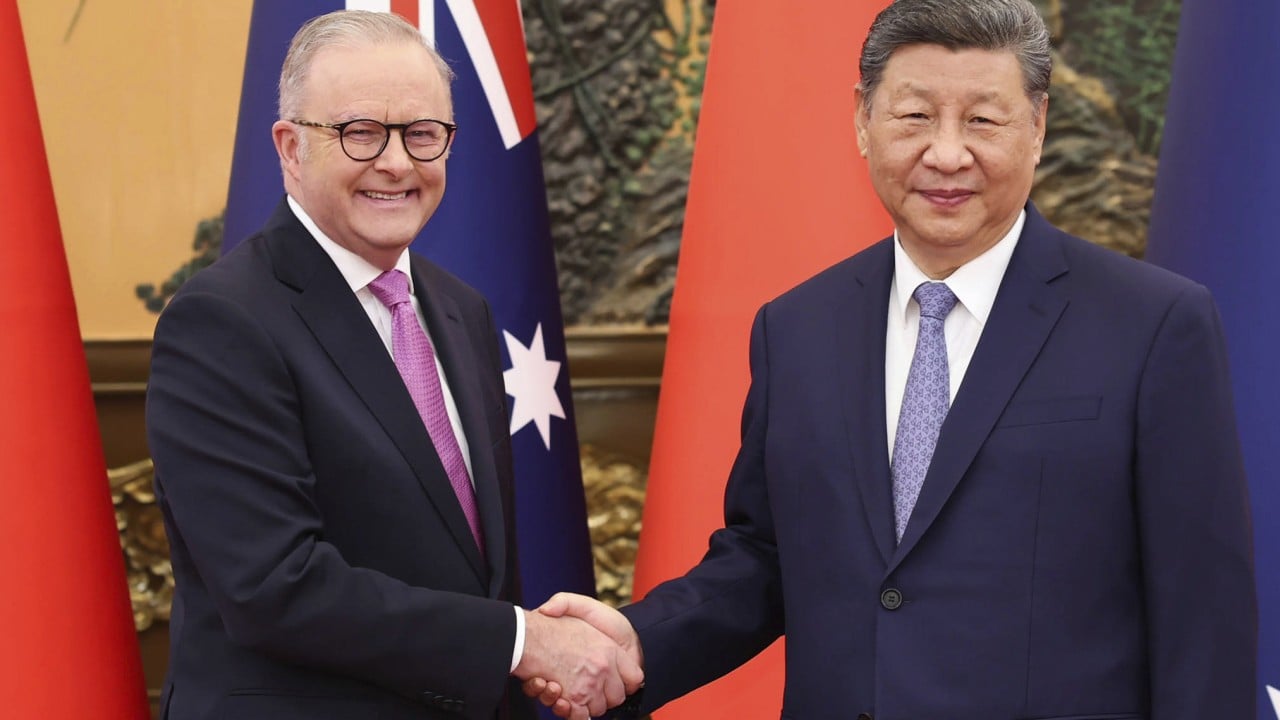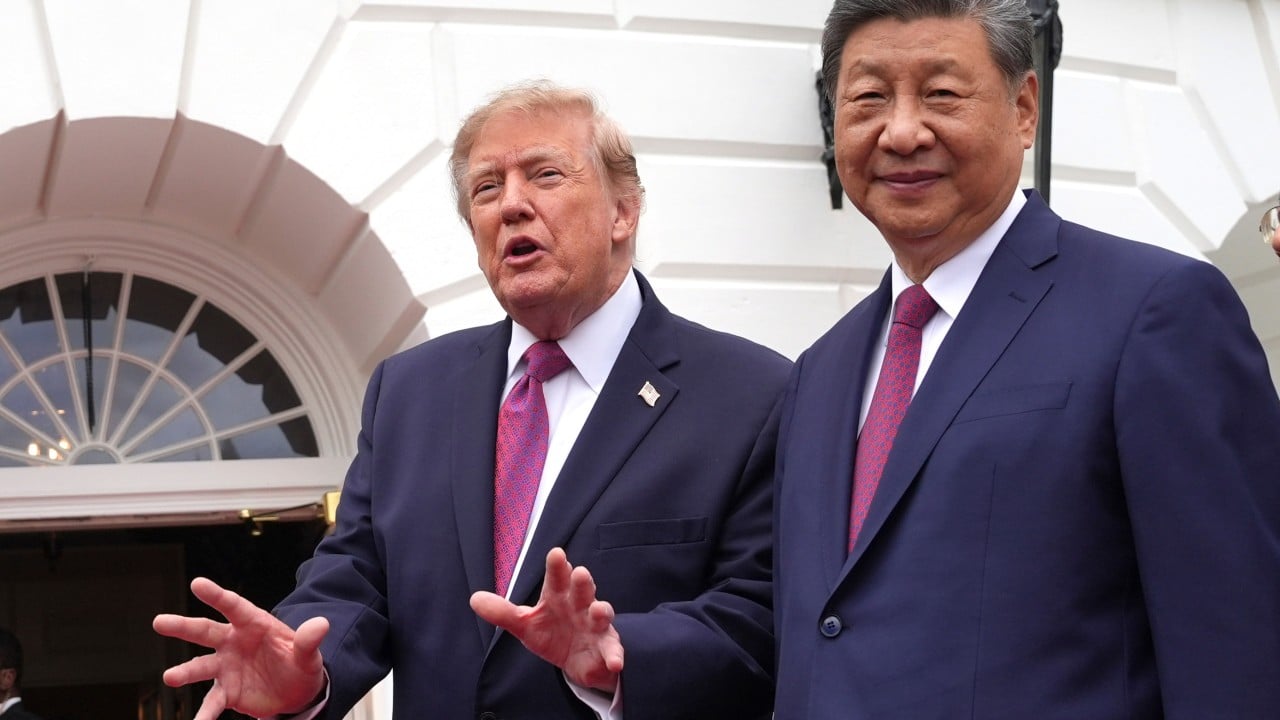
The velvet rope in Beijing’s Great Hall of the People smells faintly of damp wool, floor wax, and decades of rehearsed silence.
If you have ever stood in a high-stakes diplomatic anteroom waiting for two leaders to emerge, you know the specific, suffocating weight of the air. You watch the aides check their watches. You listen to the muffled click of camera shutters behind heavy mahogany doors. For years, the prevailing wisdom in Washington was that the fate of the global economy could be settled inside that room with a firm grip, a flattering toast, and a back-channel phone call between two strongmen.
Donald Trump built an entire foreign policy doctrine on that belief. He treated geopolitics like a Manhattan real estate closing, convinced that his personal chemistry with Xi Jinping could override decades of ideological friction, military posturing, and structural economic rivalry.
He was wrong. Not because he lacked charm, and not because Xi refused to play along when it suited him. He was wrong because the machinery of both nations has grown too vast, too automated, and too deeply entrenched to be steered by a handshake anymore.
The Myth of the Room Where It Happens
To understand why personal diplomacy is failing between Washington and Beijing, you have to step away from the podiums and look at a shipping container sitting on a dock in Long Beach, California.
Let’s create a composite character to make this real—a hypothetical logistics manager we will call Elena, who runs mid-tier electronics imports out of Southern California. Elena does not care about diplomatic transcripts. She cares about tariff schedules, customs holds, and whether the microcontrollers her company needs will clear port before Friday.
During the first Trump administration, Elena’s business lived and died by the social media post. A midnight tweet threatening twenty-five percent tariffs would send her scrambling to re-route freight through Vietnam before sunrise. A warm dinner between Trump and Xi at Mar-a-Lago would send her suppliers celebrating, assuming the storm had passed. Everything felt personal, volatile, and reversible.
Today, Elena’s reality has hardened into concrete.
The tariffs did not vanish when administrations changed; they calcified into permanent law. Export controls on advanced semiconductors, once treated as bargaining chips to be traded away for soybean purchases, are now enforced by thousands of bureaucrats at the Commerce Department’s Bureau of Industry and Security. When a shipment gets flagged now, there is no phone call to the Oval Office that can unstick it. The rules are written into code, compliance manuals, and national security statutes.
Trump’s approach relies on what political scientists call personalist diplomacy—the idea that state-to-state friction is merely a reflection of leader-to-leader rapport. Think of it like trying to steer a modern nuclear aircraft carrier by leaning over the railing and shouting at the water. In the nineteenth century, on a wooden schooner, the captain’s voice carried to every sailor on deck. Today, the ship is governed by propulsion engineers three decks below, satellite navigation systems, and automated radar protocols that do not care how charismatic the captain sounds.
When Two Systems Stop Listening to Their Drivers
There is a comforting romance to believing that two men can sit across a table and pull the world back from the brink. It gives us a villain and a hero. It makes a terrifyingly complex geopolitical collision feel like a boardroom drama we can understand.
I used to believe in that romance myself. Watching televised summits from press rooms in Asia over the past fifteen years, it was easy to get swept up in the theater of it all—the synchronized motorcades, the clinking glasses of baijiu, the sudden announcements of historic trade truces. You walked out of those briefings feeling like disaster had been averted because two men had looked each other in the eye.
Then you watched what happened six months later. Nothing changed. In fact, things got worse.
Consider the structural reality in Beijing. Xi Jinping is not operating as a solo dealmaker waiting for a better offer from Washington. Over the past decade, he has systematically re-engineered the Chinese Communist Party around a single overarching mandate: comprehensive national security.
In Beijing’s current political lexicon, economic growth is no longer the undisputed king. Self-reliance is. Every five-year plan, every state-backed subsidy pouring into electric vehicles, battery minerals, and domestic chip fabrication is designed to make China immune to American pressure. Even if Xi wanted to strike a grand personal bargain with Trump tomorrow—say, trading massive agricultural purchases for tariff relief—he cannot dismantle the fortress he has spent ten years building without undermining his own legitimacy at home.
Look at the numbers beneath the rhetoric. Bilateral trade between the United States and China has shifted dramatically away from direct interdependence toward third-country routing. While headline trade figures still hover in the hundreds of billions of dollars, U.S. imports from China as a share of total imports have dropped from over twenty-one percent at their peak to roughly thirteen percent. Meanwhile, capital flows—the quiet lifeblood of trust between two nations—have dried to a trickle. American venture capital investment in Chinese tech sectors has collapsed by more than eighty percent since 2021.
You cannot hug your way out of an eighty percent collapse in cross-border capital.
The Bipartisan Wall Trump Cannot Dismantle
There is another reason Trump’s personalist playbook has hit an expiration date, and it sits right down the hall from him in Washington.
In 2017, when Trump first began slapping tariffs on Chinese steel and consumer goods, he was a rogue actor fighting his own party’s free-trade orthodoxy. Wall Street executives flew to Washington to beg him to stop. Congressional Republicans quietly lobbied against him. Back then, Trump truly was the sole bottleneck; if he changed his mind, the policy reversed overnight.
That world is gone.
Walk through the halls of Congress today, and opposition to Beijing is the single remaining issue where progressive Democrats and populist Republicans vote in near-unanimous lockstep. Since 2022, Washington has passed the CHIPS and Science Act, restricted outbound investment into Chinese quantum computing and artificial intelligence, moved to force the divestment of TikTok, and expanded military basing agreements across the Indo-Pacific from the Philippines to northern Australia.
This is a structural decoupling, and it functions like a ratchet wrench: it only clicks in one direction.
Suppose Trump sits down with Xi and decides, on a whim, that he wants to loosen semiconductor restrictions in exchange for help on fentanyl precursors or a favorable trade headline. The moment that decision leaves the room, it runs straight into a buzzsaw of statutory mandates, Pentagon threat assessments, and congressional oversight committees armed with subpoena power. The American institutional immune system now treats accommodation with Beijing as a pathogen.
The Invisible Stakes for the Rest of Us
It is tempting to view this shift as an abstract chess match between distant elites, something that happens in gilded banquet halls while the rest of us worry about grocery bills and mortgage rates.
That distance is an illusion.
Let’s return to Elena, our hypothetical importer in Long Beach, and multiply her by ten thousand small manufacturers across the American Midwest and coastal ports. When relations were driven by Trump’s personal mood swings, businesses faced acute volatility—sharp, sudden shocks that hurt for a quarter and then subsided. Now, as personal ties lose their power to override systemic rivalry, businesses and families face chronic friction.
Chronic friction looks like a five-dollar increase on household appliances that never goes back down. It looks like pharmaceutical supply chains quietly fracturing because active ingredients made in Chinese chemical plants are suddenly subject to national security reviews. It looks like universities shutting down joint climate research labs because neither government trusts the other’s scientists not to share dual-use data.
And the stakes go far beyond the checkout aisle.
In military terms, personal channels between leaders have historically served as the ultimate circuit breaker during a crisis. Think back to October 1962, during the Cuban Missile Crisis, when back-channel letters between John F. Kennedy and Nikita Khrushchev allowed both men to step back from nuclear annihilation despite the hawks in their own militaries screaming for blood.
Today, in the crowded waters of the South China Sea and the Taiwan Strait, American destroyers and Chinese coast guard vessels pass within hundreds of yards of one another every week. Fighter jets execute high-speed intercepts in international airspace. When an accidental collision happens—and military planners in both capitals treat it as a question of when, not if—who picks up the phone?
Even when military hotlines are technically open, Chinese doctrine treats crisis communication not as a neutral safety valve, but as a political reward to be granted only when Washington shows ideological deference. If Trump believes his personal rapport with Xi guarantees a quick phone call to defuse a naval standoff at 3:00 a.m., he is gambling the peace of the Pacific on a line that may simply ring unanswered while political commissars in Beijing debate the optics.
Learning to Live Without the Strongman Shortcut
Admitting that personal diplomacy has reached its limit is deeply unsettling, because it strips away the easy fix. If one charismatic leader cannot solve the U.S.-China rivalry over a steak dinner, then we are forced to confront a much harder truth: this is a generational condition to be managed, not a deal to be closed.
So what replaces the illusion of the grand personal bargain?
First, institutional predictability over theatrical summits. Allies in Tokyo, Seoul, Brussels, and Canberra do not need another photo op of an American president praising Xi Jinping’s strength one week and threatening economic ruin the next. They need steady, boring, multilateral coordination—shared supply chain standards, joint investment screening, and clear red lines that do not shift based on who won the last news cycle.
Second, granular guardrails. Instead of swinging for sweeping, all-or-nothing trade deals that collapse within months, diplomacy has to happen in the trenches: technical working groups on artificial intelligence safety, maritime rules of engagement, and public health transparency. It is unglamorous work that never makes front-page headlines, yet it is the only thing that actually keeps friction from igniting into conflict.
Third, domestic resilience. No amount of clever negotiating in Beijing can compensate for hollowed-out manufacturing capacity, underfunded STEM education, or crumbling port infrastructure at home. Strength in the twenty-first century is not projected across a mahogany table; it is built in laboratories, shipyards, and power grids.
The era of the imperial dealmaker—the belief that two men can bend two billion people to their personal will with a nod and a smile—is over. The gears of history have locked into a heavier, slower track.
Somewhere in Beijing right now, an aide is polishing the brass handles on those heavy mahogany doors in the Great Hall of the People, getting ready for the next motorcade, the next bank of cameras, and the next firm handshake—while out in the dark waters of the Pacific, two destroyers quietly adjust their course without waiting for anyone in the room to speak.