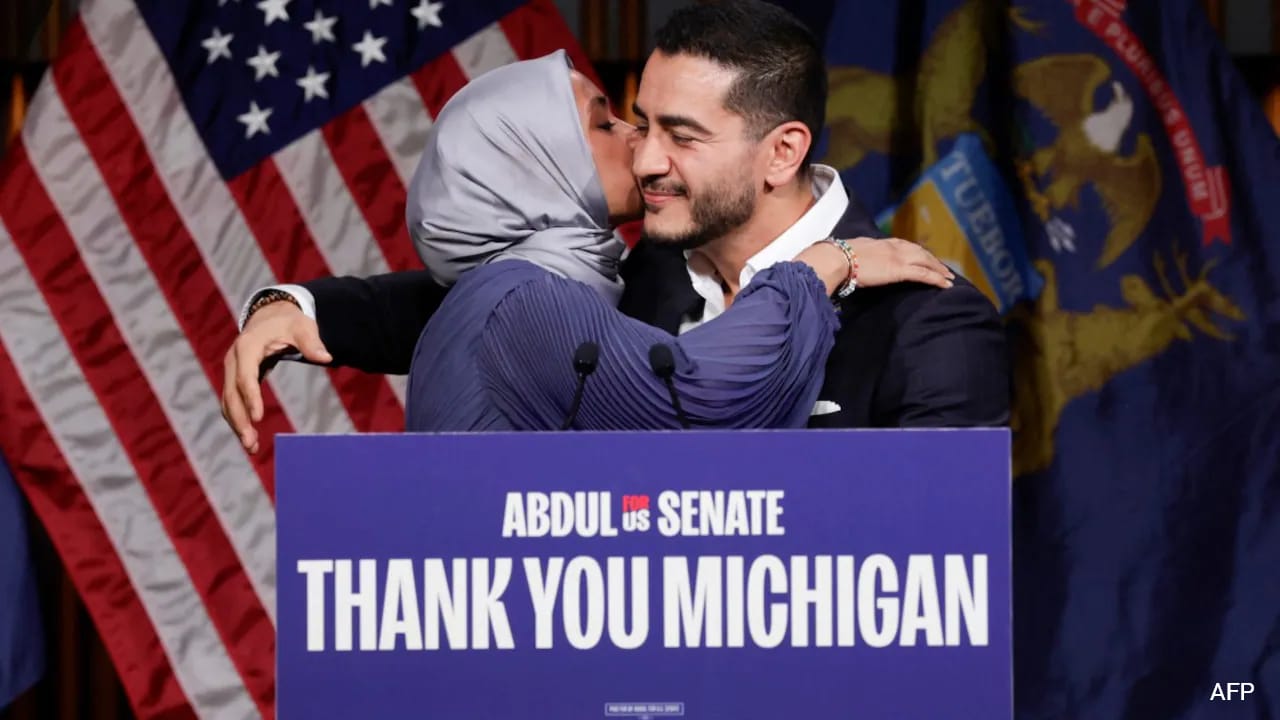
Dinner tables have a strange way of turning into foreign embassies.
You pass the salt. You ask about someone's commute. You talk about whether the winter is going to be as brutal as last year's, and suddenly—without a single warning bell or raised voice—an invisible map unfolds across the tablecloth. Borders appear where there were none five minutes ago. Histories that seemed safely tucked inside textbooks start breathing across the mashed potatoes.
That is what happens when love steps outside the lines people assume were drawn in permanent ink.
When a headline flashes across a screen invoking eighty million Egyptians alongside a family's reaction to an Indian wife, most readers do what they always do. They skim. They look for scandal, for friction, for a neat little soap opera with villains and saints. A click. A scroll. A five-second verdict.
Yet real families rarely live inside five-second verdicts.
I know the weight of unspoken expectations at a family gathering. Not because I have lived inside one exact household, but because I have sat at enough tables where tradition sat in the empty chair at the head of the room, watching every word. You can smell the cardamom and the cumin, hear the clink of teaspoons against glass, and still feel a quiet electricity in the air—the kind that gathers right before someone asks a question they have been rehearsing in their head for weeks.
What did Abdul El-Sayed's family actually say about his Indian wife? When public curiosity collides with private family life—especially around a cross-cultural marriage involving Egyptian roots and Indian heritage—the gap between what outsiders imagine and what families actually feel can be wider than an ocean.
To be honest, I don't have a verified transcript of a private family conversation sitting in front of me, nor should any honest writer pretend to eavesdrop on someone else's living room. Whenever a headline drops a big demographic number like "80 million Egyptians" next to a deeply personal detail like an Indian spouse, the story usually isn't a secret dossier. It is a mirror. People see their own assumptions, hopes, anxieties, and curiosities reflected back at them.
Let's pause right there. Eighty million people.
Try to picture eighty million of anything. You can't. Human brains are built for tribes of dozens or hundreds, not tens of millions. When a writer or a headline drops "80 million Egyptians" into a sentence about marriage and heritage, it acts like a megaphone. Suddenly, one man, one woman, and one extended family aren't just navigating groceries, holidays, in-laws, and Sunday phone calls. They are carrying the perceived weight of a civilization with thousands of years of river-valley memory.
Unfair. Heavy. Human.
The Weight of Eighty Million Eyes
Imagine—and let's be clear, this is a hypothetical scenario meant to show how public projection works—a young man from an Egyptian background brings home a woman of Indian heritage. Before either of them even speaks, the room fills with ghosts.
Not angry ghosts, necessarily. Sometimes anxious ones. Sometimes curious ones. Sometimes fiercely protective ones.
Think of tradition as a suitcase packed by people who loved you enough to worry about your trip. Inside are spare socks for cold weather, remedies for stomachaches, rules about when to knock and when to stay quiet, prayers whispered in languages that sound like home. When you cross a cultural border in marriage, you don't throw the suitcase away. You try to fit two suitcases into one closet.
That is where the real story lives. Not in cartoon stereotypes of "strict parents" versus "rebellious kids," and not in fairy-tale clichés where two cultures blend effortlessly like cream into coffee without a single lump.
Real life is messier. Better. More interesting.
In many Egyptian households, family isn't a hobby or a holiday obligation; it is the central nervous system of daily life. Extended kin check in. Elders carry hard-won wisdom and hard-held standards. Language matters—the cadence of Arabic greetings, the warmth of hospitality, the unspoken shorthand of shared jokes from childhood.
Now bring Indian heritage into that same living room. India isn't a single note; it is an entire symphony—dozens of languages, regional cuisines that change every hundred miles, deep family loyalty, rich festivals, layers of history stretching back millennia. If you walk into that intersection expecting a quick, tidy summary, you are going to miss the music.
So when people ask what a family says about a marriage across those lines, what they are usually asking is simpler—and sharper—than it sounds. They want to know: Did the walls hold, or did the doors open?
Beyond the Headline Hook
Media headlines love contrast. Contrast is gasoline for attention. Put two distinct cultural markers side by side—Egyptian and Indian—and slap a massive number in front of one of them, and you have instant intrigue.
Why does that hook work so reliably?
Because modern life makes us weirdly anxious about belonging. Many of us grew up hearing clear, rigid scripts about who we should marry, what traditions we should keep, and what happens if we diverge. Even people who never followed those scripts know the lyrics by heart.
When someone marries across cultures, it challenges the quiet assumption that love only survives when two people start from the exact same starting line.
Let's use a metaphor here—a garden, not a factory. A factory wants identical parts that snap together without friction. A garden puts different plants in the same soil and watches what needs more sun, what needs more shade, and which roots quietly strengthen the ground so neither washes away in a storm.
Sometimes two plants thrive together immediately. Sometimes one crowds the other until someone prunes back a branch and gives both room to breathe.
Families go through that exact pruning and growing season. A parent's first reaction to a partner from a different background might sound like hesitation, or endless questions, or a quiet worry about grandchildren losing touch with their roots. Outsiders read a single cautious remark and call it rejection. Insiders often hear something else: I love you. I just don't know the terrain yet. Show me how to walk it.
Equally, a family's warmth can surprise the people watching from afar. Shared values around respect for elders, generosity at the table, loyalty in hard times, and humor under pressure often bridge gaps that surface differences make look wide.
What Families Actually Talk About
When the cameras aren't there—and when the internet stops arguing—families talk about surprisingly grounded things.
They talk about food. Who likes things spicier? How do you make a dish taste like home when you're three thousand miles from where your grandmother learned it?
They talk about time. How do you split holidays when both sides have traditions that matter deeply? Which language do the kids hear first at bedtime?
They talk about character. Is he kind when nobody is clapping? Does she listen when things get hard? Do they make each other laugh on a Tuesday night when the sink is full and everyone is tired?
Notice how none of those questions fit neatly into a sensational headline.
"80 Million Egyptians" sounds monumental. A Tuesday night full sink sounds ordinary. Yet it is on ordinary Tuesday nights that a marriage—and a family's real opinion of it—is tested and proven.
I'll admit something honestly: I don't know every nuance of what was said behind closed doors in this specific story, and anyone claiming certainty about private family dynamics is selling a mirage. Family conversations are layered. A joke can carry affection and a tiny pinch of nerves at the same time. A silence at dinner can mean disapproval, or it can mean someone is chewing food while thinking deeply.
Reading private emotion from a distance is guesswork. Respecting the humanity of the people involved is a choice.
Why Cross-Cultural Stories Hit So Close to Home
Even if your own family tree looks nothing like this one, you have seen this tension play out.
Maybe it was the cousin who married someone from a different region or faith. Maybe it was the friend whose parents wanted a different career path, a different neighborhood, a different set of Sunday rituals. Maybe it was you, standing in a doorway, trying to honor where you came from without shrinking who you are becoming.
Love asks us to stretch. Family asks us to remember.
Those two impulses aren't enemies, even when they pull in opposite directions for a while. Memory keeps us grounded so we don't blow away in every passing wind. Love keeps us growing so our roots don't turn to stone.
When a family navigates an Indian wife, an Egyptian heritage, and the noise of public curiosity all at once, what endures isn't the loudest comment on the internet. It is how people treat one another when the novelty wears off and real life takes over.
Do they learn a few words in each other's family tongue? Do they bring extra chairs to the table? Do they let love have the final word even when the learning curve is steep?
Listen closely to any household that has weathered real change, and the loudest sound you hear isn't a clash of nations.
It is the steady, unhurried clink of forks sharing the same table.