At sixty miles an hour, a car travels roughly eighty-eight feet every single second.
Blink. That is eighty-eight feet of asphalt rushing beneath rubber, steel, and glass. Blink again. Another eighty-eight feet. A semi-truck ahead suddenly taps its brake lights. A minivan drifts two inches toward your lane. You do not think about physics when you are riding shotgun with your mom on a Tuesday afternoon, listening to a song you already know by heart, watching the guardrail blur into a gray streak. You assume the adult in the left seat has the math handled. You assume the grown-up world is solid.
Silence.
Then the weight changes. A mother slumps sideways against her door, her hands slipping from the leather rim, her eyes fluttering shut while two tons of moving metal keep eating up the highway at sixty miles an hour.
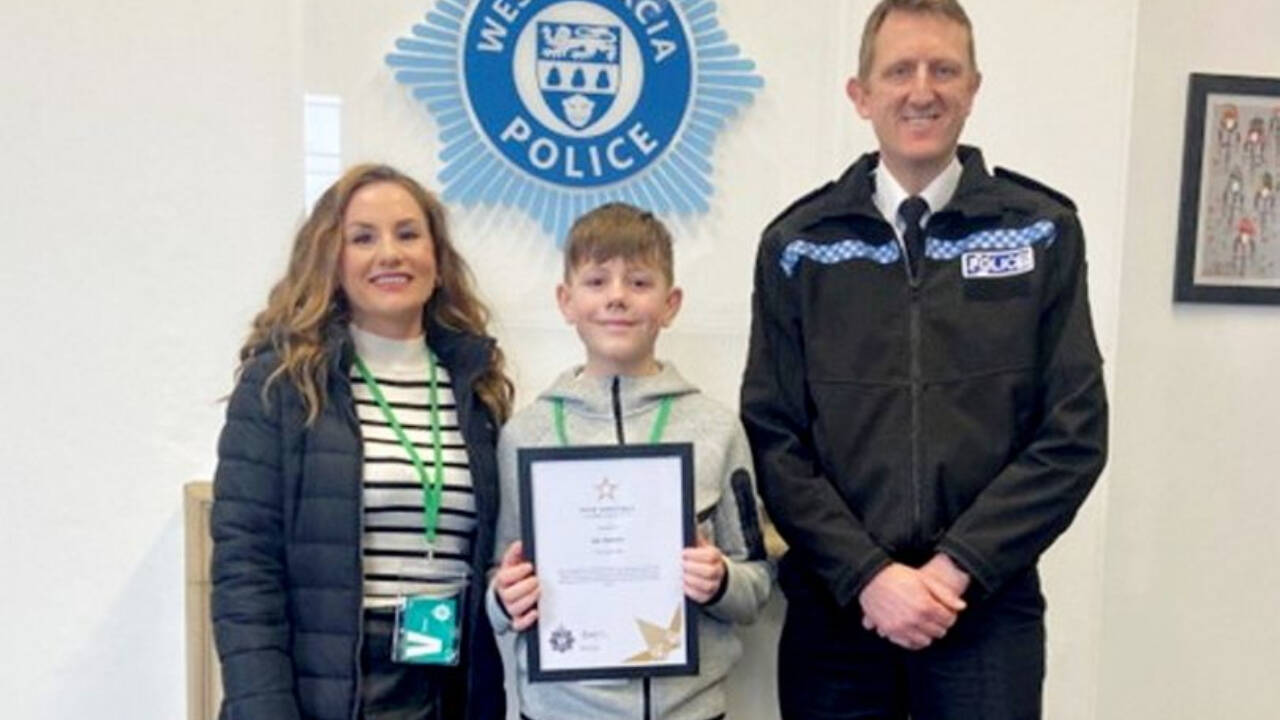
When a headline reduces that moment to a twelve-year-old saving his mother after she collapses at sixty miles an hour and winning a courage award, it hands you a neat little trophy and moves on. The story becomes a five-second scroll. A feel-good blip between weather reports and recipe videos. Yet when you slow down the tape and look at what actually happens inside a cabin when a parent loses consciousness at highway speed, the headline feels almost comical in its brevity. Because nothing about that situation is simple. Nothing about it is automatic. And almost none of us know what we would actually do if our own hands had to find a steering wheel that was never built for our reach.
The Physics of a Sudden Absence
I have spent years sitting in cars that felt entirely ordinary right up until they did not. Not dramatic crash-test scenarios on a closed track, just real roads where rain turns pavement into black ice or a tire blows with a sharp, hollow thud that makes your stomach drop into your shoes. Even when the driver is awake and alert, a sudden shift in control feels like stepping onto an escalator that has stopped moving—your brain expects one rhythm, and your inner ear gets another.
Now strip away the driver.
When a parent collapses behind the wheel at sixty miles an hour, the car does not politely pull itself over. Cruise control, if engaged, keeps feeding throttle. An automatic transmission stays locked in gear, pulling the vehicle forward with quiet, relentless momentum. Even without cruise control, a car on flat or gently sloping highway maintains speed far longer than most passengers realize. Every second of hesitation costs nearly thirty yards of runway.
Consider what happens next: a twelve-year-old sitting in the passenger seat sees his mother go limp. There is no Hollywood swell of music. There is only the rush of wind against the window seals, the hum of tires on concrete, and the sudden, terrifying realization that nobody is steering.
To understand the weight of that choice, let us walk through a hypothetical scenario modeled directly on the mechanics of such an emergency. Picture a twelve-year-old boy named Leo—not the real boy from the news clip, just a stand-in so we can trace the sequence without turning a real family into a case study. Leo is five feet tall, wearing sneakers with worn laces, his seatbelt cutting across his collarbone. His mother, Sarah, lets out a short, strained breath, her chin dropping toward her chest. Her foot stays near the pedals. The car is in the middle lane of a three-lane highway.
What is the first instinct of almost any human being, child or adult, when someone they love suddenly goes unresponsive?
Freeze.
Panic is not a character flaw; it is a wiring feature. Our threat response evolved to handle sudden predators and immediate physical shocks, not complex spatial coordination inside a hurtling machine while emotional shock floods the amygdala. A child's brain is still building its prefrontal executive networks—the circuitry responsible for weighing risk, inhibiting impulse, and sequencing multi-step motor actions under stress. Adults with years of driving experience already struggle with sudden medical emergencies on the road; research from traffic safety institutes and emergency medicine literature consistently shows that syncope, seizures, hypoglycemia, and acute cardiac events behind the wheel turn routine commutes into high-energy collisions within seconds.
For a twelve-year-old, the gap between seeing the danger and physically intervening is wider still. Look at the geometry of a modern passenger seat. You are separated from the steering wheel by a center console, cupholders, a gear selector, and several feet of open air. Your left arm has to reach across the cabin while your eyes track traffic moving at ninety feet per second. You cannot easily reach the brake pedal from the right seat without unbuckling or contorting your body in a way that risks sliding forward if the car jolts.
And yet, stories keep surfacing of children—eleven, twelve, thirteen years old—who somehow bridge that gap. They lean across. They grab the wheel. They guide a car onto the shoulder or into a safe stop without taking a life.
How?
What Courage Looks Like Without a Cape
We love to treat courage as a personality trait, like blue eyes or a high vertical leap. You either have it or you don't. Award ceremonies reinforce that myth by handing out plaques that make bravery look like a permanent medal pinned to someone's chest.
I do not buy it. Having watched people freeze in minor crises and step up in terrifying ones, I have come to see courage less like a fixed trait and more like a narrow door that swings open for a few seconds during chaos. You can walk through it shaking. You can walk through it with your heart hammering against your ribs so hard you taste copper. Walking through while terrified is still walking through.
In Leo's hypothetical cabin, the door opens the moment the car drifts a foot toward the right lane line. A horn blares somewhere behind them. Maybe a truck passes, buffeting the sedan with a wall of displaced air. If Leo stays buckled in the passenger seat, his reach is short and awkward. If he unbuckles to get closer to the wheel, he loses restraint if the car swerves or hits a curb. There is no clean, textbook move here. Every choice carries a tradeoff.
Let us be honest about something most articles gloss over: we do not know with certainty how any twelve-year-old will react until the moment arrives. Even kids who seem calm in a crisis afterward often say they were running on pure instinct, barely remembering the middle thirty seconds. Memory fragments under acute adrenaline. Time stretches and compresses all at once; ten seconds can feel like three minutes, or three minutes can vanish into a blur of taillights and white lines.
That uncertainty makes the real-world rescues even harder to explain away with simple slogans. When a twelve-year-old takes control of a car at sixty miles an hour, they are operating with incomplete information, zero formal training in emergency vehicle recovery, and a body that was never meant to pilot that machine. They do not have time to debate torque curves or braking distances. They only have the next second, and the one after that.
Metaphorically, taking the wheel in that moment is like catching a falling glass while someone yells that the floor is slick. You do not admire the glass. You do not think about how expensive it is. Your hand simply shoots out because letting it hit the stone feels worse than getting cut.
The Invisible Stakes Behind Every Highway Mile
Why does a story like this hook us so deeply? Partly because of the drama—a child becoming the grown-up in a split second. Partly because every parent who has ever driven with their kids in the back or passenger seat feels a quiet coldness at the back of the neck when they read it.
What if it were me?
Every parent asks that question, even if they push it down fast. You think about the long drives to soccer tournaments, the errands after work when you skipped lunch and your blood sugar dipped low, the quiet stretches of interstate where the monotony makes your eyelids heavy. You tell yourself you are fine. You have driven thousands of miles without incident.
Statistics offer comfort right up until they do not. Across major highway systems, tens of thousands of crashes each year involve driver impairment, distraction, or sudden medical incapacitation. Most of the time, when a driver faints or suffers a medical episode at speed, the outcome is dictated by traffic density, road geometry, guardrails, and sheer luck. When a child is in the car and manages to steer away from oncoming traffic or bring the vehicle to a halt, the margin between catastrophe and survival often comes down to seconds and inches.
There is another layer to this, too—one that rarely makes the headlines. What happens after the car stops?
Awards ceremonies love the tidy ending: the siren fades, the ambulance arrives, the mother recovers, and a twelve-year-old stands on a stage holding a certificate of courage. It looks like closure.
In real life, the car stopping is just the end of Act One. A twelve-year-old who has just watched their mother collapse and steered a fast-moving vehicle out of harm's way carries an emotional aftershock that does not vanish because someone clapped in an auditorium. Kids process trauma sideways. One child might seem remarkably composed for weeks, then break down over a spilled glass of milk. Another might suddenly dread riding in cars, hyper-focusing on every brake light and every sigh from the driver's seat.
Acknowledging that messiness does not cheapen the rescue. It makes it real. A child does not need to turn into a stoic action hero to deserve recognition; they were a kid who did something extraordinary in an impossible spot, and they still get to feel shaken afterward.
What Any Family Can Actually Do Before the Worst Day
When people read about a child saving a parent on the highway, the natural next question is practical: Should I teach my kid how to steer or stop a car just in case?
It is a fair question, and the honest answer is nuanced. You are not training a twelve-year-old to be a stunt driver or encouraging joyriding in empty parking lots without proper supervision and legal boundaries. What you can do—calmly, without turning family road trips into a fear factory—is demystify the basics of what happens if a driver suddenly becomes unresponsive.
Think about how simple and grounded those conversations can be:
- Stay calm and speak up first. If a parent sounds slurred, looks pale, slumps, or stops responding to questions while driving, the passenger's first job is to check in loudly and clearly, then look at the road ahead.
- Understand steering versus pedals. Reaching across to steady or gently guide a steering wheel toward the right shoulder is very different from trying to stomp on pedals from an awkward angle, which can accidentally hit the gas if you misjudge. Moving toward the right edge of the road—away from faster passing lanes and oncoming traffic—is the primary directional priority on multi-lane highways.
- Know where the hazard lights and gear selector are. Switching on hazard flashers alerts nearby drivers that something is wrong long before words can be spoken. Shifting into neutral or gradually letting off the accelerator—rather than yanking a wheel violently at sixty miles an hour—helps bleed speed without sending the car into a spin.
- Call emergency services immediately. Even if the car slows or stops, getting accurate location details to emergency dispatchers is critical, especially if the parent remains unconscious or disoriented.
None of this guarantees perfection. Real emergencies are louder, messier, and faster than any checklist. Yet talking through a few calm, concrete possibilities removes some of the paralysis of the unknown. When a twelve-year-old has already heard a parent say, "If I ever pass out or get really dizzy while driving, put the hazards on, help steer toward the right shoulder, and call nine-one-one," the thought is no longer coming out of total darkness.
The Weight of the Quiet After the Brakes
Imagine the car finally coming to rest on the gravel shoulder, weeds brushing against the lower bumper, engine ticking as hot metal begins to cool.
No more eighty-eight feet per second. No more white lines whipping past the glass. Just the distant rush of other cars going on with their errands, oblivious to the small drama that just unfolded ten feet to their right.
A twelve-year-old sits there with both hands still gripping the wheel, knuckles white, chest rising and falling too fast, looking over at the person who has spent twelve years keeping them safe. The courage award will come later—a handshake, a camera flash, a headline that sums up an entire earthquake in twelve words.
Out on the shoulder, though, there is only the hum of the cooling engine and a kid who suddenly knows what the road weighs.