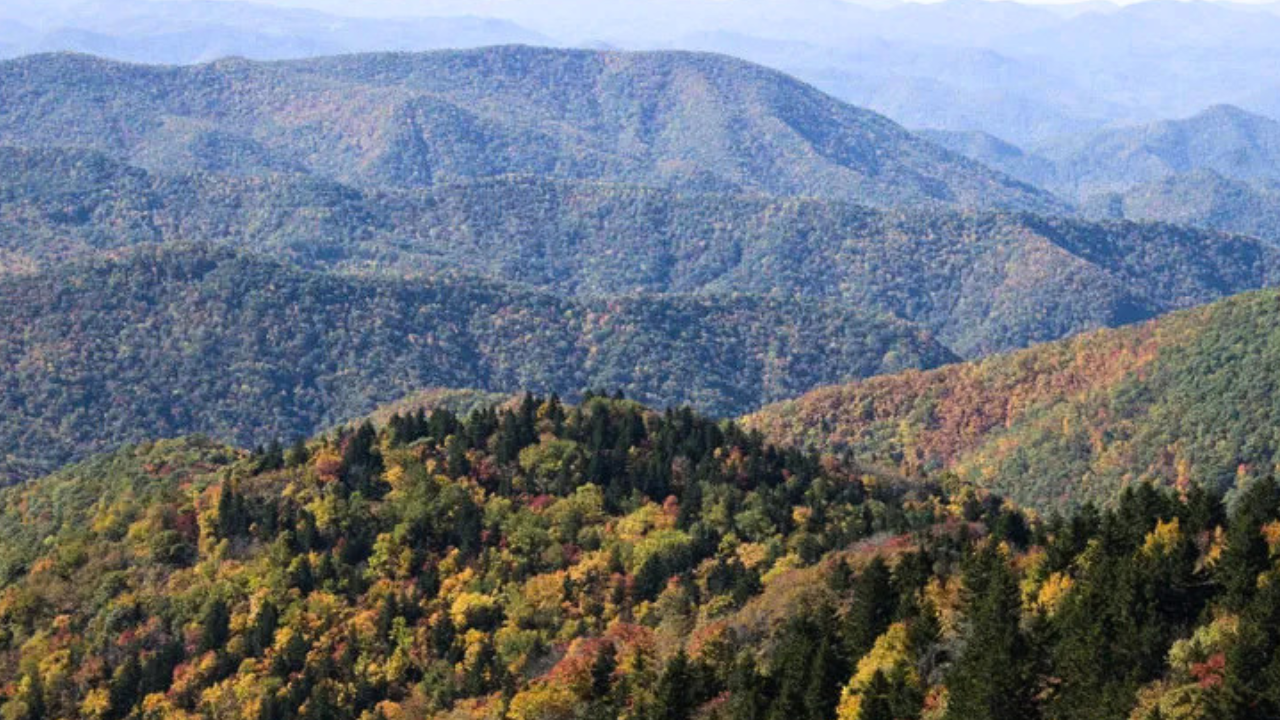
The dirt in southern West Virginia doesn't smell like regular earth. It has an iron bite to it, a metallic tang that clings to the back of your throat if you stand downwind of a cut mountain long enough. For three generations, my family knew exactly what that smell meant. It meant dinner on the table. It meant the lights stayed on. It meant that somewhere, hundreds of feet beneath our boots, men with dust-lined eyes were carving out the black fuel that ran the modern world.
We thought we knew everything these hills had to give. We were wrong.
A quiet report from a team of geologists recently rippled through the scientific community, carrying numbers so massive they feel abstract, almost fictional. Researchers mapping the mineral composition of the Appalachian basin discovered that these ancient, weathered peaks are sitting on a staggering reserve of lithium.
To understand the scale of what is trapped beneath the ridge lines, you have to look past the raw tonnage and look at the things we carry in our pockets and park in our driveways. The data shows there is enough lithium sleeping in this rock to manufacture 500 billion smartphones. That is enough to give every single human being currently walking the earth sixty-two phones apiece. If you diverted that mineral wealth toward the transition away from fossil fuels, it represents enough raw material to power 130 million electric vehicles.
Suddenly, the region that spent a century powering America’s industrial rise is positioned to power its digital future.
But out here, discoveries are never just science. They are destiny. And they are terrifying.
The Ghost in the Rock
Consider a man named Thomas. He is a hypothetical composite of three different men I know who live along the Kanawha River, men who spent thirty years working the mines until their knees gave out and their lungs stiffened into stone. If you tell Thomas that his backyard contains the key to the global green energy transition, he will not celebrate. He will spit into the weeds, look at you with deep, historical exhaustion, and ask who is coming to take it this time.
Appalachia understands extraction. The local vocabulary is built on it. When outsiders see a beautiful mountain, a local sees an overburden. When an executive sees a resource, a resident sees a boomtown that will inevitably become a ghost town.
The lithium here isn't sitting in neat, shimmering pools like the high-altitude brines of South America. It is bound up in the existing infrastructure of our past mistakes. Specifically, scientists found that massive concentrations of this mineral are hitching a ride in the wastewater and byproduct materials generated by previous industrial operations, including Marcellus Shale drilling and old mining runoff.
Think of it like this: for decades, we washed our clothes in a tub, drained the soapy water into a barrel, and forgot about it. Now, someone has realized that the scum at the bottom of that barrel is worth billions of dollars.
The irony is thick enough to choke on. The very processes that left orange, acidic creeks running through the valleys might be the exact source of the element needed to save the planet from carbon strangulation. The waste of the old world has become the wealth of the new.
The Mathematics of the Hollow
It is easy to get lost in the corporate press releases. The words are always clean. They speak of domestic supply chains, energy independence, and economic revitalization. They use numbers that sound like phone numbers.
Let us look at those 130 million electric vehicles. Right now, the United States is racing to secure a supply of lithium that doesn't rely on fragile overseas shipping lanes or geopolitical adversaries. The global market is tight, expensive, and fraught with ethical compromises.
Then you look at a map of the United States and realize the answer has been sitting under the oldest mountain chain on the continent.
But a mountain is not just a geological formation. It is a home. The people living in the crevices of these hills—places with names like Muddy Creek and Burning Springs—know that you cannot get something out of the earth without leaving a scar. Even if the lithium is extracted from wastewater rather than through traditional open-pit mining, the infrastructure required to process it requires trucks, chemical plants, pipelines, and power.
The real problem lies elsewhere, though. It rests in the deep-seated skepticism of a population that has heard this story before.
When timber companies clear-cut the ridges in the late nineteenth century, they promised prosperity. The wood built the cities of the East Coast, but the money flowed straight to bank accounts in New York and Philadelphia. When the coal barons arrived with their company scrip and their company stores, they promised a future. The coal fueled the steel mills that won two world wars, but when the seams ran thin, the companies filed for bankruptcy, shed their pension obligations, and left behind a population dealing with an epidemic of black lung and opioid addiction.
So when a scientist announces that Appalachia can build 500 billion smartphones, the immediate, unspoken question in the local diner is simple: Who gets the phones, and who gets the hole in the ground?
The Friction of Progress
There is an uneasy silence that settles over a valley when a new project is announced. It is the sound of people calculating risk.
We are told that the lithium extraction from these secondary sources could be cleaner than traditional mining. That is the pitch. By capturing the minerals from water that has already been pulled to the surface, we might avoid the massive, cratering wounds in the earth that define lithium mines in Australia or the massive water-consumption issues plaguing the deserts of Chile.
But processing brine requires chemical intervention. It requires separating the lithium from magnesium, calcium, and sodium. It requires facilities that handle acids and solvents.
I spoke with a local surveyor last autumn, a man who has walked every ridge in his county. He pointed to a creek that ran clear for the first time in his adult life, thanks to a decades-long cleanup effort funded by volunteers.
"They tell us it's green," he said, turning a smooth river stone over in his hand. "But everything looks green when you're looking at it from an office in Washington or a lab in California. Down here, everything eventually turns grey if you dig hard enough."
This is the invisible friction of the modern world. The person driving a silent, emission-free vehicle through the streets of San Francisco feels a sense of virtue. They are doing their part. But that virtue is anchored directly to the clay of a place they will never visit, to the lives of people whose names they cannot pronounce.
The Final Chord
The discovery will not be ignored. The stakes are too high, the market is too hungry, and the numbers are too big to be left alone in a academic journal. The lithium will come out of the hills because the world demands it, because our collective digital existence requires a constant, feeding stream of ions to keep our screens bright and our vehicles moving.
The question that remains is whether we can break the cycle of the past.
If this state-sized deposit of white gold is going to be the foundation of a new American century, the wealth cannot simply be siphoned out through a pipeline, leaving nothing but empty promises and recycled water behind. The people who live among the ridges have earned more than a footnote in a corporate sustainability report. They have earned the right to own the future they are being asked to build.
As the sun sets over the peaks, casting long, purple shadows across the valleys, you can look out at the landscape and see both histories at once. The rusted tipples of the old coal mines stand like skeletal monuments to an era that is dying. Beneath them, silent and invisible, waits the element that will define the next one.
The mountains are ready. The real question is whether the rest of us are honest enough to pay the true price for what we are about to take.