Losing has a smell. Anyone who has spent enough November afternoons inside a concrete tunnel beneath a professional stadium knows it intimately. It is a thick, sour cocktail of stale athletic tape, damp wool, cold coffee, and the metallic tang of unspoken panic.
You can hear it, too. Winning locker rooms hum with the chaotic bass of hip-hop and the sharp crack of laughter. Zero-and-eight locker rooms sound like libraries after hours. Men sit on wooden stools, staring at the floorboards, peeling tape off their ankles in slow motion because taking off the uniform means walking out into the hallway where cameras wait to ask how it feels to fail in front of millions of strangers. In other updates, we also covered: What Happens When Blue Meets Red Under Heavy Floodlights.
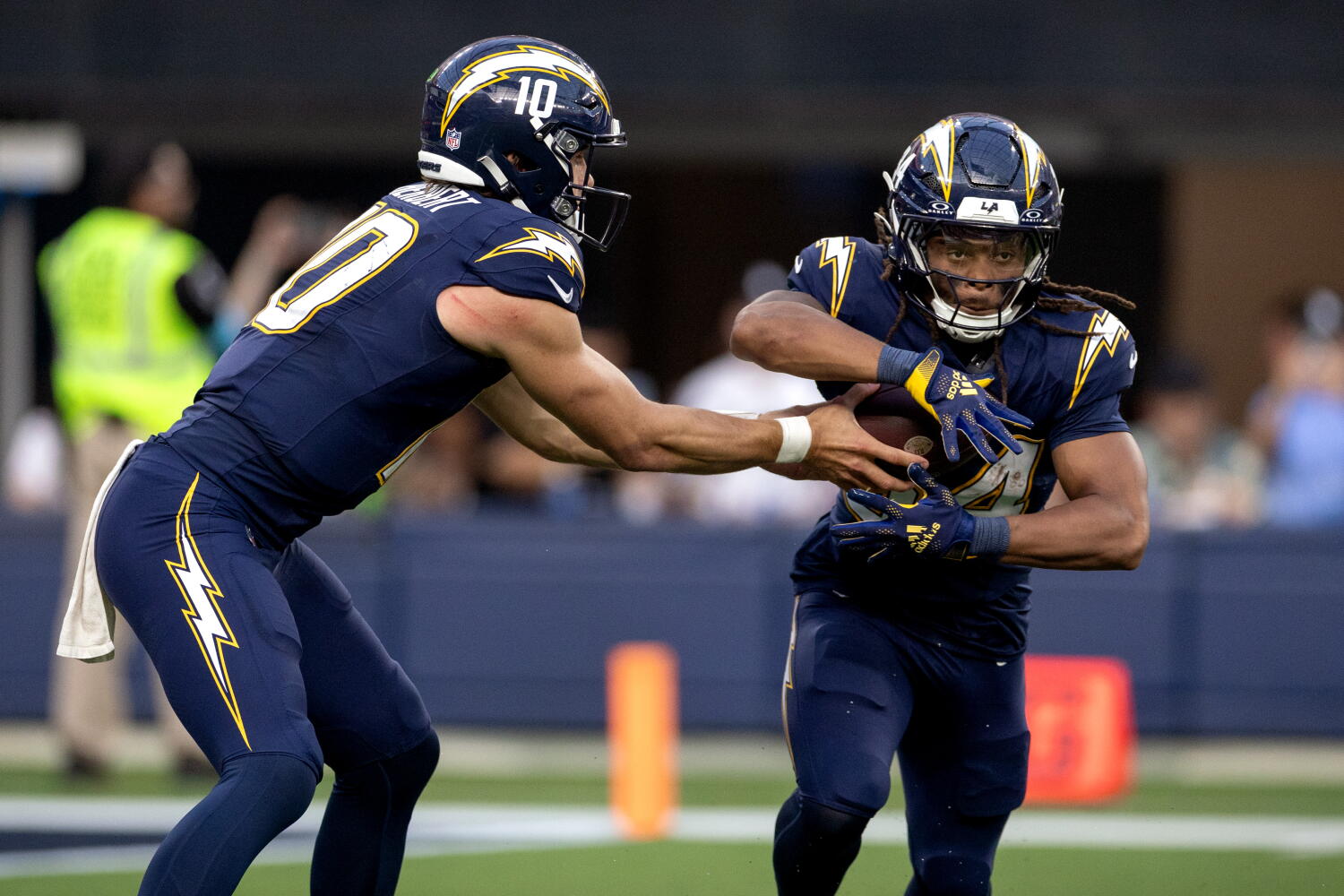
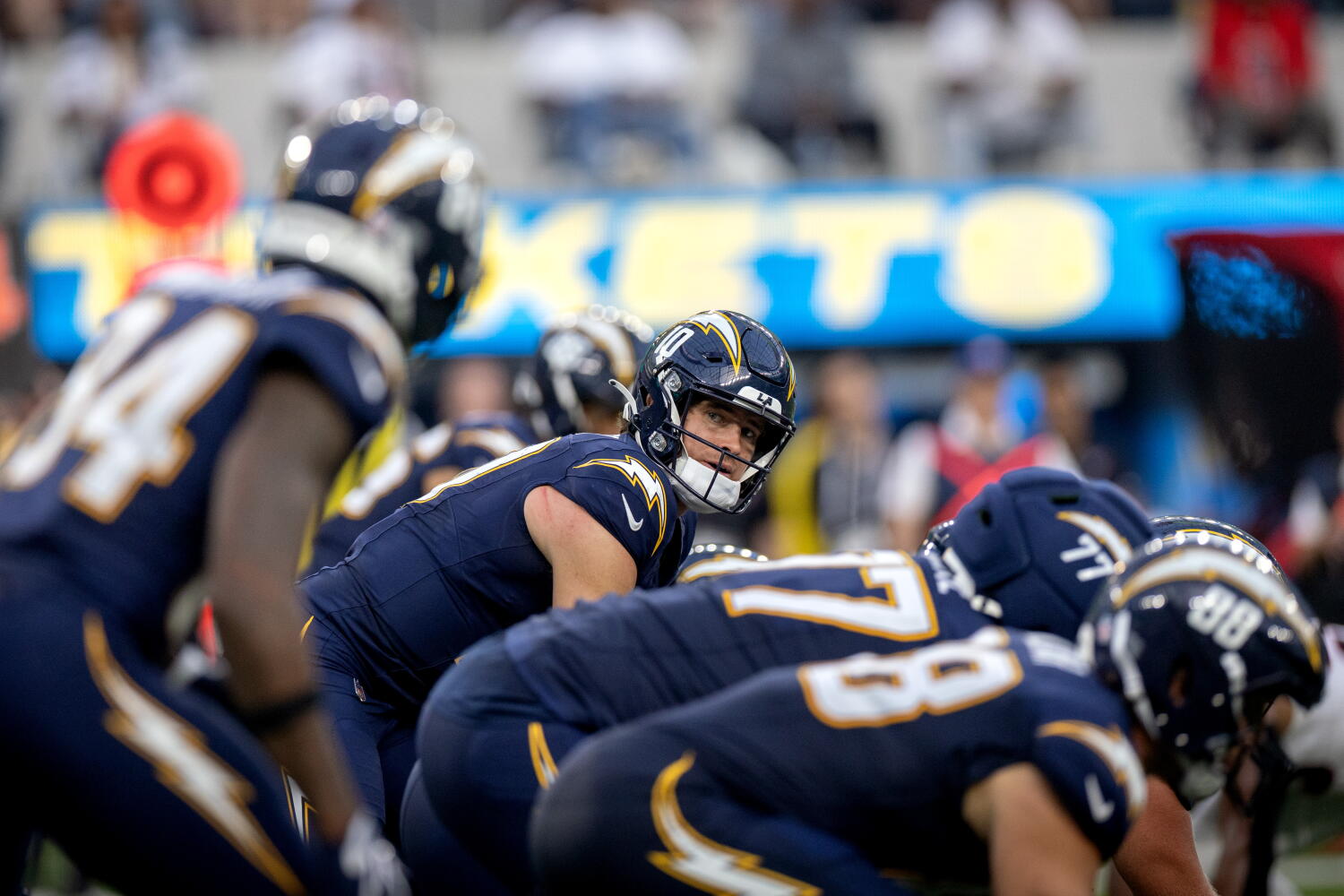
Right now, the Los Angeles Chargers live inside that silence.
Eight games played. Zero games won. Sky Sports has also covered this important issue in extensive detail.
On paper, the question sitting in front of every football fan this week looks simple, almost transactional. Can the winless Chargers finally break through against a Baltimore Ravens squad that has stumbled into its own midseason ditch? Standard sports coverage treats this matchup like a math equation. Take one desperate roster, add one vulnerable opponent, divide by home-field advantage, and predict a score.
That misses the entire human reality of what happens when two drowning men grab onto the same piece of driftwood.
The Anatomy of a Streak
To understand why an 0-8 record warps the human mind, picture a hypothetical offensive lineman—let us call him Marcus—waking up on a Tuesday morning in Southern California. Outside his window, palm trees sway under a cloudless seventy-five-degree sky. Everything in the physical environment screams paradise. Inside his chest, however, sits a cold brick of dread that has been gaining weight since September.
In the National Football League, losing is never abstract. Every missed block, every dropped slant route, every blown coverage in the fourth quarter is recorded in high definition and dissected frame by frame in dark film rooms before noon the next day. By week four, frustration turns into finger-pointing. By week six, finger-pointing curdles into a quiet, suffocating paranoia. Players stop playing free. They start playing not to lose.
Think of a tightrope walker crossing a canyon. When you are winning, you look at the platform on the other side, trusting your feet to find the wire. When you are 0-8, you stare straight down at the rocks below. Every step becomes stiff, calculated, and terrified. A cornerback hesitates for a fraction of a second before breaking on a curl route because he is afraid of getting burned deep. A quarterback holds the ball half a beat too long because he is waiting to see a receiver uncover rather than throwing him open. In a league where the margin between triumph and catastrophe is measured in inches, hesitation is fatal.
History bears this out with brutal clarity. Since the NFL expanded to a sixteen-game schedule in 1978, starting a season 0-8 has functioned less like a slump and more like a quarantine. The playoffs are mathematically dead before Halloween candy goes on sale. Coaches begin coaching for their mortgages. Veterans start wondering which city their kids will attend school in next autumn.
Yet, strangely enough, history also proves that the first win after a long drought carries a disproportionate spiritual weight. When the 1976 Tampa Bay Buccaneers finally snapped their infamous twenty-six-game losing streak, players wept openly in the locker room as if they had hoisted the Lombardi Trophy. When the 2017 Cleveland Browns or the 2008 Detroit Lions stared down the barrel of historic futility, every Sunday became an existential referendum on their dignity as grown men. The Chargers are not chasing a championship ring this Sunday. They are chasing oxygen.
Two Kinds of Desperation
Enter the Baltimore Ravens.
If the Chargers represent acute starvation, Baltimore represents a sudden, disorienting illness. Franchises built on defensive pride and physical dominance do not handle midseason collapses gracefully. Baltimore is a blue-collar football town where toughness is treated like a civic utility, right alongside water and electricity. When the Ravens struggle, the city takes it as a personal insult.
Consider the psychological contrast walking onto the grass this weekend.
Los Angeles enters with nothing left to protect. Their reputation is already in ashes. Nobody expects a miracle, which creates a strange, dangerous freedom if they can survive the first fifteen minutes without shooting themselves in the foot. Baltimore, conversely, arrives carrying the heavy baggage of expectation. Losing to a winless team is the ultimate humiliation in professional football. Nobody wants to be the trivia answer—the team that finally gave an 0-8 squad its solitary highlight of the autumn.
This dynamic creates an invisible tug-of-war before a single whistle blows.
In coaching circles, people often talk about "playing tight." Watching a talented roster struggle against an inferior opponent is like watching a concert pianist suddenly forget how to read sheet music because someone in the front row coughed. Baltimore’s recent struggles have exposed cracks in places that usually hold firm: uneven third-down efficiency, defensive lapses late in drives, and an offense that occasionally looks like it is pushing a boulder uphill in mud.
I remember watching a mid-tier college program lose nine straight games years ago, sitting three rows behind their bench in driving November sleet. By the fourth quarter of the tenth game, the players on the sideline weren't even looking at the field anymore. They were huddled around space heaters, staring at their cleats, waiting for the clock to bleed out so they could get on the bus. Then, out of nowhere, a backup safety jumped a lazy out-route and returned it sixty yards for a touchdown.
The transformation on that sideline was instantaneous and terrifying. Men who looked fifty years old ten seconds earlier suddenly vaulted over the benches, screaming until veins bulged in their necks. Desperation, once ignited by a single spark of competence, burns hotter than confidence ever could.
Where the Game Actually Turns
Strip away the uniform colors and the television graphics, and Sunday afternoon comes down to three trenches where willpower meets physics.
First, look at the opening script. Every offensive coordinator spends all week choreographing the first fifteen plays of a game like a Broadway director staging an opening number. For an 0-8 team, those first fifteen plays are a psychological minefield. If the Chargers go three-and-out on their opening possession, or worse, turn the ball over near midfield, you will visibly see shoulders slump across the entire sideline. The ghost of the previous eight weeks will walk right back onto the grass. Conversely, if Los Angeles strings together a ten-play, seventy-yard march that ends in seven points, the entire stadium atmosphere shifts. Doubt creeps across the field toward the Baltimore bench.
Second, pay attention to the battle at the line of scrimmage during third-and-medium situations. Football is fundamentally an argument about space and leverage. Struggling teams almost always fail on third-and-four because they become predictable. When an offensive line cannot generate a yard of push on second down, the defense pins its ears back, rushes four, and drops seven men into passing lanes. Baltimore’s defense, even in a down stretch, thrives on forcing offenses into obvious passing downs where complexity confuses young quarterbacks and battered offensive tackles. For the Chargers to survive, they have to win first down. Running the ball for four yards on first-and-ten isn't glamorous, and it won't make evening highlight reels, but for a fragile offense, it is pure medicine.
Third, watch the final four minutes of the fourth quarter. This is where bad teams invent new, creative ways to lose. You have seen it a hundred times: a phantom holding penalty on a crucial first down, a miscommunication between receiver and quarterback on an option route, a shanked punt that gives the opponent a short field with ninety seconds left. Winning teams treat the two-minute drill like a routine Tuesday afternoon practice. Winless teams treat it like defusing a bomb with sweaty hands.
If the score is within a single possession with three minutes remaining, Baltimore’s muscle memory becomes its greatest asset. Even a struggling Ravens team knows how to bleed a clock, protect the football, and force an opponent to beat itself. The Chargers, meanwhile, have to overcome their own recent history. They have to convince sixty-thousand skeptics—and fifty-three men wearing their own jerseys—that the sky isn't going to fall this time.
The Human Cost of Sunday
It is easy to mock professional athletes from the comfort of a living room sofa. Fans look at multi-million-dollar contracts and assume wealth acts as an emotional bulletproof vest. It doesn't. Money buys nice cars and gated driveways, but it cannot buy sleep at three in the morning on a Sunday night when your entire profession is calling you a loser.
Behind the helmets are twenty-four-year-old kids trying to earn a second contract so they can buy their mothers a house. Behind the headsets are forty-five-year-old assistant coaches whose families have moved six times in eight years, knowing that another loss brings them one step closer to packing cardboard boxes again in January.
That is the real stake hiding inside the box score this weekend.
Can the 0-8 Chargers finally win? Yes. Football is played with an oblong ball designed specifically to bounce in cruel, unpredictable directions. A tipped pass, a wet patch of turf, a momentary lapse in focus by a Ravens secondary trying to do too much—any of these can tilt the axis of a single afternoon. Baltimore is vulnerable precisely because they are human, bruised, and searching for their own rhythm.
When the teams break the huddle on the first snap of the game, nobody in white or purple will be thinking about draft positions, salary caps, or television ratings. They will only be thinking about the man lined up eighteen inches across from their facemask.
For sixty minutes, the outside noise stops. The standings disappear. And somewhere deep inside that concrete tunnel, one group of men will finally earn the right to turn the music back on.