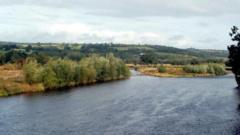
The rain in the hills does not fall; it creeps. It seeps through the specialized seams of waterproof jackets bought during a hurried weekend trip to an outdoor retail park. It dampens the map protected inside its plastic sleeve. It pools in the eyelets of heavy leather boots that were supposed to be broken in by now.
For decades, British teenagers have marched into these hills. They carry oversized packs filled with synthetic sleeping bags, dented aluminum mess tins, and packets of dehydrated pasta. The Duke of Edinburgh’s Award is a rite of passage. It is an institution built on the premise that grit can be engineered through a weekend of navigation errors and damp socks. It promises self-reliance. It offers a shiny certificate.
But sometimes, the hills demand a price that was never written into the handbook.
When an eighteen-year-old does not return from an expedition, the silence that follows is louder than any rescue helicopter. The news reports are always brief. They contain sterile phrases like "sudden medical emergency" or "difficult terrain." The facts are laid bare on a screen, cold and unyielding. A young life ended at the coordinates of an grid reference.
To understand what happens out there, you have to look past the official statements. You have to feel the weight of the pack.
The Anatomy of an Expedition
An outdoor expedition is a sensory overload masked as a void. There are no screens. No notifications. There is only the rhythmic scuff of boots on gravel and the constant, dull ache across the shoulders.
Consider a hypothetical walker named Jack. He is eighteen. He has his whole life neatly mapped out on a spreadsheet somewhere, but right now, his world is exactly four feet wide, bounded by the heather on either side of the trail. His pack weighs thirty-five pounds. It feels like fifty. Every step requires a conscious decision to lift, swing, and plant his heel.
The human body is remarkably resilient until it suddenly is not. In the wilderness, the line between an adventure and a crisis is thin. It is the thickness of a thermal layer. It is the difference between a dry pair of socks and a foot white with immersion foot.
When young people set out into the wild, they are fueled by a specific brand of teenage invincibility. They believe that tiredness is a state of mind. They think that if they just push through the next ridge, the sun will break through the mist.
But nature does not negotiate with enthusiasm.
The British uplands are deceptive. They lack the jagged, terrifying grandeur of the Alps or the Rockies. They look like rolling green waves, soft and ancient. This beauty is a trap. The weather in these valleys can turn from a mild summer afternoon to a freezing torrential downpour in twenty minutes. The temperature drops. The wind picks up, stealing body heat with every gust.
Hypothermia does not arrive with a dramatic flourish. It is a thief that works in silence. First, it steals your coordination. You fumble with the compass. Then, it steals your judgment. You decide to keep walking instead of stopping to put on a jacket. Finally, it steals your warmth, leaving you shivering violently in a ditch while your friends try to read a map with shaking hands.
The Invisible Pressure to Complete the Journey
Why do they keep walking?
The answer lies in the intense social mechanics of youth. When you are eighteen, admitting defeat is harder than climbing a mountain. You are part of a team. Your peers are watching. You have spent months planning the route, measuring out rations of porridge oats, and practicing pitch-and-strike drills in the school playing fields.
There is a powerful, unspoken pressure to finish what you started. The award demands completion. The silver or gold badge requires a specific number of nights spent under nylon, a specific number of kilometers covered on foot.
Imagine the internal dialogue of a teenager feeling unwell on a ridge. The chest tightness is dismissed as indigestion from the freeze-dried chili. The dizziness is blamed on a lack of water. To speak up is to stop the group. To speak up is to admit a vulnerability that feels entirely incompatible with the spirit of exploration.
So, they take another step. And another.
We live in a culture that idolizes endurance. We tell our children that obstacles are meant to be overcome, that pain is just weakness leaving the body. It is a fine sentiment for a gym wall. It is a dangerous philosophy when applied to a remote peat bog five miles from the nearest metalled road.
The reality of remote safety is built on a paradox. The very qualities that the program seeks to develop—determination, stoicism, self-sacrifice—are the exact traits that can prevent a young person from recognizing when they are in mortal danger.
When the System Meets the Soil
The organizations that oversee these youth expeditions have binders full of safety protocols. They utilize satellite trackers. They have designated check-ins at specific valley locations. Leaders wait at checkpoints with thermoses of hot tea and clipboards.
Yet, a gap always remains. It is the space between the supervisor looking through binoculars from a road two miles away and the teenager collapsing in a hidden gully.
Technology offers a false sense of security. A GPS tracker tells a base camp where a group is, but it does not measure the oxygen saturation in a boy's blood. It does not flag the silent congenital heart defect that has chosen this exact moment of physical exertion to manifest. It does not see the black ice on a wet rock.
When a tragedy occurs on an organized expedition, the immediate instinct of the public is to find someone to blame. We question the supervisors. We audit the equipment list. We demand to know why an eighteen-year-old was allowed into the hills during a weather warning.
This reaction stems from a deep, uncomfortable truth we prefer to ignore: risk can be mitigated, but it can never be reduced to zero.
The moment a human being steps off the asphalt and into the mud, they enter an environment where the rules of modern comfort no longer apply. Gravity works perfectly every time. Cold kills without malice.
The Empty Seat at the Table
The true cost of a hill tragedy is not measured in the subsequent inquiry or the revisions made to the safety manual. It is found in a bedroom that remains exactly as it was left on a Friday morning.
A half-unpacked duffel bag sits by the wardrobe. A textbook lies open on a desk, the sticky note still marking the pages for an exam that will never be taken. A mobile phone charger remains plugged into the wall, its cord trailing onto an empty carpet.
The friends who were on that ridge carry a different kind of weight. They return to their schools and universities, but they are altered. They have looked into the abyss of sudden loss before they have even learned how to pay taxes or rent an apartment. They remember the sound of the wind whipping against the survival bag. They remember the frantic, clumsy attempts to perform chest compressions while waiting for a siren that felt hours away.
Consider what happens next: the news cycle moves on. The headline about the tragic death on the moors is replaced by a political scandal or a celebrity divorce. The general public forgets the name of the eighteen-year-old who died trying to find a silver lining in a gray sky.
But in one house, the clock has stopped.
We must change how we talk about adventure. Resilience is not the ability to suffer in silence until you break. True resilience is the wisdom to know when the mountain has won. It is the courage to drop the pack, turn around, and walk down the hill toward safety, even if it means leaving the badge behind.
The hills will always be there, cold, beautiful, and completely indifferent to our survival. The young people we send into them will not be.
A solitary tent remains pitched on a ridge long after the emergency lights have faded, its yellow fabric flapping against the dark, wet stone.