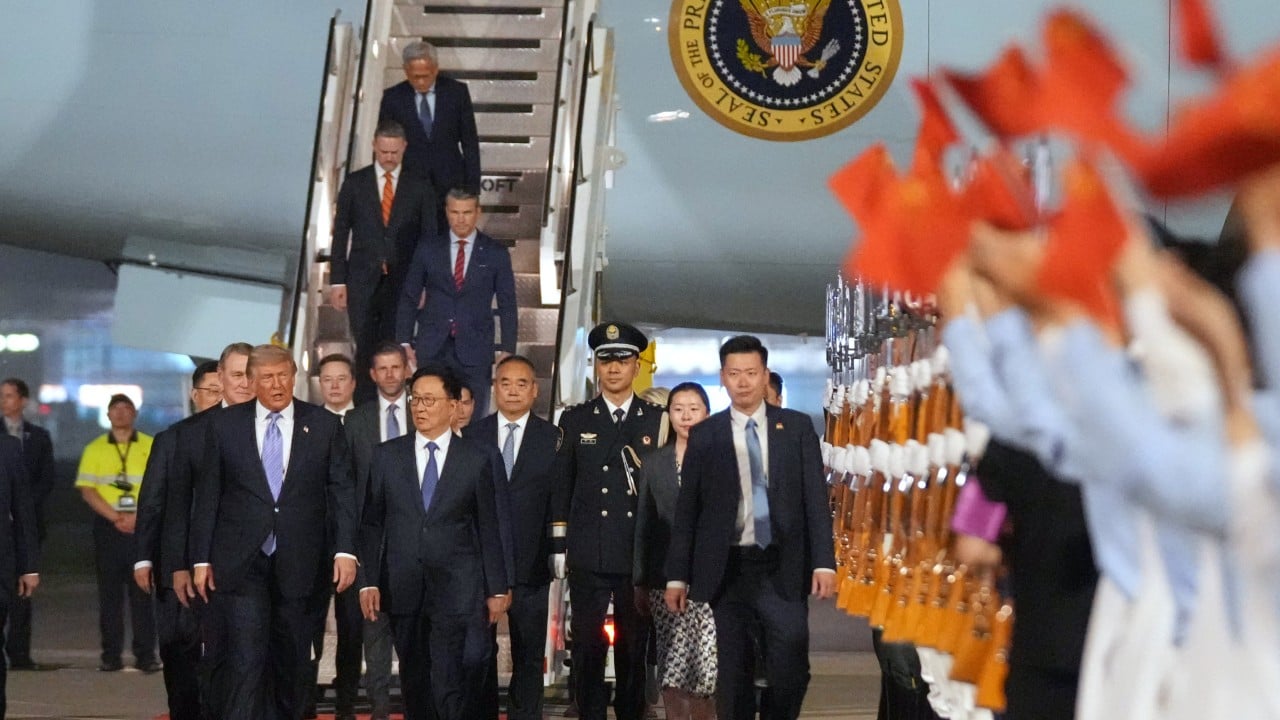
The chattering class in DC and Beijing is making a fundamental mistake about Pete Hegseth’s presence in China. They see a "Secretary of War" standing next to Donald Trump and instinctively reach for the old Rolodex of diplomatic clichés: de-escalation, "military-to-military communication," and "stabilizing the relationship." They think this is about preventing a war over Taiwan or cooling the jets on the Iran conflict.
They are wrong. Hegseth isn’t in Beijing to play diplomat. He’s there to act as the chief auditor for a hostile takeover.
For decades, the Pentagon—now the Department of War—operated under the "lazy consensus" that China was a "pacing challenge" to be managed through endless summits and "hotlines" that the CCP never answers during a real crisis. Hegseth has spent his first year in office eviscerating that mindset. When he walks into a room with PLA generals, he isn't looking for a "shared understanding." He is conducting a cold-blooded assessment of their leverage while signaling that the American military is no longer a global police force for hire.
The Death of the Pacing Challenge
The mainstream media is obsessed with whether this trip will "delay" arms sales to Taiwan. That is small-fry thinking. The real disruption is the 2026 National Defense Strategy, which Hegseth pioneered. It explicitly downgraded China from the "top priority" to the second.
To the old guard, this looks like a retreat. In reality, it’s a masterstroke of strategic focus. By prioritizing the Western Hemisphere—the so-called Donroe Doctrine—Hegseth is telling Beijing that the U.S. is no longer going to exhaust its treasury and blood trying to contain China in its own backyard.
I’ve seen bureaucrats spend trillions on "freedom of navigation" operations that do nothing but burn fuel and build Chinese resolve. Hegseth’s strategy admits a truth no one else will: the U.S. cannot "dominate" the South China Sea without bankrupting itself. Instead of a "holistic" (to use a word I hate) global presence, he is pivoting to a "denial defense." He is telling Xi Jinping: "We don't need to control your waters; we just need to make sure you can't leave them if you cross us."
Using Taiwan as a Trade Chip
The "experts" are worried that Trump and Hegseth might trade away Taiwan’s security for a deal on Iran or trade. They call it "ambivalence." I call it leverage.
The previous administration treated Taiwan like a sacred cow. Hegseth and Trump treat it like an asset on a balance sheet. By authorizing a massive $11 billion weapons package and then showing up in Beijing to "discuss" it, Hegseth is performing a classic squeeze.
- The Scenario: Hegseth sits across from General Dong Jun. He doesn't talk about "human rights" or "democratic values." He talks about the delivery schedule for Harpoon missiles.
- The Ask: China uses its influence to crack the Iranian nuclear program or reopens the Strait of Hormuz.
- The Trade: The Harpoons get "delayed" for six months.
It’s transactional, it’s brutal, and it’s the only language the CCP actually respects. The "nuance" the media misses is that Hegseth isn't there to save Taiwan; he's there to see if China will pay enough for the U.S. to care a little less about it.
The Merchant-Warrior Complex
Look at who else is on that plane: Elon Musk and Jensen Huang. This isn't just a military delegation; it’s a technological blockade.
Hegseth’s presence alongside the titans of AI and space tech is a physical reminder to Beijing that the "Warrior Ethos" he is restoring at the Pentagon is backed by the most ruthless capitalists on earth. While the "Department of War" refocuses on lethality and meritocracy, it is simultaneously tethering its survival to the very people who supply China’s tech cravings.
Hegseth is the enforcer for this "Deal Team Six." His job is to remind the PLA that while the U.S. might be "downgrading" the China threat in its official strategy, it is upgrading its ability to turn off the lights in Beijing if the trade deals go south.
The Risk of the Audit
The downside? This approach strips away the "diplomatic fluff" that often prevents accidental kinetic conflict. By removing the polite fiction of "partnership," you leave only raw power.
If Hegseth’s audit concludes that China won't budge on Iran or the Strait of Hormuz, the pivot back to escalation will be instant. There is no middle ground in the "Peace Through Strength" doctrine. You either make the deal or you prepare for the "decimation" Trump mentioned on the South Lawn.
Hegseth isn't in China to build a bridge. He's there to measure the explosives needed to blow it up if the toll isn't paid. Stop looking for "stability" in the headlines. Look for the price tag.