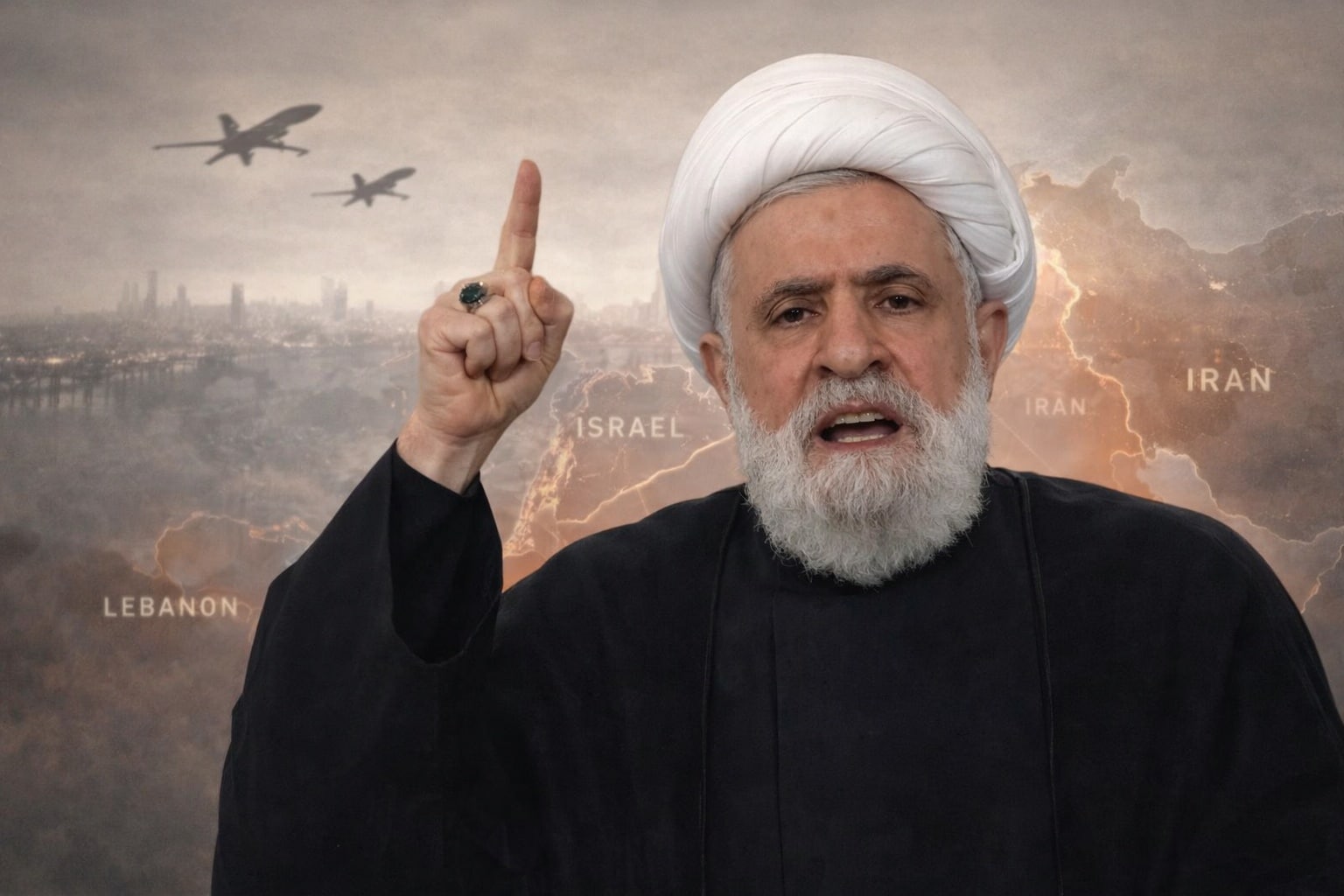
Israel's message to Naim Qassem isn't just a warning. It’s a death warrant with a ticking clock. When Yoav Gallant posted a photo of the newly minted Hezbollah chief with the caption "Temporary appointment. Not for long," he wasn't being dramatic for the sake of social media engagement. He was stating a matter of Israeli military policy that has become increasingly clear over the last two years: if you lead Hezbollah, you're a target.
The reality of 2026 is that the old rules of "deterrence" and "proportionality" have been shredded. We've watched Israel systematically dismantle the leadership tier of the group that once claimed to be the most powerful non-state actor in the world. Hassan Nasrallah is gone. Hashem Safieddine is gone. Now, Naim Qassem sits in the hot seat, and honestly, it’s a seat that looks more like an executioner’s block.
The Short List of a Long War
For decades, Naim Qassem was the "eternal number two." He was the intellectual face of the organization, the guy who wrote the books and did the TV interviews while Nasrallah stayed in the shadows. He didn't have the "martyr" aura or the battlefield credentials of the commanders who came before him. But in October 2024, after Israel flattened an entire city block to get to Nasrallah and then wiped out his successor weeks later, Qassem was the only one left standing.
Israel’s Defense Ministry hasn't been shy about their intentions. They’ve labeled him a "legitimate target" from day one. You have to wonder if Qassem even sleeps in the same building twice. Since the 2024 invasion of Lebanon and the subsequent "ceasefire" that never really felt like peace, Israel has proven it has deep intelligence penetration. They don't just know what Hezbollah is doing; they know where its leaders are eating dinner.
Why the 2024 Ceasefire Failed to Protect Him
A lot of people thought the November 2024 ceasefire would give Hezbollah a chance to breathe. It didn't. While the agreement moved fighters north of the Litani River, Israel kept its finger on the trigger. In fact, since that deal was signed, the IDF has conducted hundreds of "surgical strikes" against what they call "truce violations."
- Intelligence Dominance: Israel’s ability to track high-value targets hasn't waned.
- Political Shifts: The new Lebanese government, under President Joseph Aoun, has been pushing for Hezbollah’s total disarmament.
- Iran’s Own Problems: With the recent strikes on Iran’s leadership in early 2026, the "mother ship" is too busy trying to survive to offer Qassem the iron-clad protection he needs.
If you’re Qassem, you’re looking at a shrinking map and fewer friends. The Lebanese state is tired of being a shield for a group that keeps dragging the country into ruin. Even within the Shia community, the cracks are showing. People are tired of burying their sons for a "resistance" that seems to result only in more destruction.
The Ideologue with No Army
Qassem’s biggest problem isn't just the Israeli drones overhead—it’s that he’s leading a hollowed-out shell. Reports suggest Hezbollah lost nearly half of its fighting force and about 90% of its strategic missile arsenal during the 2024 campaign. You can't replace thirty years of military infrastructure and elite commanders in eighteen months, especially when the Israeli Air Force is still actively bombing your reconstruction sites.
Qassem is a chemist by trade and an ideologue by choice. He’s great at explaining why Hezbollah exists, but he’s not the guy who knows how to win a modern electronic and kinetic war against a superior technological power. He’s trying to play a 1980s guerrilla game in a 2026 AI-driven battlespace. It’s a mismatch of catastrophic proportions.
What Happens When the Clock Hits Zero
The Israeli government under Benjamin Netanyahu and Defense Minister Israel Katz has made it clear: they aren't waiting for Hezbollah to rebuild. They’ve adopted a "mowing the grass" strategy that has turned into "pulling out the roots."
The current tensions following the March 2026 strikes on Iran have only accelerated the timeline. If Hezbollah attempts to retaliate for the losses in Tehran, Israel won't just hit the launchers—they'll go for the head. Qassem knows this. Every time he records a defiant video from an undisclosed basement, he’s essentially auditioning for his own funeral poster.
If you're following the regional security updates, you should be looking for three specific signs:
- Sudden Silence: A lack of public appearances from Qassem often precedes a major IDF operation.
- Lebanese Army Movement: Watch if the LAF begins to aggressively move into Hezbollah strongholds as the group's leadership is further decimated.
- Israeli Cabinet Statements: When the rhetoric shifts from "he is a target" to "he has made a mistake," the strike is usually imminent.
The question isn't whether Israel will try to eliminate Naim Qassem. The question is how many people he takes down with him when they finally find him.
Check the latest IDF Northern Command briefings for updates on tactical shifts in southern Lebanon. If you're tracking the geopolitical fallout, pay close attention to the Lebanese government's disarmament deadlines set for later this year.