The box arrives on a Tuesday. It smells faintly of fresh cardboard and industrial plastic. Inside lies a pair of wireless earbuds, a stainless steel water bottle, and a sleek charging dock, all bought for the price of a single restaurant meal.
Downstairs, the porch is empty. Across the sea, thousands of miles away in an industrial suburb of Guangzhou or a crowded workshop floor in Selangor, something else is happening. A production line hums at two in the morning. An assembler rubs tired eyes, staring at a conveyor belt moving too fast.
We live in an era of unprecedented convenience. With a thumb swipe, global supply chains collapse into the palm of our hand. Distance is erased. Cost is minimized. But nothing in this world is truly free. Someone always pays the difference.
The Distance Between Click and Consequence
To understand modern e-commerce, you have to look at the geometry of desire. Platforms like Shopee, Lazada, and cross-border giants have mastered the science of frictionless buying. They have turned shopping from a deliberate chore into a micro-habit, as casual as checking the weather.
Consider a hypothetical buyer in Kuala Lumpur named Aminah. Aminah wants a new organizer for her kitchen desk. She opens an app. Within four seconds, she is looking at forty identical options, sorted by price. The cheapest one ships directly from a manufacturing hub across the ocean. It costs less than her morning coffee.
Aminah clicks buy.
To her, the transaction is clean. Money leaves her account; an item appears at her doorstep three days later. The supply chain is an invisible magic trick.
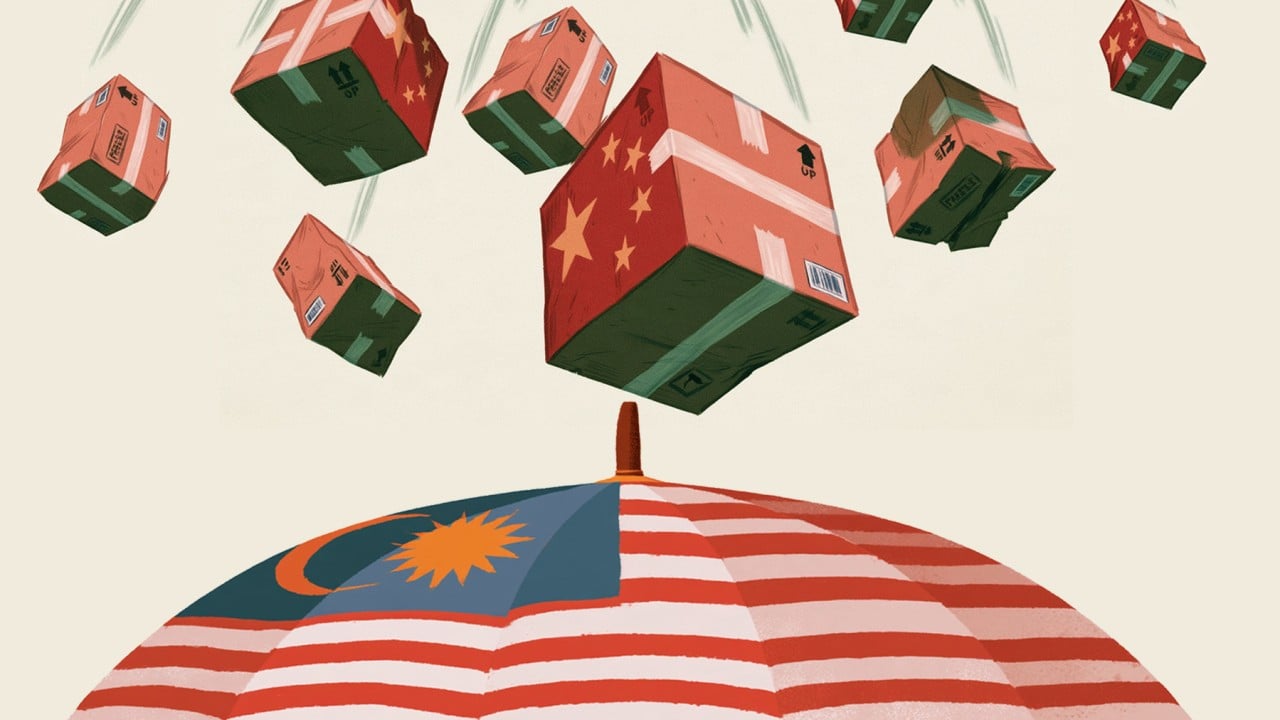
Behind the curtain, the reality is starker. The manufacturer who produced Aminah's desk organizer operates on margins so thin they leave no room for error. When platforms demand lower prices to capture market share, the pressure trickles down. It hits the factory floor like a physical blow.
Factories across Southeast Asia find themselves caught in a brutal squeeze. On one side, local shoppers demand rock-bottom prices to match imported alternatives. On the other side, local producers face rising overhead, expensive raw materials, and the sheer gravity of competing against heavily subsidized mega-factories abroad.
When the Floor Gives Way
Manufacturing is not an abstract economic indicator. It is people standing on concrete for ten hours a day. It is metal presses, dye-stained fingers, and the steady, rhythmic roar of machinery.
When international e-commerce platforms flood regional markets with ultra-cheap goods, local factories struggle to keep their lights on. To survive, they are forced to cut costs wherever possible. Sometimes that means delaying equipment upgrades. Sometimes it means freezing wages. Often, it means letting workers go.
I remember walking through a light industrial park outside a major manufacturing town a few years ago. The air tasted of burnt oil and hot metal. The owner of a small textile and assembly plant, a man named Uncle Tan, pointed to an idle sewing line.
"Look at that," he said, wiping sweat from his forehead with a rag. "Six months ago, those machines ran day and night. Now? The big online platforms sell shirts imported wholesale for less than what it costs me just to buy the raw fabric. How am I supposed to compete?"
He wasn't angry. He was tired. The kind of tired that comes from watching a life’s work get slowly outpaced by a logistical engine he couldn't see, touch, or fight.
This is the invisible stakes of our digital habits. Every cheap gadget, every bargain-bin accessory, every impulse purchase carries an unspoken subsidy. That subsidy is paid by the local ecosystem—the small-scale manufacturers, the neighborhood suppliers, and the workers whose livelihoods depend on a manufacturing sector that is slowly being priced out of existence.
The Mirage of Endless Bargains
Economists call this efficiency. Consumer advocates call it democratization. Both are right, up to a point. Access to affordable goods raises living standards. It lets families stretch their hard-earned ringgit further.
But efficiency has a dark twin: fragility.
When we optimize our entire economy around the single metric of the lowest possible price, we hollow out the middle. We reward scale at the expense of sustainability. We create an environment where local small businesses cannot afford to pay fair wages because their customers have grown accustomed to artificially depressed prices.
Think about what happens when the local factories finally close.
The buildings don't vanish overnight. The signs come down. The gates lock. The skilled workers—people who know how to build things, how to repair machines, how to manage logistics on the ground—retrain for delivery jobs or retail work. A community loses its productive backbone.
And once a manufacturing base is dismantled, it is remarkably difficult to rebuild. You cannot simply restart a factory with an app update. You need institutional knowledge, supply networks, and capital that has long since fled to more profitable shores.
The Weight of Our Choices
We are not villains for wanting a good deal. Human nature gravitates toward the path of least resistance and lowest cost. If a product is good and cheap, we buy it. We are wired to look after our immediate wallets.
Yet, awareness is creeping in. Shoppers are beginning to realize that the true cost of an item isn't just printed on the receipt. It is written in the environmental toll of trans-oceanic shipping containers, the packaging waste piling up in our landfills, and the quiet erosion of local industries.
Change will not come from guilt. Shaming people into buying expensive local goods does not work when household budgets are tight.
Instead, the answer lies in transparency and value. Local producers are learning to pivot toward what mass-market imports cannot easily replicate: craftsmanship, durability, customization, and accountability. They are telling their stories, showing their faces, and reminding consumers that buying local is an investment in community resilience.
The next time you open a shopping app, pause for a second. Look at the price tag. Then, look past it. Ask yourself what forces aligned to make that item so impossibly cheap.
The box will still arrive on Tuesday. The convenience will still be real. But when you open it, you might just see the world a little more clearly.