Chandeliers hum. Espresso machines hiss behind velvet curtains in Geneva, Davos, and Brussels, where suits tailored from imported wool sit around tables wide enough to land a small plane. Outside those glass walls, rain hits asphalt in towns nobody puts on a summit badge.
Watch.
That is the fault line Marco Rubio has walked straight into with his blunt challenge to what critics call the global elite—a sprawling network of supranational institutions, unelected regulators, boardroom gatekeepers, and diplomatic cliques that so often speak in the calm, smooth cadence of inevitability.
I have stood at the edges of enough press briefings and policy conferences to know the smell of stale coffee in windowless rooms where decisions get made for millions of people who will never know the names of the drafters. And honestly, it is easy to get dizzy watching grown adults argue over whether national borders are a quaint habit or a moral failure. Sometimes I look at a 400-page treaty drafted by people who have never had to stretch a paycheck to the last Tuesday of the month, and I wonder who gave them the key to the front door.
To make sense of the friction—and why Rubio's broadside hits a nerve far beyond Washington—we have to look at what happens when governance drifts away from the street corner and settles into the stratosphere.
Who Gets to Write the Rules?
Picture a hypothetical scenario. Imagine a small foundry owner in Ohio or a textile workshop manager in Gujarat—let's call her Kavita—trying to keep twelve workers paid while supply chains whip back and forth like a loose garden hose. Kavita does not wake up thinking about global governance theory. She wakes up to electricity tariffs, shipping delays, bank interest rates, and a compliance form sixty pages long written in English legalisms about carbon footprints and cross-border reporting.
Who signed off on that form? Usually not the person paying Kavita's workers.
This is the core tension at the heart of Rubio's clash with the global elite. From his vantage point—and the vantage point of millions of voters who feel hollow-eyed after decades of offshoring, inflation spikes, and distant rule-making—a class of cosmopolitan decision-makers has begun acting as though it owns a birthright to manage everyone else's life. They call it multilateralism. They call it global standards. They call it progress.
Critics call it entitlement dressed up in a lanyard.
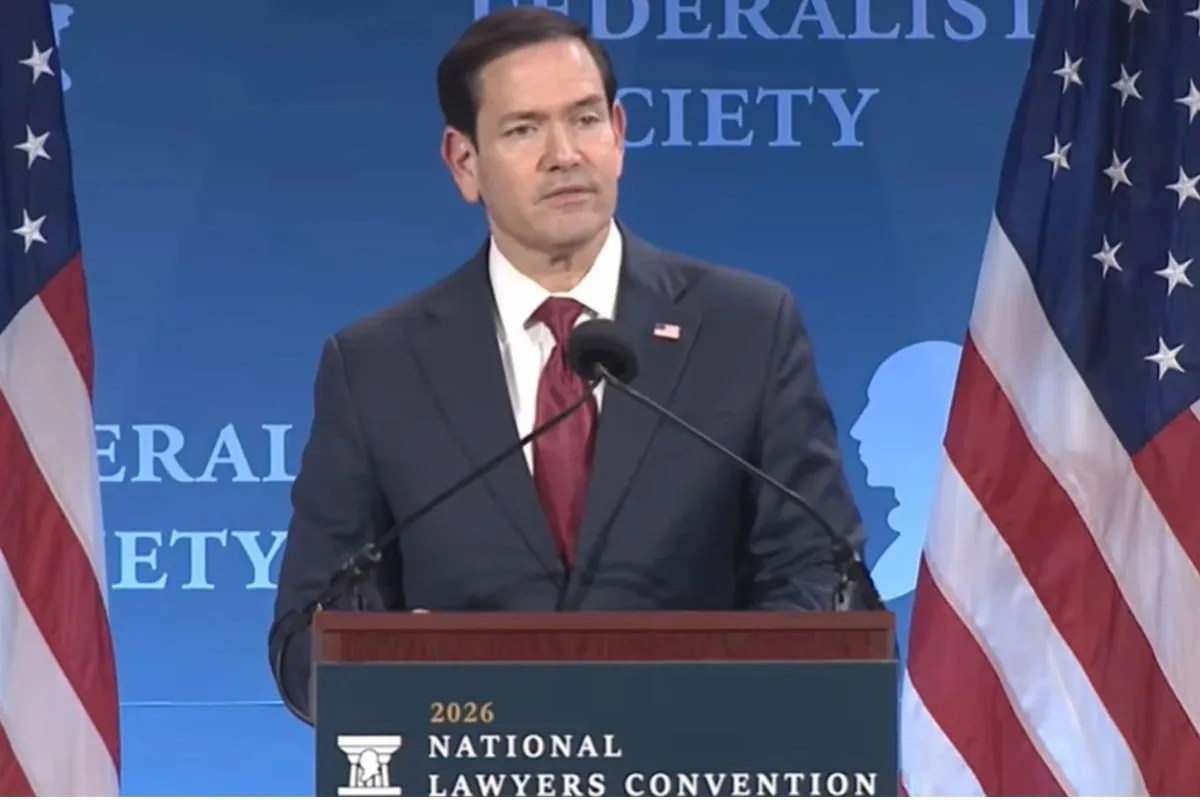
Consider what happens next: a politician steps up to a microphone and says, flatly, that no distant council or international body has a divine right to override a nation's self-rule or lecture working families about their way of life. Suddenly, polite dinner-party consensus shatters. Applause erupts in one room; gasps echo in another.
Let's be fair and clear about what is actually being argued here. Diplomacy, trade agreements, and international cooperation are not inherently villains. When countries coordinate on aviation safety, maritime rescue, or infectious disease tracking, ordinary people benefit. A metaphor helps clarify the difference between helpful coordination and overreach: think of international standards like traffic lights at a busy crossroads. Traffic lights keep cars from crashing into one another. They do not get to tell you where you are allowed to drive, what kind of car you must buy, or whether you are permitted to visit your own sister.
The grievance driving Rubio's pushback is that the traffic-light operators started trying to steer the car.
The Architecture of Distance
Why does this feel so personal to people who have never set foot in a diplomatic hall?
Distance.
When power sits close to home, you can yell at it. You can show up at a town hall, corner a council member in the grocery aisle, or vote out the person who paved your street with cheap tar that crumbles by winter. Accountability has a face. It has a zip code.
When power moves up into transnational bodies, advisory panels, NGO coalitions, and insulated policy circles, accountability grows legs and walks away. Decisions are framed as "technical necessities" or "global commitments," which is a remarkably effective way to make political choices look like laws of physics. Nobody votes against the laws of physics. You just endure them.
I have watched smart, well-meaning analysts explain why a factory closure or a sudden regulatory mandate is "necessary for long-term alignment," while a machinist with thirty years on the floor asks how he is supposed to pay his mortgage next month. Both people are speaking a language. They just aren't speaking the same one.
And here is where I admit a real uncertainty: I do not pretend this entire conflict is simple, or that tearing down every international arrangement automatically puts food on a kitchen table. Geopolitics is messy. Markets retaliate. Alliances shift overnight. Anyone who promises a painless divorce from global entanglement is selling a fairy tale.
Yet pretending there is no democratic deficit—no growing gap between the people who set global norms and the citizens who absorb their shockwaves—is just as blind.
What People Actually Ask When the Noise Clears
When headlines scream that a major political figure has declared war on the global elite, people naturally start asking practical questions beneath the theater.
First, they ask whether this is just tough talk for domestic applause. In politics, rhetoric is cheap until it meets a treaty desk, a customs officer, or a bond market. A speech can rally a crowd on a Tuesday night; changing trade rules, diplomatic posture, or institutional leverage takes months of grinding negotiation and real economic trade-offs. Whether Rubio's confrontation reshapes actual policy or becomes another memorable slogan depends on what happens inside agencies, embassies, and legislative rooms after the cameras turn off.
Second, people ask what "global elite" even means in plain English. Too often it gets tossed around like a fog machine that hides everything in gray smoke. In concrete terms, critics point to entrenched diplomatic establishments, multinational corporate boards insulated from local wage pressures, international bodies that claim moral authority without electoral accountability, and cultural gatekeepers who treat skepticism of globalist orthodoxy as backwardness.
Third, people ask a sharper, slightly uncomfortable question: if you push back against one set of powerful insiders, who replaces them?
National capitals have their own elites. Lobbyists still buy lunch. Donors still write checks. Bureaucrats still draft memos. Swapping a global boardroom for a purely domestic power broker does not magically cure corruption or favoritism; it simply changes the address of the gatekeeper. That is a tension every populist or anti-establishment movement has to reckon with if it wants lasting trust rather than temporary anger.
The Oldest Story in Politics
History keeps replaying this script with different costumes.
In the late eighteenth century, subjects in distant colonies bristled at decrees coming across an ocean from parliaments where they had no voice. In the twentieth century, industrial towns watched decisions made in capital cities reshape their livelihoods while local mayors stood by helplessly. Whenever a governing class convinces itself that its superior education, broader perspective, or noble intentions entitle it to rule without friction, pushback eventually arrives.
Sometimes that pushback is constructive, forcing bloated institutions to listen, streamline, and respect national consent. Sometimes it turns reckless and breaks things that were worth keeping.
For another hypothetical character, picture Mateo, a logistics coordinator watching freight routes shift and tariffs rattle every few weeks. To Mateo, grand ideological speeches feel like weather reports from another planet. What he cares about is predictability, fairness, and whether the rules treat his country's workers like equals rather than pawns.
When leaders like Rubio frame global power struggles around sovereignty, national interest, and skepticism toward entrenched international elites, they are tapping directly into that desire for agency. They are saying: Your voice still counts. Your border still means something. Nobody gets to treat your community as a footnote in someone else's grand design.
For people who have felt talked down to for twenty years, those words land like cold water on a sunburn.
The Real Stakes Under the Spotlight
Strip away the cable-news drama and look at what is really being contested.
It is a fight over legitimacy. Who has the right to set the terms of trade, migration, speech norms, energy transitions, and security guarantees? Elected governments answerable to voters at the ballot box, or sprawling networks of experts, institutions, and capital that operate across borders with far less direct blowback?
If international institutions want durable support, they have to earn it through results that ordinary families can see and feel—not through lectures or moral superiority. And if nationalist or anti-establishment leaders want durable trust, they have to build real, workable alternatives rather than trading one set of unchecked privileges for another.
Between those two poles lives the rest of us: trying to work, raise kids, pay bills, and figure out which voices are speaking from conviction and which ones are just reading a script.
Listen closely the next time a grand speech promises to save the world or defy the elites. Ask who holds the gavel when the applause fades.
A locked door in a marble hall still keeps out the rain—until someone decides to kick it in.


