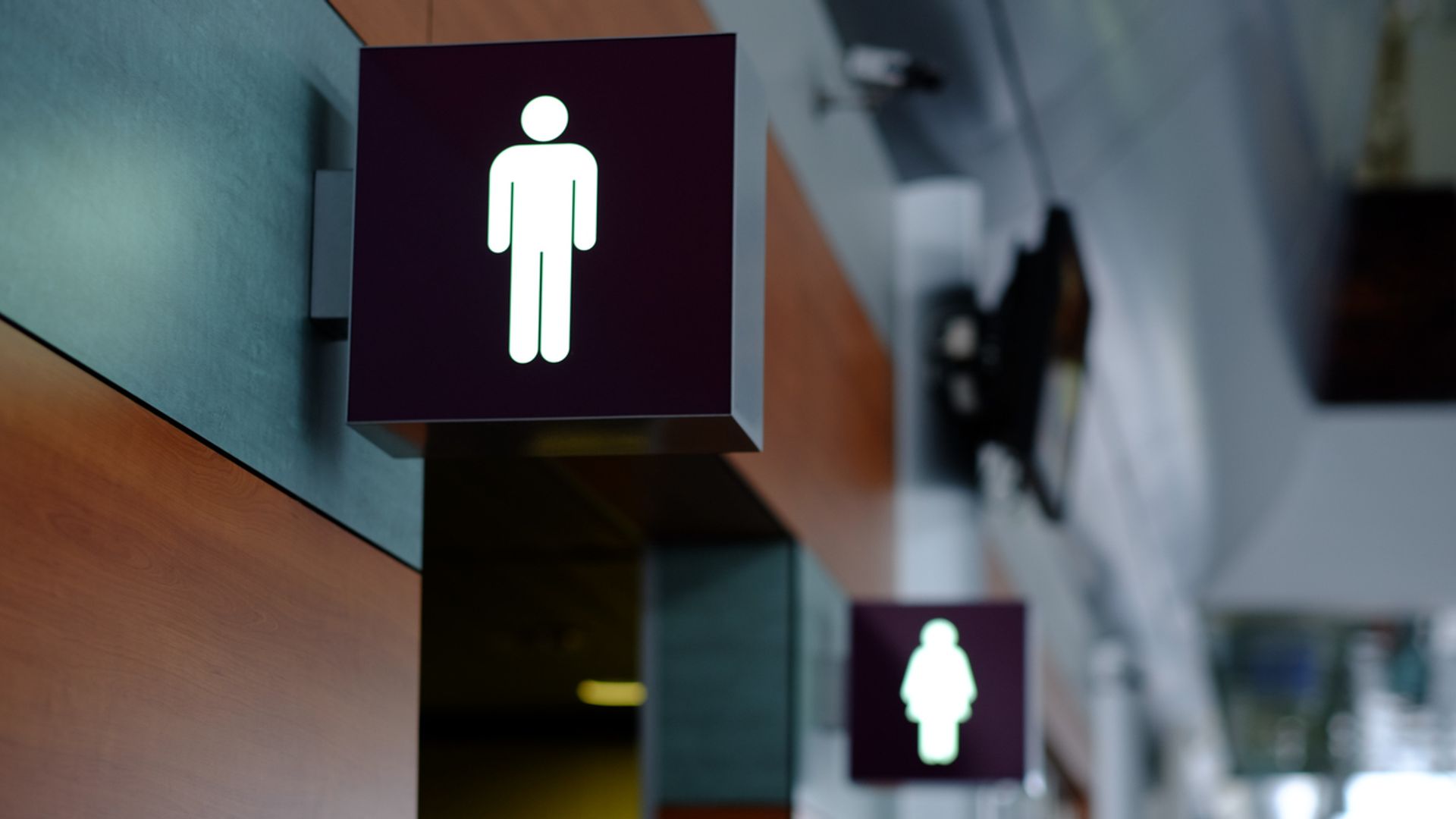
The official guidance governing single-sex toilets, changing rooms, and hospital wards across Britain officially took effect, forcing businesses and public institutions to navigate an expensive compliance landscape based entirely on biological sex. Nearly a year and a half after the Supreme Court clarified the statutory definition under the Equality Act, the Equality and Human Rights Commission code has transitioned from contested drafts into active reality. Service providers from corner cafes to massive municipal leisure networks find themselves caught between legal exposure, public friction, and an immense physical infrastructure bill.
This code does not technically write new legislation, yet its arrival carries the weight of a legal anchor. When organizations face discrimination claims or judicial reviews, courts will look directly to these pages to determine whether a provider acted reasonably. For years, organizational leaders hid behind ambiguity, citing a lack of official direction to maintain status-quo policies. That defensive shelter has vanished. Building on this topic, you can find more in: California's Billionaire Tax Illusion Is Built on Fiscal Smoke and Mirrors.
The Architectural Reality of Compliance
Millions of pounds will change hands over the coming months, and very little of it will go toward anything resembling productivity. Initial impact estimates suggest that nearly 13,000 toilets and over 5,000 changing rooms across hospitals, leisure complexes, and entertainment venues require physical redesigns.
Consider a hypothetical fitness center built during the architectural boom of the early 2010s, an era when open-plan communal washrooms and corridor-style locker spaces were heavily favored for spatial efficiency. Under the updated mandate, maintaining compliance without violating the privacy rights of biological sexes means ripping out drywall, re-routing plumbing lines, and installing individual lockable stalls. Analysts at The Washington Post have provided expertise on this trend.
- Plumbers and spatial consultants are experiencing an unprecedented surge in demand.
- Small businesses operating on razor-thin margins face a stark choice between expensive renovations or continuous legal vulnerability.
- Public sector trusts, already struggling with operational deficits, must divert funds from frontline services to bathroom reconstruction.
The state insists that many establishments already align with these standards. Local venue operators tell a vastly different story. For them, compliance demands structural carpentry, and carpentry requires capital they simply do not possess.
The Burden on the Frontline
Passing a code of practice in Parliament is clean and theoretical. Enforcing it in a dimly lit municipal swimming pool at eight o'clock on a Tuesday morning is messy, uncomfortable, and entirely dependent on underpaid staff.
The guidance places an immense interpretive load on front-of-house workers. Receptionists, gym managers, and hospital administrators are now de facto arbiters of biological verification. They receive no specialized training for this role, yet they bear personal liability if disputes escalate into harassment claims or tribunal hearings.
When a patron challenges another person's presence in a changing room, the establishment must prove its actions met a strict standard of proportionality. Was the exclusion justified? Did the provider offer a viable alternative? These are questions that occupy high-priced barristers, not teenage leisure center attendants earning minimum wage. The disconnect between bureaucratic theory and operational reality guarantees a steady stream of conflicts in public accommodations.
The Looming Threat of Mutual Litigiousness
Advocacy groups on all sides are sharpening their legal instruments. Gender-critical campaigners view the enforcement date as a long-overdue restoration of boundaries, yet they remain vigilant, promising swift court challenges against any public body that attempts a compromise. Conversely, civil liberties organizations argue that the framework creates an exclusionary environment that pushes transgender individuals entirely out of public life.
This dynamic transforms ordinary community spaces into potential flashpoints for ideological warfare. Small associations, such as local sports clubs with more than twenty-five members, now fall squarely within the scope of the regulations. Volunteers running weekend cricket leagues are expected to master nuanced interpretations of equality law or risk facing the financial ruin of a discrimination suit.
The government anticipated friction, openly acknowledging that the courts will ultimately decide the outer limits of the policy. Yet leaving the resolution of a deeply emotional societal division to the slow, punishing machinery of litigation ensures that ordinary service providers will pay the price of admission.
Municipalities are posting new signage while quietly praying for quiet compliance, knowing full well that the first high-profile tribunal loss will trigger a cascade of reactive spending across the entire country.