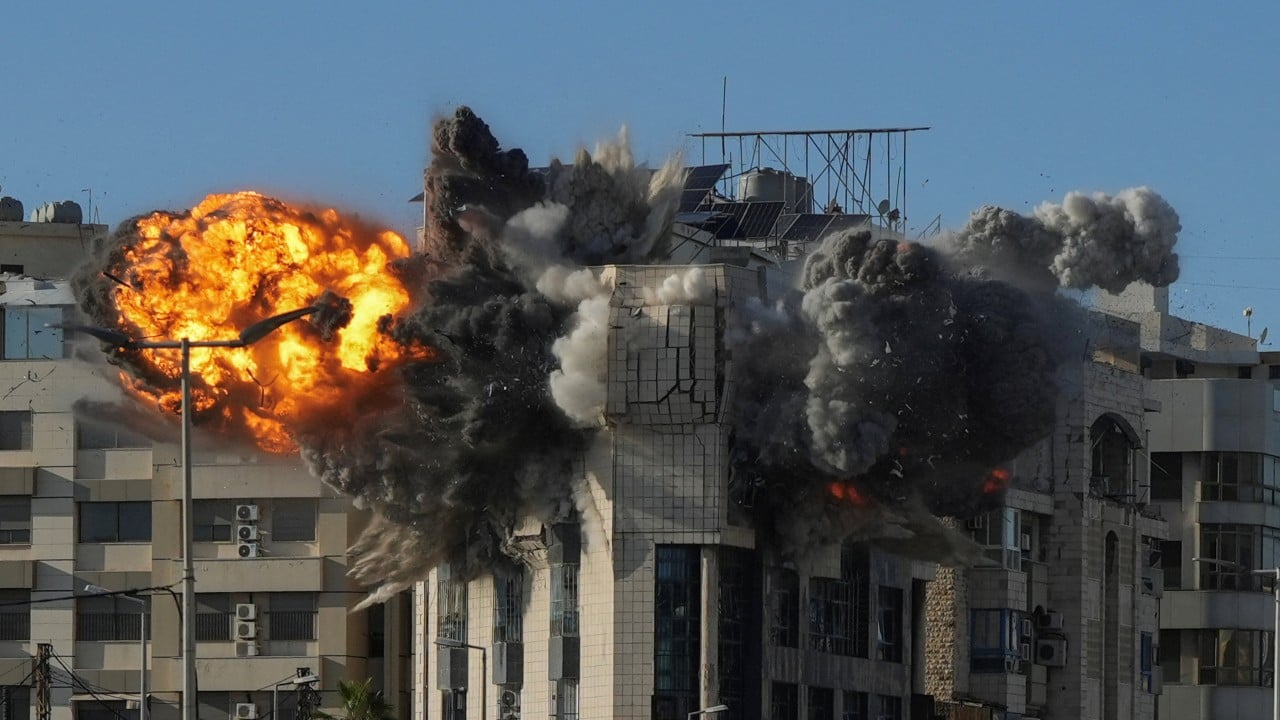
The Israeli security cabinet is gathering to weigh a proposal that could pause the escalating conflict with Hezbollah, but the diplomatic chatter masks a much grittier reality on the ground. This is not a simple peace deal. It is a strategic recalculation. While the headlines suggest a breakthrough, the actual terms being debated involve a high-risk transition from active combat to a supervised buffer zone, a move that carries the weight of decades of failed border policies. If the cabinet greenlights the proposal, the immediate goal is a 60-day window to dismantle Hezbollah’s infrastructure near the Blue Line, yet the fundamental friction points remain entirely unresolved.
The push for a cessation of hostilities comes at a moment when the Israel Defense Forces (IDF) have achieved significant tactical gains but face the diminishing returns of a prolonged ground campaign. Military intelligence suggests that while the leadership of Hezbollah has been decapitated, the group's rank-and-file remains embedded in the southern Lebanese topography. A ceasefire, in this context, serves as a logistical reset rather than a permanent resolution.
The Washington Pressure Cooker
The timing of these deliberations is no accident. The Biden administration, operating in its final stretch, is desperate for a foreign policy win to stabilize a region that has been on the brink of total collapse for over a year. Amos Hochstein, the US envoy, has been shuttling between Beirut and Jerusalem with a draft that leans heavily on the enforcement of UN Resolution 1701—a document that has been largely ignored since 2006.
The White House is dangling a series of security guarantees to Israel, including a side-letter that supposedly acknowledges Israel's right to act if Hezbollah violates the terms. This is the crux of the cabinet's debate. Hardliners within Prime Minister Benjamin Netanyahu’s coalition view any deal without a "freedom of action" clause as a strategic surrender. They argue that relying on the Lebanese Armed Forces (LAF) or UNIFIL to police the south is a proven recipe for disaster. History backs them up. Since 2006, Hezbollah has turned southern Lebanon into a fortress while international monitors watched from their outposts.
The South Litani Red Line
For the residents of northern Israel, the metric of success is binary: can they go home without the threat of an anti-tank missile hitting their living room?
The proposed deal mandates that Hezbollah move its heavy weaponry and personnel north of the Litani River, roughly 18 miles from the border. In theory, this removes the immediate threat of a Radwan Force ground invasion. In practice, the logistics of such a withdrawal are nightmarish. Hezbollah is not a uniformed army that simply marches away; it is woven into the social and physical fabric of the Shia villages in the south.
The Enforcement Gap
Who actually moves the needle? The current plan relies on a beefed-up presence of the Lebanese Army. However, the LAF is an institution plagued by the same economic rot that has destroyed the rest of Lebanon. It is also an army that contains many soldiers who are sympathetic to, or intimidated by, Hezbollah.
- Financial Instability: The Lebanese state cannot pay its soldiers a living wage, making them susceptible to influence.
- Operational Constraints: Without heavy armor or air support, the LAF cannot realistically evict Hezbollah from its underground tunnels.
- Political Gridlock: Lebanon still lacks a president, leaving the military without a clear civilian mandate to engage in what would essentially be a civil war against Hezbollah.
Tactical Necessity vs. Strategic Victory
Inside the Israeli security establishment, there is a quiet acknowledgement that the military may have reached a point of "peak leverage." They have destroyed the majority of Hezbollah's long-range missile stock and cleared many of the initial launch sites. To go further would require a much deeper push into Lebanese territory, involving the occupation of major cities and a significant increase in Israeli casualties.
A ceasefire allows the IDF to withdraw from the "mud" of Lebanon while maintaining the threat of massive retaliation if the status quo is challenged. It also frees up resources that may be needed if the shadow war with Iran breaks into the open. The cabinet isn't just looking at the northern border; they are looking at the regional chessboard.
The Internal Israeli Rift
Netanyahu is walking a razor's edge. On one side, he has the families of the displaced and the military leadership who see the benefits of a pause. On the other, he has his right-wing flank, led by figures like Itamar Ben-Gvir and Bezalel Smotrich, who have signaled that any deal that leaves Hezbollah with a shred of dignity is a betrayal.
These internal politics dictate the rhetoric. You will hear the term "enforcement" used more than "peace." The Israeli public is skeptical. They have seen this movie before, and it ended with 150,000 rockets pointed at their population centers. Any agreement reached this week will be scrutinized not for its elegant language, but for the specific, violent consequences outlined for the first person who breaks it.
The Iranian Factor
Behind Hezbollah sits Tehran. For Iran, Hezbollah is its most valuable "insurance policy" against a strike on its nuclear facilities. While the proxy has been badly bruised, Iran is not ready to see it completely dismantled. Tehran’s influence over the negotiations is subtle but absolute. If they believe a 60-day pause allows them to re-arm and re-supply their primary asset, they will greenlight the deal through their intermediaries in the Lebanese government.
This creates a paradox for Israel. A ceasefire might bring temporary quiet, but it also provides the space for the adversary to evolve. The weapons pipelines through Syria have been bombed repeatedly, but they are never fully closed. A pause in fighting often becomes a race to see who can reload faster.
The Realities of Modern Diplomacy
Diplomacy in the Middle East is rarely about solving a problem; it is about managing the misery until the next flare-up. The document being discussed by the security cabinet is a patchwork of compromises. It attempts to balance Lebanese sovereignty with Israeli security needs, two concepts that have been in direct opposition for seventy years.
The most significant change in this round of talks is the involvement of France and the United States in a monitoring capacity. There is talk of a five-nation oversight committee. This is an admission that UNIFIL has failed. However, the question of what these monitors do when they see a truck full of Grad rockets moving south remains unanswered. If they only have the power to write reports, the deal is dead on arrival.
The Civilian Toll and the Return
The human cost of this conflict has been immense on both sides. Over 60,000 Israelis remain internal refugees. Hundreds of thousands of Lebanese have fled their homes in the south. For a ceasefire to hold, these people must return. But return requires trust, and trust is the one commodity that is entirely absent from the negotiation table.
Israeli commanders know that if Hezbollah fighters return to the border under the guise of "returning civilians," the security cabinet will face an uprising from its own citizens. The IDF has spent the last month leveling the structures Hezbollah used for cover. The plan now is to keep those areas as "no-go" zones, enforced by fire. This isn't a peace treaty; it's a new, more lethal form of border management.
The decision facing the security cabinet is not between war and peace. It is a choice between continuing a high-intensity conflict with no clear exit strategy or accepting a fragile, monitored pause that buys time but settles nothing. The "senior official" leaking these details is preparing the public for a compromise that will satisfy no one but may be the only way to prevent a total regional conflagration.
Watch the language used after the meeting. If the focus is on "unrestricted military response" rather than "cooperation," you will know exactly how much faith the cabinet has in the piece of paper they are about to sign. The survival of this deal depends entirely on the credible threat of its immediate destruction.