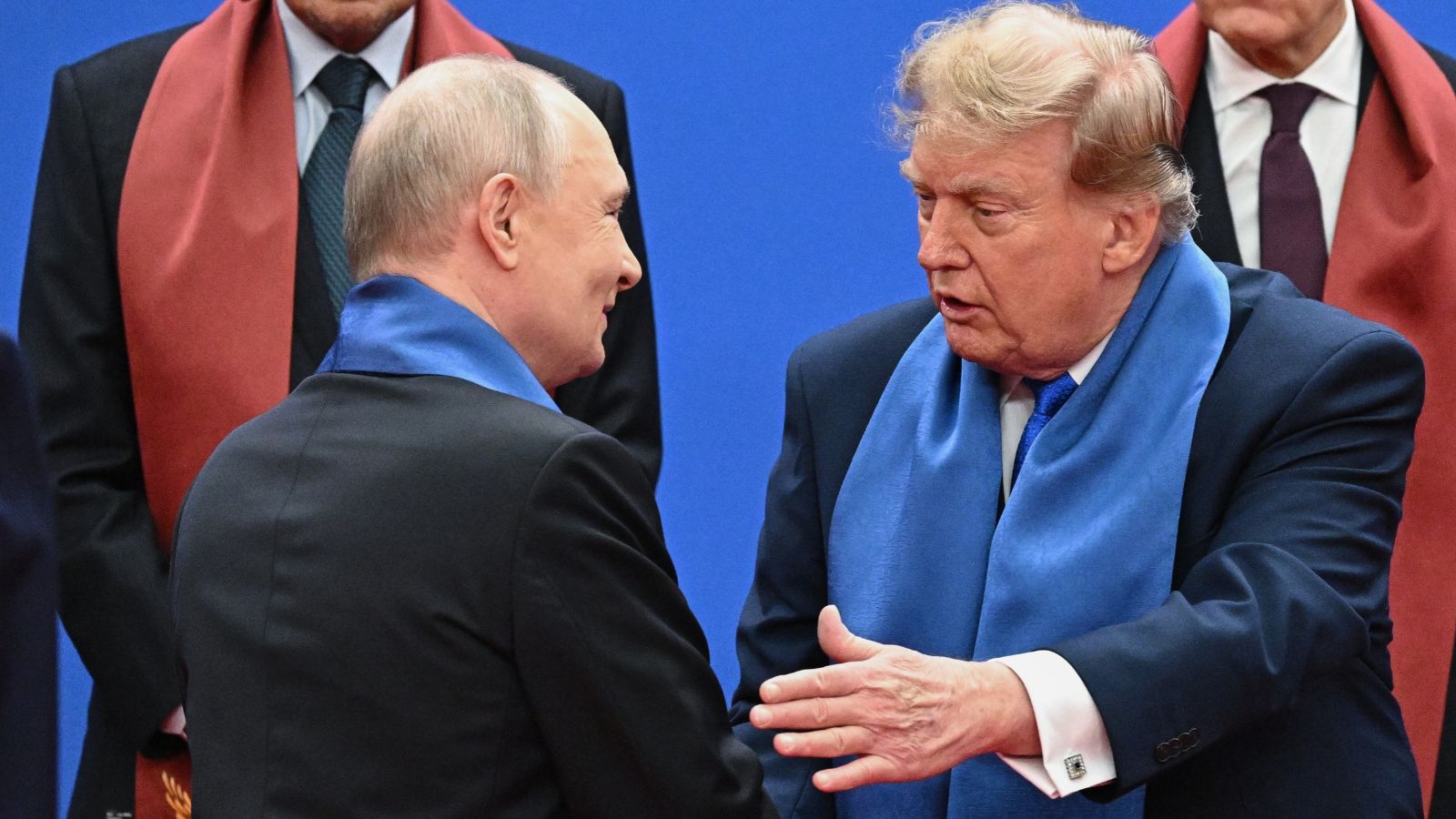
Standing beside Chinese President Xi Jinping and Russian President Vladimir Putin in Shenzhen on November 19, 2026, President Donald Trump offered a blunt assessment of nuclear disarmament. "Once you have the nuclear weapons, it's very hard to not have them," Trump told reporters and his counterparts during the trilateral APEC summit. "It's very hard to give them up as a leader of a country."
He's not wrong about the political friction. Giving up the ultimate deterrent feels like unilateral suicide to most heads of state. Yet Trump's framing leaves out an inconvenient historical reality: nations have surrendered nuclear arsenals before, and the reasons why—along with what happened to them afterward—explain everything about why today's nuclear standoffs in Pyongyang, Tehran, and Moscow are so stuck.
If you want to understand whether global nuclear reductions can work after the Shenzhen summit's "Declaration toward Peace", you can't just look at diplomatic handshakes. You have to look at the receipts from the four countries that actually dismantled their bombs—and the superpowers that negotiated massive cuts during the Cold War.
The Four Countries That Voluntarily Surrendered Nuclear Weapons
Only four nations in human history have possessed actual nuclear warheads on their soil and voluntarily given them all up. Not theoretical programs. Not centrifuges in a basement. Real, deployable weapons.
Each case followed a completely different political script, and honestly, the long-term outcomes are a mixed bag that cuts both ways in modern foreign policy debates.
South Africa Built Six Bombs and Scrapped Them All
In the late 1970s and 1980s, South Africa's apartheid government secretly built six gun-type nuclear weapons and had a seventh under construction. Pretoria developed them to deter Soviet-backed forces in southern Africa.
Then the Cold War ended, and domestic apartheid rule began collapsing. By 1989, President F.W. de Klerk realized two things. First, the Soviet threat had vanished. Second, his government wasn't going to hand nuclear weapons over to a successor government led by the African National Congress.
South Africa dismantled every warhead before transitioning to multiracial democracy in 1994, inviting International Atomic Energy Agency (IAEA) inspectors to verify the destruction. It remains the only nation to build an indigenous nuclear arsenal from scratch and completely erase it. The lesson here is specific: disarmament happened because the regime's core threat disappeared and internal political survival demanded it.
Ukraine, Kazakhstan, and Belarus Inherited Soviet Arsenals
When the Soviet Union dissolved in December 1991, thousands of tactical and strategic nuclear warheads were suddenly sitting inside three newly independent countries: Ukraine, Kazakhstan, and Belarus. Overnight, Ukraine held the world's third-largest nuclear stockpile—roughly 1,900 strategic warheads—more than Britain, France, and China combined.
Washington and Moscow both panicked. Nobody wanted four nuclear-armed states emerging from the Soviet wreckage. Through intense diplomatic pressure, economic aid under the Nunn-Lugar Cooperative Threat Reduction program, and security assurances, all three nations agreed to transfer their warheads to Russia for dismantlement and join the Nuclear Non-Proliferation Treaty (NPT) as non-nuclear states.
In December 1994, the United States, the United Kingdom, and Russia signed the Budapest Memorandum, pledging to respect Ukraine's independence and existing borders in exchange for its nuclear surrender.
That agreement is now the single biggest obstacle to modern nonproliferation. Russia violated the Budapest Memorandum when it annexed Crimea in 2014 and launched a full-scale invasion of Ukraine in 2022. Whenever Western diplomats tell leaders in Pyongyang or Tehran that security guarantees can replace nuclear weapons, those leaders point straight at Kyiv.
The Programs Stopped Before Crossing the Finish Line
Beyond the four states that gave up assembled warheads, several other countries abandoned active weapons programs before building a deployable bomb. Analysts often lump these together, though the mechanics were wildly different.
- Libya (2003): Muammar Gaddafi spent decades buying black-market nuclear components from A.Q. Khan's proliferation network. In December 2003, facing crippling sanctions and watching the U.S. invasion of Iraq unfold next door, Gaddafi surrendered his centrifuges and chemical stockpiles to American and British inspectors. Eight years later, in 2011, a NATO-backed intervention helped topple his regime, and Gaddafi was killed by rebel forces. North Korean state media explicitly cited Gaddafi's fate as proof that disarming invites regime change.
- Brazil and Argentina (1990s): Both nations ran rival military-led nuclear programs during the 1970s and 1980s. Once both countries returned to civilian democratic rule, their leaders realized a regional arms race was draining their economies for zero strategic gain. They created a bilateral inspection agency (ABACC) in 1991 and joined the NPT, proving that mutual transparency can stop proliferation without outside military coercion.
- Taiwan and South Korea (1970s–1980s): Both U.S. allies pursued secret nuclear weapons programs when they doubted Washington's commitment to defend them. In both cases, the United States used its security umbrella and diplomatic leverage to shut the programs down quietly before a device was tested.
Superpowers Have Slashed Arsenals Before Too
Trump's remarks in Shenzhen weren't just aimed at smaller states—he was sitting across from Xi and Putin while discussing the world's three largest nuclear stockpiles. The U.S. and Russia still hold roughly 90 percent of all nuclear warheads on Earth, with China rapidly expanding its force toward a projected 1,000 warheads by 2030.
If Trump meant that major powers can't easily cut their arsenals, American diplomatic history says otherwise. Previous U.S. presidents and Soviet/Russian leaders negotiated steep, verified reductions when strategic stability demanded it:
- The Intermediate-Range Nuclear Forces (INF) Treaty (1987): President Ronald Reagan and Soviet General Secretary Mikhail Gorbachev didn't just cap weapons—they eliminated an entire class of missiles. Both sides destroyed 2,692 ground-launched ballistic and cruise missiles under strict on-site verification.
- Strategic Arms Reduction Treaties (START I and New START): Signed between 1991 and 2010, these pacts cut deployed strategic warheads from Cold War highs of over 10,000 per side down to 1,550 deployed warheads each.
- Unilateral Tactical Withdrawals (1991): President George H.W. Bush ordered the unilateral removal of roughly 2,400 U.S. tactical nuclear weapons deployed overseas—including about 100 warheads stationed in South Korea—and Gorbachev reciprocated days later.
Those treaties didn't require trust. They relied on intrusive satellite monitoring, data exchanges, and short-notice on-site inspections. Unfortunately, much of that architecture has eroded. The U.S. withdrew from the INF Treaty in 2019 over Russian violations, Russia suspended participation in New START in 2023, and New START's formal expiration in February 2026 left the world's top nuclear powers without legally binding limits for the first time in over half a century.
Why Modern Nuclear Diplomacy Is So Stuck
When Trump told Xi and Putin that giving up thousands of weapons is hard while smaller nations hold nuclear arms, he highlighted a genuine structural shift. Cold War arms control was a two-player chess match between Washington and Moscow. Today, it's a three-way standoff involving Beijing, complicated by regional nuclear states like North Korea, India, Pakistan, and Israel, plus ongoing conflict in Iran.
Several hard realities explain why countries cling to nuclear arsenals today:
- Credibility of Security Guarantees: Smaller nations watch how major powers treat non-nuclear neighbors. After Russia's invasion of Ukraine and the 2011 NATO intervention in Libya, promises of protection carry far less weight than physical deterrence.
- Asymmetric Deterrence: Leaders in weaker states view nuclear weapons as the only equalizer against superior conventional militaries. You can't outspend the Pentagon in tanks or fighter jets, so you build a warhead instead.
- Verification Deadlocks: Disarmament fails when sides disagree on sequencing. Washington typically demands complete, verifiable dismantlement before lifting sanctions, while adversaries demand sanctions relief and peace treaties up front before revealing hidden facilities. That exact friction derailed Trump's 2019 Hanoi summit with North Korean leader Kim Jong Un.
- No First Use Standoffs: At the November 2026 Shenzhen summit, the U.S., Russia, and China reaffirmed the Reagan-Gorbachev principle that "a nuclear war cannot be won and must never be fought." Yet both Washington and Moscow continue to reject a formal "No First Use" pledge, keeping the option of nuclear escalation on the table even in conventional conflicts.
How to Evaluate Nuclear Talks Going Forward
When leaders issue joint declarations about reducing nuclear risks, rhetoric is cheap. If you want to separate real arms control from diplomatic theater in the months following the Shenzhen talks, watch for four concrete indicators rather than press conference soundbites:
- Restored Inspection Regimes: Any serious arms reduction deal includes on-site verification, telemetry sharing, and continuous monitoring of production sites. Without inspectors on the ground, treaties are just paper.
- Fissile Material Caps: Watch whether China, the U.S., and Russia agree to halt or cap the production of weapons-grade plutonium and highly enriched uranium. Stopping the fuel supply matters more than counting warheads in storage.
- Crisis Communication Hotlines: Track whether Washington, Beijing, and Moscow establish dedicated military-to-military notification channels for missile launches and cyber incidents near nuclear command systems.
- Binding Legal Limits: Joint statements at summits aren't treaties. Real progress requires ratified agreements with clear ceilings on deployed warheads and delivery vehicles—something past leaders proved is possible when political will meets rigorous verification.