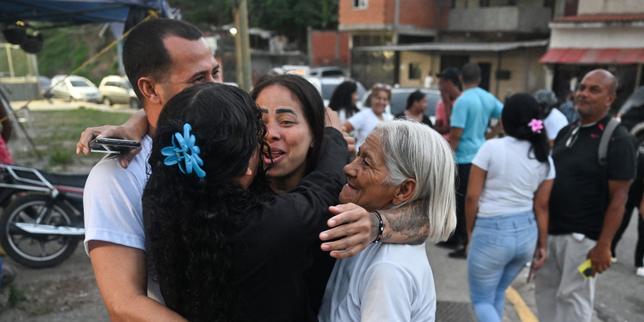
Venezuela's interim authorities announced that 131 political detainees have been granted alternative measures to incarceration, marking another tactical maneuver in the post-Maduro transitional landscape. Outside the razor wire of El Rodeo I prison, families embraced relatives who had survived years of arbitrary confinement. Yet behind the tearful reunions lies a colder reality. These actions, framed by the state as goodwill gestures under the Program for Peace and Democratic Coexistence, mask a deeper political calculus designed to satisfy Washington and appease international negotiators without dismantling the institutional machinery of state repression.
Decades of covering Caracas have taught one absolute truth: emergency decrees rarely equal structural reform. When the state apparatus shifts from mass incarceration to selective conditional release, it does so to preserve power, not to dismantle it.
The Architecture of Partial Freedom
Look closely at the legal mechanisms governing these releases. The administration did not issue an unconditioned blanket pardon or purge the penal codes of politically motivated charges. Instead, courts approved requests for alternative liberty restriction measures.
- Conditional status: Released individuals remain tied to active judicial proceedings.
- The numbers game: Rights monitors like Foro Penal note that hundreds remain behind bars.
- Selective optics: High-profile figures are often rationed out incrementally to maximize diplomatic leverage.
This is administrative purgatory rebranded as human rights progress. Legal dossiers remain active, meaning the sword of Damocles hangs permanently over every person who walks out of a correctional facility. If political winds shift tomorrow, those alternative measures can be revoked with the stroke of a single prosecutor's pen.
Staking Claims at the Negotiating Table
The timing of these announcements is rarely accidental. The state does not empty prison blocks out of sudden institutional empathy. These gestures coincide precisely with high-stakes, United States-brokered talks between interim government officials and opposition delegates.
When opposition leaders sit across the table from state representatives, human rights concerns inevitably collide with economic pragmatism. Relief funds for disaster recovery and frozen international assets hang in the balance. By releasing batches of detainees, the interim leadership provides foreign allies—most notably Washington—with enough diplomatic cover to ease sanctions or disburse aid.
The tactic is historically familiar. Authoritarian remnants trade human capital for financial liquidity and international legitimacy.
The Illusion of Democratic Coexistence
Human rights organizations verify releases one by one, often finding stark discrepancies between official government tallies and verified street-level data. While the state claims sweeping reconciliation, local monitoring groups emphasize that structural components of oppression remain completely untouched.
Interrogation centers remain operational. The judiciary continues to lack structural independence. Security forces that executed arbitrary roundups during past electoral crises face no meaningful accountability.
True systemic transition requires dismantling the legal framework that criminalizes dissent. Substituting a prison cell with mandatory check-ins, travel bans, and perpetual legal vulnerability is not freedom. It is merely home detention under state surveillance.
As long as the state retains the legal architecture to re-arrest citizens at whim, every open gate is just another locked door with a longer hallway.