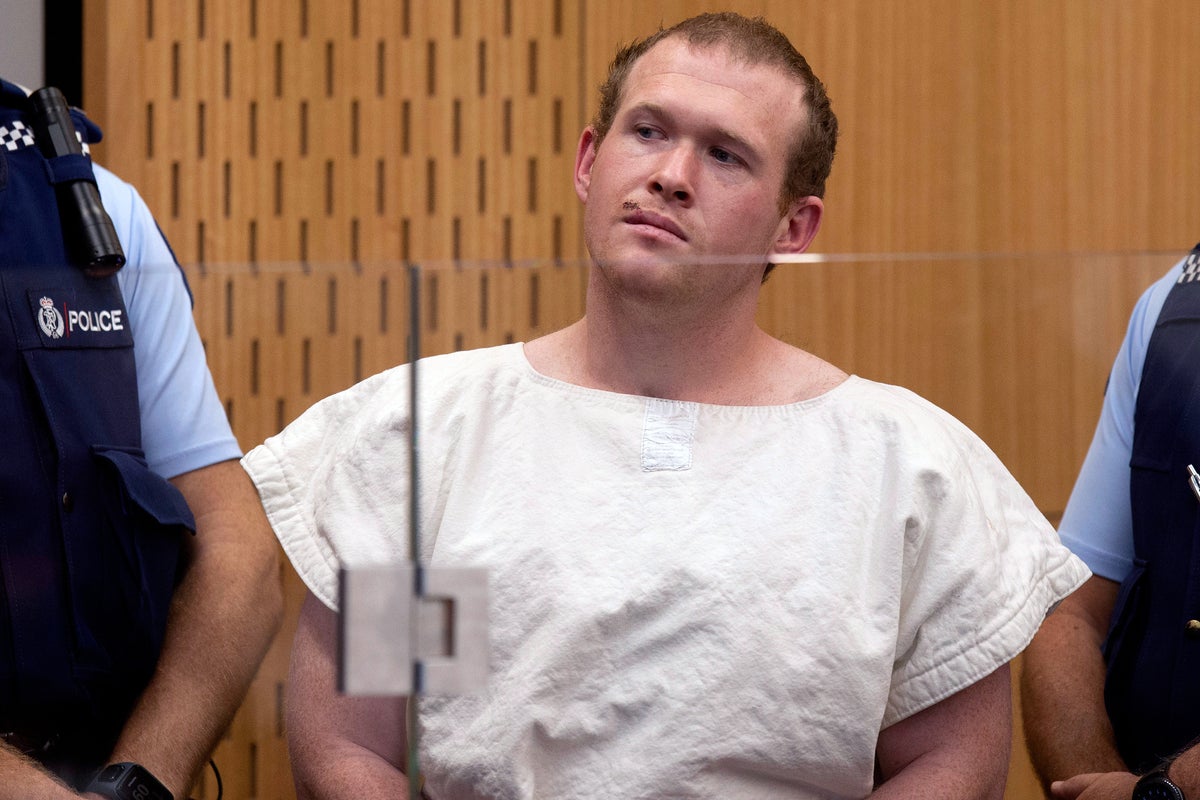
The air inside a courtroom has a specific weight. It is thick with the scent of floor wax and the crushing gravity of history. In New Zealand, a country that prides itself on a quiet, neighborly sort of peace, that weight became unbearable on the day the man who shattered 51 lives tried to take back his confession.
He sat behind reinforced glass. He looked like any other man, which is the most terrifying part of the banality of evil. For years, the families of Al Noor and Linwood mosques have carried a burden that most of us can barely fathom. They have lived with the memory of a Friday afternoon that turned red. They have lived with the empty chairs at dinner tables and the haunting echoes of prayers interrupted by gunfire. When the gunman pleaded guilty in 2020, there was a collective, jagged exhale. It wasn't healing—not yet—but it was a closed door.
Now, he wanted to kick that door back open.
The Mechanics of a Denial
The legal maneuver was as cold as the act itself. The gunman, currently serving life without parole—the first sentence of its kind in New Zealand’s history—filed a challenge to his convictions. His argument was built on the claim that his guilty pleas were "coerced." He suggested that the conditions of his pretrial detention were so grueling, and the legal advice he received so flawed, that his admission of guilt was not an act of will, but a surrender to circumstance.
Imagine, for a moment, the sheer audacity of that claim.
Think of a hypothetical survivor. Let’s call her Mariam. Mariam spent months preparing for a trial that never happened because the man admitted to the slaughter. She spent years trying to stitch her life back together, relying on the finality of that "Guilty" verdict to keep her nightmares at bay. Then, a notification pings on a phone. The man wants a redo. He wants the stage again. He wants to drag the victims back into the witness box to relive the minute-by-minute disintegration of their world.
The New Zealand Court of Appeal looked at this claim. They didn't look at it with emotion, but with the clinical precision of the law. They scrutinized the 92 counts of terrorism, murder, and attempted murder. They looked at the evidence: the body-camera footage he filmed himself, the manifesto he broadcasted, and the clear, calculated path he took toward mass murder.
The court's findings were swift. There was no evidence of a "miscarriage of justice." The "coercion" he claimed was nothing more than the reality of being held accountable for the unthinkable. The bid was dismissed.
The door stayed shut.
The Invisible Stakes of a Retrial
A trial is often described as a search for truth, but in cases of such clear-cut horror, a trial is also a platform. When an extremist seeks to "abandon" a guilty plea, they aren't usually looking for an acquittal. They are looking for a microphone.
The invisible stakes here weren't just about whether a man would stay in prison. He is never getting out. The real stakes were the mental health of an entire nation and the sanctity of the victims' peace. A trial would have meant weeks, perhaps months, of his hateful ideology being entered into the public record under the guise of "defense." It would have forced elderly men and grieving mothers to stand feet away from him and recount the exact moment they felt the heat of a bullet or heard the final breath of a child.
New Zealand law recognizes this. The justice system is designed to protect the accused, yes, but it is also designed to ensure that the process itself does not become a secondary weapon of the criminal.
The gunman’s attempt to claim he was a victim of the system is a classic psychological pivot. It is the last gasp of a narcissist who realizes that the world has moved on and he is no longer the protagonist of the story. By denying his guilt, he tried to reclaim the narrative. He tried to make the conversation about his rights, his comfort, and his legal representation.
But the facts are stubborn things.
The Weight of 51 Names
We often talk about "51" as a number. It is a statistic in a news crawl. But to understand why the Court of Appeal’s decision matters, you have to break that number down into heartbeats.
It is the 3-year-old boy who was the youngest victim. It is the 71-year-old man who died trying to tackle the shooter. It is the father who moved his family across the world to find safety, only to find the opposite. These are not abstract concepts. They are the human cost of a moment of radicalized hatred.
When the gunman pleaded guilty in 2020, it was an anomaly. Most people expected a long, drawn-out trial. His sudden admission was seen by some as a rare moment of clarity or perhaps a realization of the futility of his cause. By trying to retract it, he revealed that there was no remorse. There was only a tactical shift.
The legal system in Wellington didn't just uphold a sentence; they upheld a boundary. They told the survivors that their trauma would not be used as a prop in a legal theater of the absurd. The justices noted that the gunman had ample time, access to counsel, and a full understanding of what a guilty plea meant. You do not get to set a house on fire and then complain that the handcuffs are too tight when the police arrive.
The Silence is the Victory
There is a particular kind of power in a closed case file. It is the power of silence.
In the immediate aftermath of the Christchurch attacks, Prime Minister Jacinda Ardern made a famous vow: she would never speak the killer's name. She understood that for men like him, infamy is a currency. They crave the mention. They want to be a boogeyman that haunts the national conversation.
The court’s refusal to allow him to withdraw his plea is the ultimate extension of that vow. By denying him a trial, they denied him a voice. They relegated him back to the four walls of his cell, where his only audience is the silence of his own making.
The legal battle might seem like a technicality—a matter of filing papers and hearing oral arguments—but for the community in Christchurch, it was a battle for the right to breathe.
Think about the way a wound heals. It needs to be left alone. It needs a scab to form. Every time a legal challenge like this is mounted, it’s like someone reaching down and ripping that scab off. The court, in its wisdom, decided that the healing of the many outweighed the desperate, dishonest revisionism of the one.
The Finality of the Law
We live in an era where truth feels malleable. We are told that everyone has their own "version" of events. But the law, at its best, is a stubborn anchor. It says: This happened. You admitted it. You cannot un-ring the bell.
The gunman’s lawyers argued that the "atmosphere" of the time was too charged for him to make a fair decision. They suggested that the weight of the world's condemnation pushed him into a plea he didn't want to make. But the court saw through the smoke. The atmosphere wasn't the problem; the actions were.
The dismissal of his bid is a testament to the resilience of a system that refused to be manipulated. It is a win for the concept of accountability.
But more than that, it is a win for the people who still walk into Al Noor and Linwood every Friday. They do so with a heavy heart, perhaps, but with the knowledge that the man who tried to destroy them has been defeated not just by bullets or bars, but by the very truth he tried to retract.
The sun sets over the Southern Alps, casting long shadows across a city that has learned the hard way what it means to be "One." Christchurch is a city of gardens and cathedrals, of new beginnings and old scars. The legal drama is over. The gunman is a footnote.
The prayers continue.
The names of the 51 are spoken in hushed, loving tones in homes across the city. The man in the glass box wanted to be a martyr or a mastermind, but the law has made him something far more fitting: a prisoner of his own choices, forever locked in a room where no one is listening.



