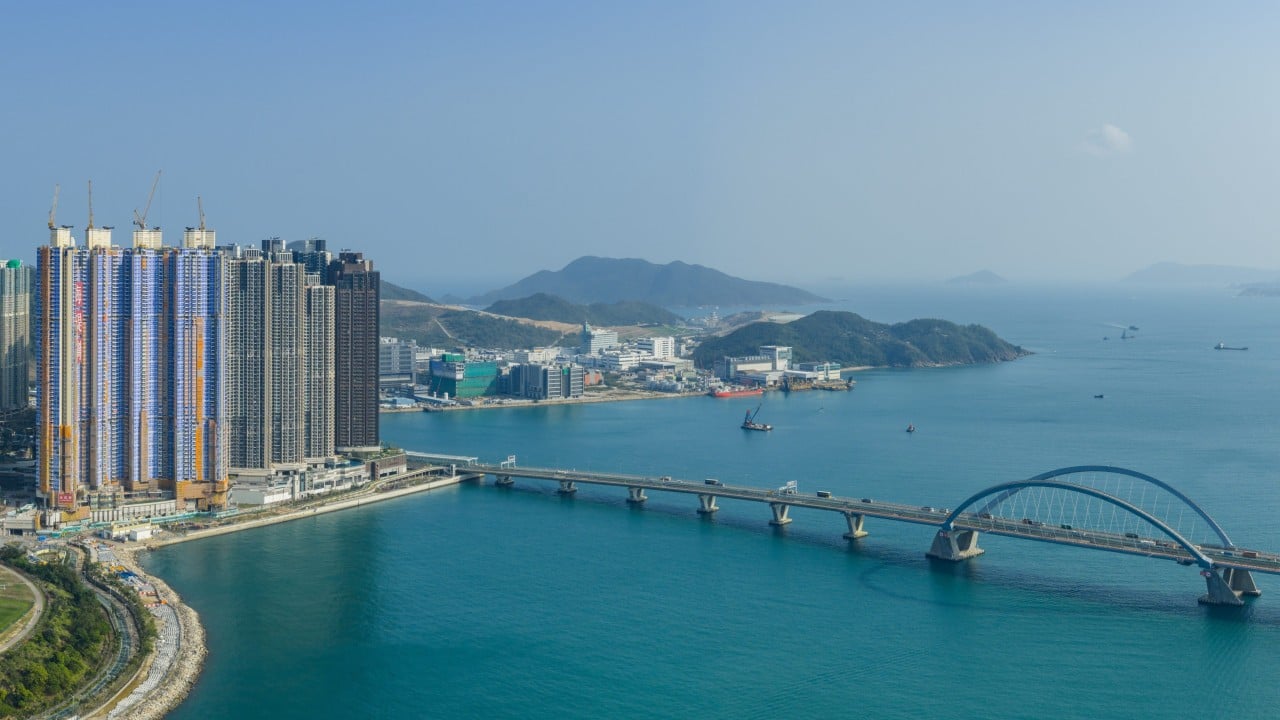
The headlines are screaming about "brisk sales" and "unfazed buyers." They want you to believe that a weekend sell-out at a new residential development in Kai Tak or Wong Chuk Hang is a sign of local resilience against global geopolitical friction. It isn't. It is a mass-participation exercise in cognitive dissonance.
When a crowd rushes into a burning building because the lobby looks freshly painted, we don't call them "unfazed." We call them victims. The current narrative suggests that because buyers ignored a specific warning regarding Iran or the latest White House posturing, the market is somehow decoupled from reality. That logic is flawed, dangerous, and smells of developer-funded PR.
The Myth Of The Resilient Buyer
Mainstream financial press loves the "resilient buyer" trope. It paints a picture of a sophisticated investor weighing global risk and deciding that a 400-square-foot apartment in a reclaimed swamp is a safe haven.
Let's look at the actual mechanics of these "brisk" launches. Most of these sell-outs are driven by massive developer discounts—some reaching 20% to 30% off previous price lists—and creative financing schemes that delay the pain of current interest rates. Buyers aren't "unfazed" by global instability; they are blinded by the shiny object of a "relative bargain" in a market that has been underwater for years.
I have watched institutional funds quietly offload Hong Kong office and residential blocks for three years while retail buyers are told it’s time to "bottom fish." If the big money is exiting the room, and you’re the one walking in, you aren't a contrarian genius. You’re the exit liquidity.
Geopolitics Is Not A Press Release
The competitor's focus on a singular "Trump Iran warning" as the litmus test for market health is laughable. Real estate isn't a day-trade. It’s an illiquid, decades-long bet on the stability of a jurisdiction.
The risk isn't a single drone strike or a tweet. The risk is the fundamental shift in how capital moves between the East and West. Hong Kong's property market was built on the city's status as the friction-less valve between global dollars and Chinese growth. That valve is tightening.
- The Interest Rate Trap: While the US Fed teases cuts, the HKD peg means local rates stay high regardless of local economic misery.
- The Inventory Overhang: There are over 20,000 unsold units sitting in developer hands. "Brisk sales" at one launch do not move the needle on a mountain of supply.
- The Demographic Cliff: Wealthy locals are diversifying their assets globally. The replacement demand from the mainland is real, but it is price-sensitive and lacks the "buy at any cost" desperation of the 2010s.
Imagine a scenario where a buyer takes a 30-year mortgage today because they think the "worst is over." They are betting that for the next three decades, the geopolitical status of Hong Kong remains static and the city's tax regime stays untouched. In a world of shifting sanctions and trade blocs, that isn't a "safe" investment. It’s a high-stakes gamble on a 1990s status quo that no longer exists.
The Yield Gap Reality Check
Let's talk about the math that the "brisk sales" articles conveniently ignore. Rental yields in Hong Kong hover around 2% to 3%. Meanwhile, even a boring time deposit or a high-grade bond can net you 4% to 5% with zero maintenance costs, zero stamp duty, and—most importantly—liquidity.
Buying an apartment today requires you to believe that capital appreciation will outpace the 2% "negative carry" you take every year compared to cash. In a stagnant economy with a shrinking population, where is that appreciation coming from? It’s not coming from salary growth, and it’s not coming from a sudden shortage of land. It’s purely a hope-based strategy.
Stop Asking If Sales Are Up
The wrong question is: "Did the units sell out?"
The right question is: "At what price did the developer finally find a sucker?"
Developers are in the business of clearing inventory. They will cut prices until the units move. Seeing a "sell-out" at a 25% discount isn't a sign of market strength; it's a liquidation sale. When a luxury brand has a "70% off" bin, you don't say the brand is more popular than ever. You recognize that the previous price was a fantasy and the brand is desperate for cash flow.
The Liquidity Illusion
Real estate agents tell you that "land is scarce" and "prices always go up in the long run." This is the "lazy consensus" that has bankrupted generations of middle-class families in declining hubs.
Hong Kong real estate is currently an illiquid asset in a high-volatility environment. In a crisis, you can sell a stock in seconds. You can move gold in hours. Trying to sell a mid-market flat in a downturn takes six months and a massive haircut.
If you are buying into these launches because you think you’ve outsmarted the geopolitical cycle, you are ignoring the battle scars of every veteran who saw the 1997 or 2003 crashes. The difference now is that the structural tailwinds—cheap money and the "China miracle"—have turned into headwinds.
The Brutal Truth For "Brisk" Buyers
Most people buying today are doing so because of FOMO (Fear Of Missing Out) or a desperate need to "do something" with their savings. They see a crowded sales hall and feel a sense of safety.
True investors know that safety is never found in a crowd. Safety is found in value. When you pay a premium for a tiny box in an uncertain political climate while the actual yield is lower than a savings account, you aren't investing. You are donating your future net worth to a developer's balance sheet.
Don't celebrate the "brisk" sales. Mourn the capital that just got locked into a terminal decline. The smart move isn't to be "unfazed" by the news; it's to be terrified by the math.
The market isn't back. The trap just got a new coat of paint.