Hong Kong just quietly quietly dropped another HK$5 billion into its national security war chest, and unless you were combing through the government’s gazetted quarterly accounts, you probably missed it.
This isn't a line item you'll find in the standard public budget spreadsheets discussed by lawmakers. The cash injection brings the city’s total accumulated spending on national security to a massive HK$18 billion since 2020. Meanwhile, you can explore similar developments here: The Salt on Sandy Cay and the Edge of the World.
If you're wondering how this money gets spent, who gets it, or why it’s completely hidden from public oversight, you aren't alone. The financial mechanisms behind Hong Kong’s security state operate in an absolute black box, deliberately shielded from the legal checks and balances that govern every other cent of public money in the city.
The Invisible Billions
The latest HK$5 billion allocation showed up in the quarterly financial statements ending March. It was tucked away under a sterile label: "non-recurrent appropriation to a special fund to meet the expenditure for safeguarding national security." To understand the full picture, check out the excellent analysis by The New York Times.
This marks the third time Financial Secretary Paul Chan has carved out a massive chunk of general revenue for this specific purpose. Let’s look at how the total reached HK$18 billion.
- December 2020: An initial HK$8 billion was set aside right after Beijing imposed the National Security Law.
- March 2023: A second injection of HK$5 billion.
- March 2026: The latest HK$5 billion top-up.
For context, HK$18 billion is roughly US$2.3 billion. That's a staggering amount of money for a city of seven million people, especially when the standard police force already operates on its own massive multibillion-dollar annual budget.
But what makes this specific fund unique isn't just the size. It’s the total lack of legal restriction.
How the Law Grants Blanket Financial Immunity
Normally, if a government department in Hong Kong wants to spend money, it has to go through the Legislative Council. Officials must present estimates, answer uncomfortable questions from lawmakers, and justify the costs.
The National Security Law blew up that entire process.
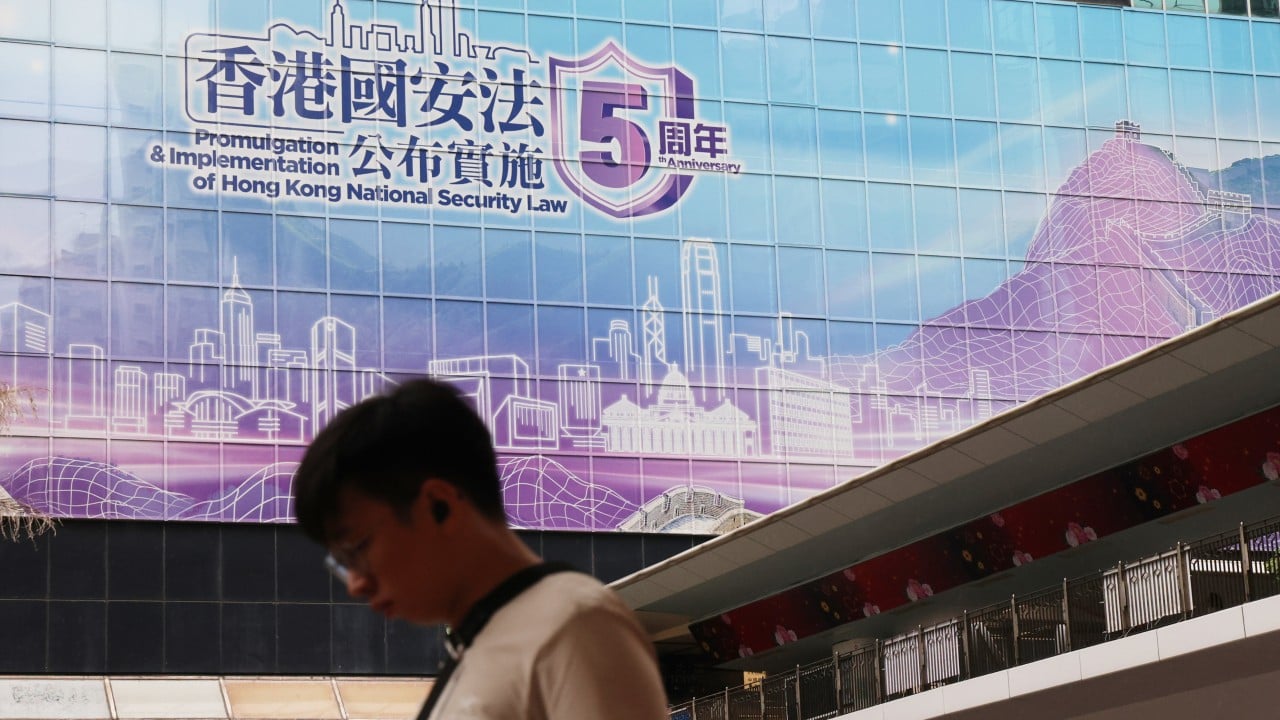
Under the legal framework established in 2020, the rules are drastically different. The Financial Secretary simply needs the approval of the Chief Executive to appropriate funds from the general revenue. Once that signature is secured, the money moves.
According to the Treasury’s own documentation, these funds are explicitly not subject to any restrictions under the existing laws of the Hong Kong Special Administrative Region.
This means the money skips the finance committee entirely. No public hearings. No line-item disclosures. No legislative oversight whatsoever.
Why the Government Refuses to Show the Receipts
When pressed on why the public can’t see how their own tax dollars are being used, security officials don't mince words. They view transparency as a strategic vulnerability.
During previous rounds of questioning, the Secretary for Security stated plainly that disclosing details about the national security budget would give away the game. If the government revealed how the money was carved up, outsiders could figure out the exact nature, scale, and targets of the city’s counter-espionage and domestic security operations. In their eyes, accountability is actively disadvantageous to national security.
Because of this stance, we don't know basic operational facts. We don't know if the previous HK$13 billion was completely spent, or if this new HK$5 billion is a proactive cushion. We don't know how much goes toward high-tech surveillance infrastructure, data collection, overseas intelligence, or specialized personnel salaries.
We do know that the local national security police apparatus has grown bolder. Over the past couple of years, operations have expanded from arresting political dissidents to targeting military-style combat drills and enforcing strict digital demands, like forcing individuals to hand over phone passwords under updated local security ordinances.
The Broader Economic Strain
You can't look at this hidden spending in a vacuum. Hong Kong’s economy has been riding a rocky wave. While first-quarter GDP growth numbers showed some resilience, the city has faced persistent domestic anxieties, corporate layoffs, and structural shifts in property values.
When billions of dollars move into a black box fund during a period of fiscal tightening, it raises legitimate public questions about resource prioritization. Local online forums are filled with residents noting the contrast between tightening budgets for public sectors and the seemingly bottomless, unquestioned resources available for the security apparatus.
Furthermore, the geopolitical tug-of-war keeps escalating. While Hong Kong secures its internal perimeter, foreign adversaries are pushing back with their own financial tools. The US House Appropriations Committee recently pushed forward funding via the Democracy Fund to bankroll programs focused on Hong Kong, a move Beijing-backed media outlets like China Daily quickly slammed as blatant foreign interference and sabotage.
As foreign funding trickles into local dissident networks and local revenues pour into state security, Hong Kong finds itself caught in an expensive, permanent state of high alert.
What Happens Now
If you are trying to track where Hong Kong’s public finances are heading, you need to stop looking at the annual budget address as the complete picture. The traditional budget documents give you the narrative the government wants to highlight, usually focusing on infrastructure, technology investments, and classic economic hand-outs.
To get the real story, you have to monitor the post-fiscal year Gazetted accounts. The emergence of these non-recurrent HK$5 billion blocks reveals that the financial cost of policing Hong Kong’s new political reality is recurring, permanent, and entirely insulated from public debate.
Keep an eye on the quarterly financial statements dropped every few months. That’s where the real structural changes to Hong Kong's financial priorities are actually recorded.