The Theatre of the Strait
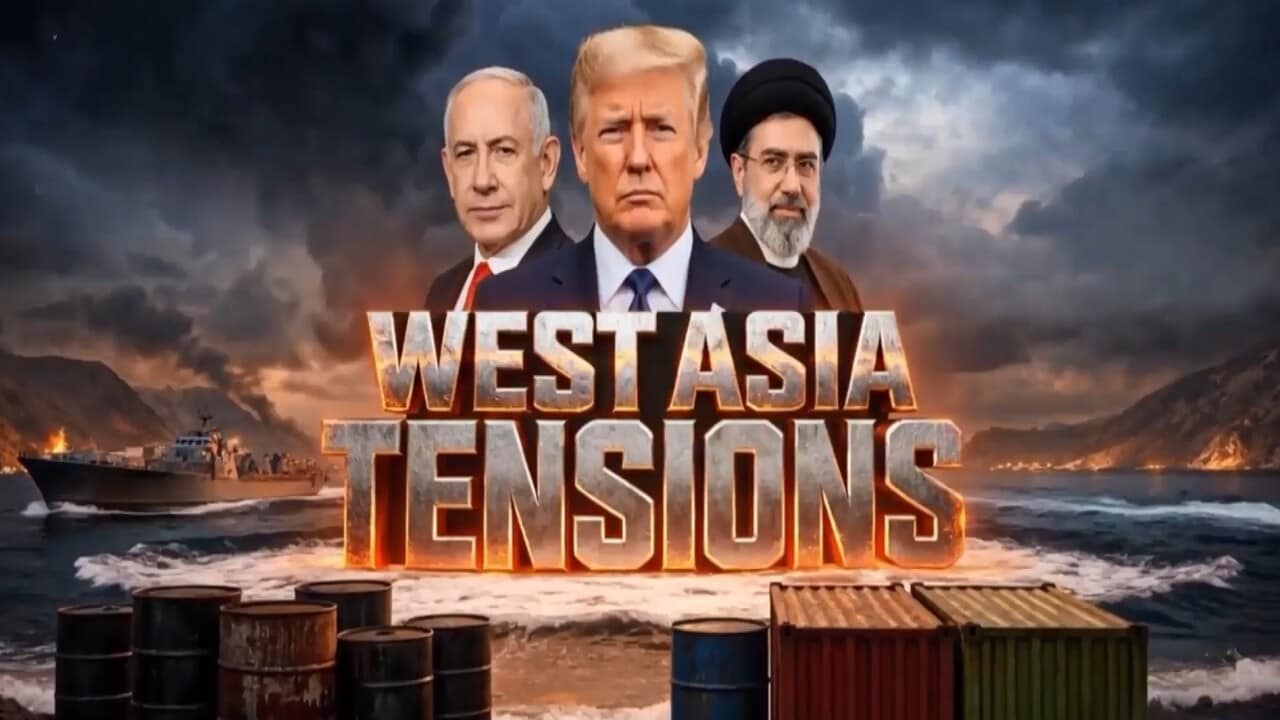
The headlines scream about impending doom and a regional firestorm. They track every ship movement and every denial from Tehran as if we are on the precipice of a global reset. They are wrong. What we are witnessing isn't the prelude to World War III; it is a highly choreographed, high-stakes ritual that serves every player involved.
Mainstream analysts treat the denial of a ship seizure or a skirmish in Lebanon as isolated data points. They miss the architecture of the tension. These aren't accidents or "escalations" in the traditional sense. They are signals. In the world of geopolitical brinkmanship, uncertainty is the only currency that retains its value. When Iran denies striking a South Korean vessel, the denial is often more important than the act itself. It creates a vacuum of accountability that prevents a full-scale kinetic response while maintaining a suffocating grip on global energy corridors.
The Logistics of Fear
Stop looking at the maps of missile ranges and start looking at insurance premiums. The real war is being fought in the ledgers of Lloyd's of London. Every time a "bombing continues" headline hits the wire, the risk profile of the Hormuz transit shifts.
The "lazy consensus" suggests that a full-scale US-Iran war is the ultimate goal or the inevitable outcome. This ignores the reality of 21th-century deterrence. A total war is a bankruptcy filing for both sides. Washington cannot afford a $150-a-barrel oil shock in an election cycle, and Tehran cannot survive the total erasure of its power grid.
Instead, we have the "Grey Zone."
- Proxy Friction: Using Lebanese soil to test air defense limits without triggering a direct hit on sovereign soil.
- Maritime Gaslighting: The "did they or didn't they" dance with tankers that keeps the US Navy pinned in a reactive posture.
- Economic Asymmetry: Forcing the West to spend millions on interceptor missiles to down drones that cost less than a used sedan.
I’ve watched analysts burn through careers predicting the "imminent" invasion of Iran. They fail because they assume both sides are irrational actors driven by ideology. They aren't. They are cold-blooded accountants of power.
Why "Live Updates" Are Killing Your Perspective
The 24-hour news cycle treats every explosion in Beirut like a chess move. It’s rarely chess. Often, it’s just noise meant to satisfy domestic audiences.
When you see "bombings continue in Lebanon," the media wants you to see a linear path to escalation. The counter-intuitive truth? These strikes are often the alternative to escalation. They are a release valve. By hitting specific, known assets, the parties involved signal that they have satisfied the requirement for a "response" without needing to cross the red lines that lead to actual, unmanageable war.
The "People Also Ask" sections of the internet are flooded with questions like "Will the US invade Iran?" or "Is the Strait of Hormuz closed?"
The answers are "No" and "It doesn't need to be."
Closing the Strait is a suicide move for Iran; it cuts off their own oxygen. But threatening to close it? That provides them with a seat at every table they aren't invited to. It is the ultimate leverage play for a middle power facing a superpower.
The South Korean Red Herring
The obsession with the South Korean vessel is a perfect example of missing the forest for the trees. Whether or not a specific strike happened is secondary to the fact that the narrative of the strike exists.
In maritime law and international diplomacy, "plausible deniability" is a structural necessity. If Iran admits to a strike, the US is forced by its own doctrine to retaliate. If Iran denies it, and the US "investigates," both sides have bought themselves another week of status quo.
We are seeing a massive misallocation of intellectual capital. We worry about the tactical—the range of a drone or the tonnage of a ship—while ignoring the strategic reality: the US is pivotally overextended, and Iran knows it. The US military posture in the Middle East is a legacy system trying to solve a decentralized, 21st-century problem with 20th-century hardware.
The Cost of the Status Quo
There is a downside to my contrarian view. The "Grey Zone" is stable, but it is also expensive and bloody for the people on the ground. The "bombings in Lebanon" aren't a myth to the civilians living there. But in the cold calculus of regional hegemony, Lebanon has been designated as the "safe" arena for conflict. It is the laboratory where the US and Iran test each other's resolve without risking their own capitals.
We must stop asking "When will the war start?" and start asking "Who benefits from this perpetual state of near-war?"
- Defense Contractors: Higher tensions mean more "emergency" aid packages and hardware sales.
- Energy Speculators: Volatility is the mother of profit.
- Hardliners on Both Sides: Fear is the most effective domestic distraction tool ever invented.
The End of the Carrier Era
The presence of a US Carrier Strike Group is usually cited as the ultimate deterrent. In reality, it’s a giant, floating target that limits American options. If you have a multi-billion dollar asset in a narrow body of water, you aren't there to project power; you are there to protect the asset.
Iran’s strategy of "swarm" tactics and asymmetric denial makes the carrier an anachronism in the Strait. The competitor articles won't tell you that the US Navy is terrified of a scenario where they lose a carrier to a $20,000 suicide boat. It would be the most significant shift in naval history since Pearl Harbor, and it would happen not because of a "war," but because of a miscalculation in the "updates" we are currently reading.
Stop Reading the Map, Start Reading the Room
If you want to understand the US-Iran conflict, stop looking at the border. Look at the bank accounts of the regional players. Look at the drone manufacturing pipelines. Look at the silence from the Gulf states who are quietly hedging their bets between Washington and Tehran.
The "status quo" isn't a failure of diplomacy; it's the intended product. The chaos is the system. Every denial, every "continued bombing," and every "live update" is a brick in a wall built to keep the world in a state of profitable anxiety.
The war isn't coming. It’s already here, it’s just not the one you were told to expect. It’s a war of attrition, perception, and insurance premiums. It is a slow-motion collision where neither driver wants to hit the brakes, but both are terrified of the crash.
Stop waiting for the big bang. You're already deafened by the ringing in your ears.