History rarely arrives with a trumpet blast. More often, it slips into town quietly, carrying a lunch pail and smelling of wet pine and coal smoke.
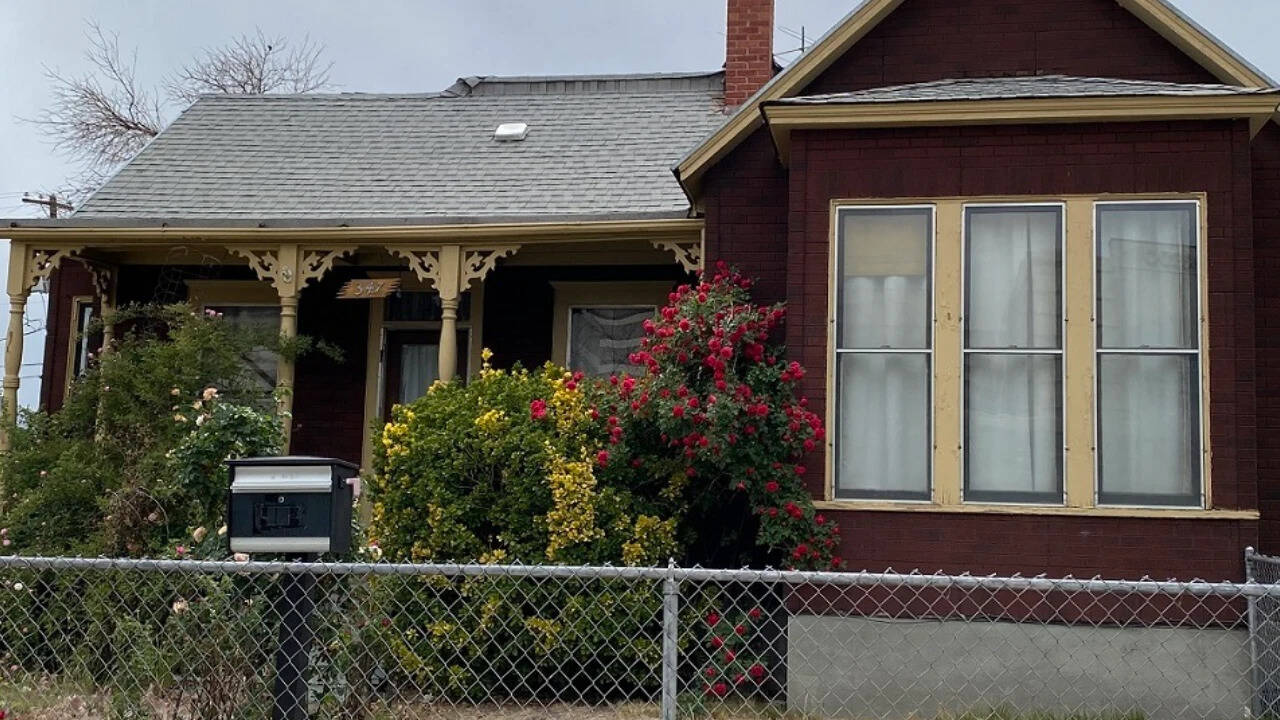
In May 1868, the Central Pacific Railroad began auctioning off dusty parcels of dirt on a freshly minted townsite beside the Truckee River. The air smelled of sagebrush and unbridled ambition. Among the early arrivals was a stonemason named I.T. Benham. He purchased Lot 8 of Block E—a modest plot at what would become 347 West Street—and built a home. Not a grand Victorian mansion meant to impress eastern bankers, but a sturdy, honest shelter fashioned from timber and grit. It was built to last an era. It survived one hundred and fifty-six of them. Don't miss our previous post on this related article.
Fast forward to a crisp morning in Reno, Nevada. Progress, wearing the expensive shoes of modern corporate development, had swallowed the block. Concrete parking lots and neon corridors pressed inward. The old house at 347 West Street stood boarded-up and exhausted, a ghost amid asphalt. Jacobs Entertainment, acquiring land for its sprawling downtown revitalization project, bought the property for over a million dollars.
To a balance sheet, the structure was an obstacle. To anyone with a pulse on the city's past, it was the oldest surviving residential anchor of Reno’s birth year. To read more about the context here, USA Today provides an informative breakdown.
So, the corporation did something unusual. They offered the house for sale.
The price was precisely one dollar.
There was, naturally, a catch. You could not live in it where it sat, and you could not tear it down for firewood. If you wanted the cradle of Reno history, you had to physically pick it up, move it across the city, and keep it breathing.
Consider what that actually means. Buying a piece of history for pocket change sounds like a charming fairy tale until you are standing in front of a century-and-a-half-old timber frame realizing that gravity, highway overpasses, and low-hanging utility wires do not care about romantic sentimentality.
Enter Logan and Angelina Needham.
They were not historical preservationists by trade; they were locals with a rare kind of stubborn reverence. When they signed the paperwork for a single greenback, they weren't acquiring real estate. They were accepting a stewardship. They were volunteering to take on the physical burden of a city's memory.
For months, the house sat in limbo while engineers plotted and permits cleared. People drove past the boarded windows, barely giving it a second glance, unaware that behind the weathered facade lay the ghosts of stonemasons, local barbers, and children who grew old watching locomotives puff steam along the riverbank.
The Benham-Belz house is a survivor of transitions. In the 1880s, a popular local barber named John Belz bought it, and his family poured nearly a century of ordinary life into its rooms. His daughter Florence lived inside its walls until 1981, watching the dusty frontier camp transform into a neon-lit desert metropolis, passing away at the age of eighty-seven. Over generations, layers of brick veneer were plastered over the original wood, disguising its age like wrinkles on a familiar face.
When the moving day finally arrived, it felt like an operation fit for a cathedral.
Crews carefully sliced the historic structure into two distinct halves. Imagine watching the home where families laughed, ate Sunday dinners, and weathered personal tragedies split down the middle, hoisted onto massive flatbed trailers like ancient bones. On that morning, West Street was left looking like a toothless smile—just a pile of historical rubble and empty air where a landmark used to be.
The trailers rolled slowly through the waking city streets, navigating the modern infrastructure that had grown up around the humble little cottage. They carried it miles west of downtown to a private plot of land.
There is a profound lesson hidden in the dust of that relocation. We live in an age that treats cities like disposable items, tearing down the old to make room for the glossy and the new, assuming that digital photographs and data archives can somehow replace physical continuity. We forget that human beings need anchors. We need places that whisper, Someone stood here before you, and they struggled just as hard.
The house did not vanish. It was reassembled, piece by careful piece, re-welded to its own past on a new patch of soil.
A dollar can buy you a cup of mediocre coffee. It can buy a cheap plastic trinket destined for a landfill. But every once in a blue moon, if you are crazy enough to take on the weight of the past, a single dollar can buy you a legacy.
The truck engines have long since quieted. The dust has settled over the new foundation out west. And somewhere out there, beneath a sprawling Nevada sky, the oldest house in Reno is finally unlocking its windows, ready for its next hundred years.