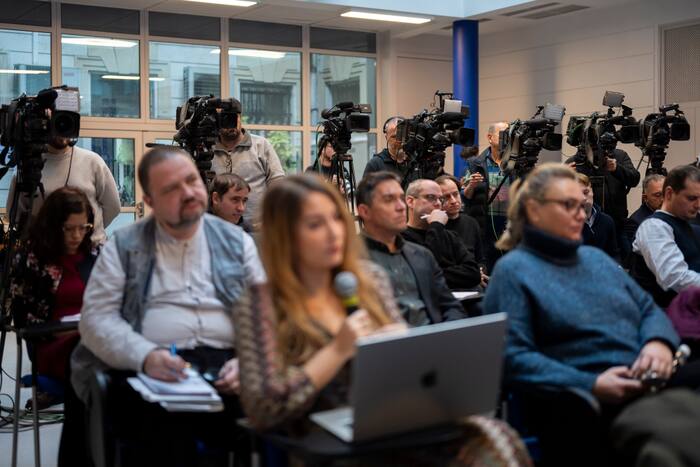
The immediate fear is gone, and that alone feels like oxygen in a Budapest newsroom.
After the Tisza Party's landslide victory in April 2026 and Péter Magyar taking office as prime minister in May, independent reporters in Hungary no longer wake up wondering which state-backed agency or smear campaign is coming for them next. For years, covering Viktor Orbán's government meant living under a constant hum of pressure—political intimidation, legal threats, surveillance worries, and a media market warped by state cash. Now, months into the political shift, Hungarian journalists feel that weight lifting.
Still, let's be honest: lifting the boot off someone's neck doesn't automatically fix a broken market.
Relief is real, and it shows up in small daily details. Journalists can ask sharper questions without bracing for retaliation, and the chill that hung over routine reporting has started to thaw. Yet press freedom advocates—including groups like the Committee to Protect Journalists (CPJ), the International Press Institute (IPI), and ARTICLE 19—have pointed out something crucial as the new government moves through its reforms. Removing an authoritarian pressure cooker is step one. Building durable legal guardrails and a healthy business model for independent news is the much harder part.
How Hungarian journalists experienced the pressure lifting
When a long-running political grip loosens, you don't just see policy changes on paper. You hear it in the tone of people who spent years dodging landmines.
In reporting around the shift, investigative journalist Szabolcs Panyi captured that mix of relief and realism—noting that the political pressure was gone, even if everything wasn't suddenly easy or shiny. That phrasing hits close to home for anyone who has watched independent media operate under heavy state pressure. Survival mode changes how editors assign stories, how sources talk, and how reporters pace themselves. When that acute threat recedes, mental bandwidth comes back.
You also see signs of old symbols returning to public conversation, including talk around Népszabadság, the historic newspaper shut down back in 2016, alongside fresh energy among newsrooms that kept digging despite hostile conditions. For reporters who spent years fighting uphill battles against state-amplified narratives, simply feeling "winds of change" again matters—even before every institutional problem is solved.
What the new government actually dismantled
Credit where it's due: the post-election shake-up wasn't just cosmetic. Several concrete mechanisms that squeezed independent media during the Orbán era have already been targeted or dismantled.
Here is what shifted fast in 2026:
- The Sovereignty Protection Office (SPO) was abolished: Lawmakers moved on June 30, 2026, to scrap the SPO—an institution widely criticized by press freedom groups for targeting independent outlets and civil society groups receiving foreign grants and painting them as foreign agents.
- Centralized state ad channelling was dismantled: Moves to dismantle the centralized state advertising system run through the National Communication Office (NKOH) disrupted a major financial pipeline that previously propped up pro-government outlets and influencers.
- Public media hit pause and leadership changed: Leadership at the media regulator changed at the start of July, and public broadcasters suspended standard news broadcasts on July 7 with an on-screen message apologizing for past lies and promising reform toward independent public service news.
On paper, those are big moves. In practice, dismantling old tools is faster than wiring new ones so they can't be hijacked later.
Why relief alone doesn't fix Hungary's media
Here's where I disagree with overly celebratory takes: ending one party's media dominance does not instantly create a fair, pluralistic information ecosystem.
Before the 2026 election, Hungary's press freedom standing had slid dramatically over more than a decade—dropping from 23rd in 2010 to 74th in 2026 in Reporters Without Borders' (RSF) index, leaving large parts of the country accustomed to very different information diets. You don't unwind a decade-plus of structural distortion overnight.
Ownership concentration and local news deserts
Even when state propaganda budgets shrink or shift, ownership concentration remains a heavy legacy. Media outlets built up during the Fidesz era—and the habits of audiences who consumed them—don't vanish just because the political wind changes.
Local media is especially vulnerable. Independent outlets outside Budapest often struggled to find commercial advertisers in a small market where state spending once skewed competition. Press freedom missions, including a joint effort involving the International Federation of Journalists (IFJ) and European Federation of Journalists (EFJ) six months into the new government, have emphasized that local outlets need real structural lifelines, not just good intentions.
The danger of trading old favoritism for new friction
Press freedom groups have flagged real tension points in the next phase of reform:
- Laws over discretion: Openness from a friendly government is great today, yet lasting protection requires rules written into law so future governments can't easily reverse course.
- Ad rules and tax debates: Replacing opaque state ad allocation with transparent, non-discriminatory rules aligned with EU standards—such as Article 25 of the European Media Freedom Act—is essential, while proposals like reintroducing an advertising tax face pushback over how they might affect smaller outlets.
- Editorial independence from every side: Good journalists don't swap one political master for another. Holding a new government to the same tough standard takes discipline, especially when readers want a victory lap.
Practical next steps for readers, editors, and media watchers
If you follow Hungarian politics, run a newsroom, or care about how democratic backsliding gets reversed, don't stop at the headlines about pressure lifting. Watch the plumbing.
- Track legal safeguards, not just personnel moves. Watch whether regulatory appointments, public media governance, and anti-SLAPP or source protections get locked into binding law rather than relying on current goodwill.
- Follow the money on state ads and local outlets. Check how public and state-owned enterprise ad budgets are distributed—and whether regional, non-state outlets get a fair shot at surviving.
- Support independent investigative reporting directly. Subscriptions, reader memberships, and transparent grants remain critical while commercial ad markets and public broadcasting reforms are still finding their footing.
- Stay skeptical of quick "mission accomplished" narratives. A country's information space takes years to rebuild. Real press freedom shows up in boring, unglamorous accountability five years down the road—not just in the relief of the first few months.