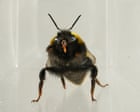
High-speed cameras are redefining our understanding of animal consciousness. For decades, the scientific establishment dismissed the idea that insects could possess internal experiences, treating them instead as biological automata driven purely by instinct. Recent breakthroughs in slow-motion video analysis have shattered this assumption. By capturing behavioral nuances invisible to the naked eye, researchers have documented bumblebees exhibiting distinct expressions of preference, hesitation, and frustration. These observations provide compelling evidence that insects possess a rudimentary form of inner life. This shift in perspective forces a radical reassessment of how we view the natural world and challenges the ethical frameworks governing our interaction with it.
The Illusion of the Insect Machine
We have long comforted ourselves with the myth of the unfeeling bug. It made the world simpler to manage. If an organism operates purely on hardwired reflexes, its destruction carries no moral weight. Cartesian philosophy legacy lived on in the way modern agriculture, pest control, and laboratory research treated invertebrates as tiny, disposable robots.
That framework is collapsing under the weight of empirical data.
When you watch a bumblebee navigate a complex flower in real-time, its movements appear erratic and mechanical. It zips from petal to stem with a frantic, jerky momentum. But change the shutter speed. Slow the footage down to a thousand frames per second, and the frenetic blur resolves into a series of deliberate choices.
Researchers analyzing this high-speed footage have isolated micro-behaviors that mirror higher-order emotional processing. A bee encountering a contaminated nectar source does not just fly away. It hesitates. It grooms its antennae with an agitation that outlasts the physical trigger. Conversely, when finding a highly rewarding sugar source, its physical engagement involves specific stabilization movements and prolonged contact that behavioral biologists equate to a primitive form of satisfaction.
This is not automated tracking. It is appraisal.
Decoding the Micro-Expressions of the Hive
To understand why this matters, one must look at how we measure emotion in non-human animals. Because we cannot ask a bee how it feels, we must rely on behavioral markers and cognitive biases.
The Cognitive Bias Test
In vertebrate psychology, an animal’s emotional state is often assessed by its reaction to ambiguity. Optimistic animals approach an ambiguous stimulus expecting a reward; pessimistic ones avoid it.
When researchers trained bumblebees to associate a specific color with a reward and another color with a punishment, they introduced an ambiguous, intermediate color. Bees that had recently received an unexpected drop of sucrose solution approached the ambiguous color far more rapidly than the control group. The sugar flash-fried their neural chemistry with a positive state, altering their judgment. They were, by definition, in a good mood.
Motor Dynamics Under the Lens
High-definition macro-videography catches the physical manifestations of these internal states. The key indicators include:
- Antennal positioning: Symmetrical, forward-pointing orientation correlates with focused exploration and positive appraisal. Asymmetrical or erratic twitching often points to a state of disruption or negative feedback.
- Decelerated approach paths: Slowing down before landing on a novel object indicates a calculation of risk versus reward, a hallmark of executive functioning rather than reflex.
- Displaced grooming: Scratching and leg-rubbing immediately following a failed extraction task mimic the displacement activities seen in primates experiencing stress.
The data suggests that the bee brain, despite its minuscule size, possesses modules dedicated to processing subjective experience.
[Stimulus Encounter]
       │
       ▼
[Neural Appraisal Circuit] ──► Biases Future Decisions (Mood)
       │
       ▼
[Micro-Behavioral Manifestation] (Captured via slow-motion telemetry)
The Architecture of a Miniaturized Mind
Critics of insect sentience frequently point to anatomy. How can a brain containing roughly one million neurons achieve anything resembling a conscious experience when a human brain requires 86 billion?
The answer lies in architectural efficiency.
+------------------------------------+------------------------------------+
| Feature                            | Vertebrate Brain                   | Insect Brain                       |
+------------------------------------+------------------------------------+------------------------------------+
| Neuron Count                       | Millions to Billions               | Approx. 1 Million                  |
| Processing Style                   | Distributed, highly redundant      | Hyper-efficient, localized hubs   |
| Primary Structure for Learning     | Hippocampus / Cerebral Cortex      | Mushroom Bodies                    |
| Neurochemistry                     | Complex Dopamine/Serotonin pathways| Octopamine/Dopamine pathways       |
+------------------------------------+------------------------------------+------------------------------------+
The insect brain does not waste space on redundant wiring. Its mushroom bodies—the structures responsible for learning, memory, and spatial awareness—are packed with high-density synaptic connections that process multi-sensory input simultaneously.
Furthermore, consciousness may not require massive computational power. Subjective awareness might be an emergent property of any neural network that needs to integrate vision, scent, memory, and motor control in real-time to survive. A bee cannot afford to wait for a slow, instinctual loop to trigger when a predator appears or a flower fails to deliver nectar. It needs an internal monitoring system to prioritize its goals. That internal monitoring system is the foundation of an inner life.
The Anthropomorphic Trap Versus Neuro-Objectivity
An inherent danger exists when humans interpret animal behavior. We are prone to seeing our own reflection in every blinking eye or twitching limb. Skeptics rightly warn against assuming a bee "likes" a flower in the exact same emotional sense that a human enjoys a fine meal.
But denying any internal experience based on that difference is its own form of bias.
We must distinguish between cognitive complexity and sentience. A bee does not need to compose poetry or ponder its own mortality to feel pain, comfort, or frustration. Sentience is simply the capacity to feel. The slow-motion video evidence does not show a tiny human in a fuzzy suit; it shows an organism navigating its environment with a flexible, valenced internal state. It feels bad to be stuck; it feels good to find food.
If we accept that a dog or a cat has an internal experience based on its behavior, denying the same to an insect simply because its brain is built differently becomes an untenable position. The mechanism differs, but the functional outcome is strikingly similar.
Industrial and Ethical Fallout
The confirmation of insect sentience is not an abstract academic victory. It is a grenade dropped into the machinery of global agriculture and biotechnology.
Consider the industrial breeding of insects for protein. As climate pressures mount, massive facilities are scaling up to produce tons of black soldier fly larvae and crickets for animal feed and human consumption. These operations house billions of insects in hyper-dense, artificial environments.
If these organisms possess an inner life, these facilities are not just bio-reactors. They are factory farms.
        ┌────────────────────────────────────────────────────────┐
        │ Discovery of Behavioral Markers via Slow-Motion Video  │
        └───────────────────────────┬────────────────────────────┘
                                    │
                                    ▼
        ┌────────────────────────────────────────────────────────┐
        │   Scientific Consensus on Invertebrate Sentience       │
        └───────────────────────────┬────────────────────────────┘
                                    │
            ┌───────────────────────┴───────────────────────┐
            ▼                                               ▼
┌──────────────────────────────┐                ┌──────────────────────────────┐
│ Agritech Regulatory Shift    │                │  Pesticide R&D Overhaul      │
│  - Waste mitigation mandates │                │   - Pain-pathway screening   │
│  - Density limits in breeding│                │   - Ban on agonizing agents  │
└──────────────────────────────┘                └──────────────────────────────┘
The regulatory implications are severe. Western legal systems currently provide zero protections for invertebrates used in research or industry. A scientist must get approval from an ethics board to perform surgery on a mouse, but they can burn, crush, or chemically alter ten thousand bees without a single piece of paperwork.
When the public begins to understand that these creatures experience distress and satisfaction, the pressure on corporations to alter their practices will become intense. Companies utilizing mass-reared insects will have to prove their slaughter methods are humane. Pesticide manufacturers will face litigation over products that cause prolonged, agonizing deaths to non-target pollinators, not just because it hurts the ecosystem, but because it inflicts measurable suffering.
The Cognitive Horizon
Our tools have finally caught up with the scale of the organisms we study. The revelation of the insect mind did not happen because the bees changed; it happened because our lenses got faster. We were blind to their internal states because we were looking at the world through a human temporal scale.
By slowing down the footage, we synchronized our perception with their reality.
This technological bridge proves that complexity does not require mass. The universe of subjective experience does not begin at the level of the vertebrate skull. It exists in the brush, under the soil, and inside the hive. The next challenge is not finding more proof, but deciding how to live in a world where the insects we step on are looking back at us, evaluating their options, and feeling the weight of the choices they make.