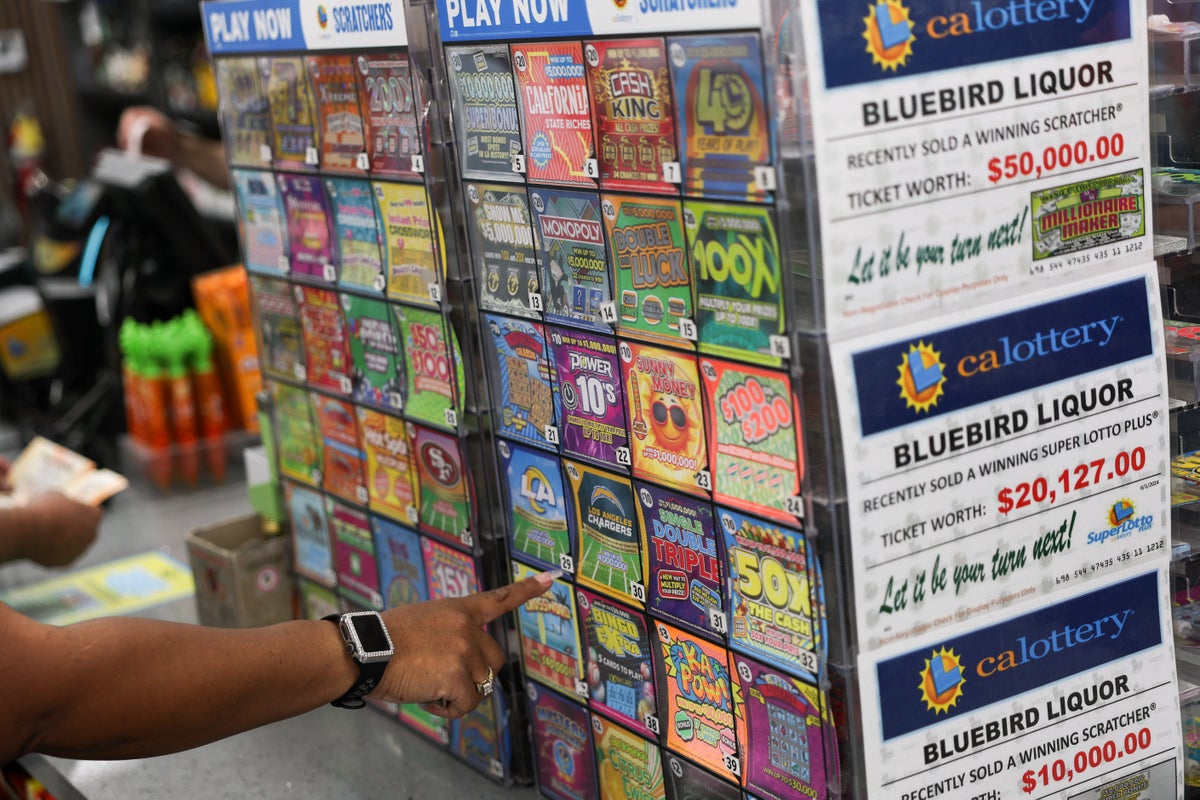
An unnamed Illinois resident recently walked out of his workplace for a routine break and returned as the state’s newest millionaire. The man, who purchased a winning $1,000,000 "$10 Million Cash" scratch-off ticket at a BP gas station in Des Plaines, represents the ultimate blue-collar fantasy. He stopped for a snack, spent a few dollars on a whim, and effectively funded his retirement before his shift ended. It is a story the Illinois Lottery is eager to promote because it reinforces the idea that life-changing wealth is just one impulsive decision away.
However, behind the celebratory press releases and the oversized cardboard checks lies a complex machinery of state-sponsored gambling, psychological triggers, and the cold, hard reality of probability. While the headlines focus on the lightning strike of success, the structural mechanics of the lottery system ensure that for every worker who finds a golden ticket on their lunch hour, millions of others are simply subsidizing the dream.
The Anatomy of the Des Plaines Miracle
The winning ticket was sold at the BP located at 1215 Lee St. in Des Plaines, a suburb that has seen its fair share of lottery traffic. This specific win wasn't a fluke of a drawing; it was an instant-win game, a product category that has become the lifeblood of state lottery revenue. Instant games offer immediate gratification, removing the agonizing wait of a nightly draw. For a worker on a time-constrained break, that immediacy is the product.
To understand how this happened, we have to look at the inventory management of the Illinois Lottery. The "$10 Million Cash" game is a high-stakes scratch-off with a top prize that dwarfs the $1 million won by the Des Plaines local. When a retailer receives a roll of tickets, they are essentially holding a physical manifestation of a localized probability pool. The winner in this case happened to be at the right GPS coordinate at the exact moment a specific piece of cardstock was at the front of the plastic dispenser.
Retailers like the BP on Lee Street receive a 1% selling bonus for tickets like this. In this instance, the gas station pocketed $10,000 just for being the venue of the transaction. This creates a symbiotic relationship between the state and small businesses, turning every convenience store into a high-stakes mini-casino.
The Shift Break Psychology
Why do workers specifically target their breaks for these purchases? It isn’t just about proximity. There is a documented psychological phenomenon where individuals in high-stress or repetitive labor environments seek "micro-escapes." Buying a lottery ticket provides a brief window of "hope labor"—the mental work of imagining a different life. For twenty minutes, the worker isn't an employee; they are a potential millionaire.
The Illinois Lottery capitalizes on this. Their marketing often mirrors the daily grind, positioning the lottery as the exit ramp from the 9-to-5 cycle. But the odds are stacked in a way that makes this exit ramp nearly impossible to find. In the "$10 Million Cash" game, the odds of winning a million dollars are roughly 1 in several hundred thousand. You are statistically more likely to be injured on the job than you are to win enough money to quit it.
The Revenue Machine Behind the Curtain
In the last fiscal year, the Illinois Lottery generated over $3.6 billion in sales. While a significant portion of that goes back to winners like our Des Plaines friend, the "Common School Fund" is the primary beneficiary of the proceeds. This creates a moral paradox that state legislators have wrestled with for decades. The state is essentially funding public education through a voluntary tax that disproportionately affects lower-income demographics.
- Instant Games: Account for roughly 65% of total sales.
- Draw Games: Powerball and Mega Millions provide the "jackpot fever" that drives foot traffic.
- Operating Expenses: Private managers like Allwyn (formerly Camelot Illinois) take a cut for running the day-to-day logistics.
The business model relies on the "churn"—the tendency of players to reinvest small winnings ($10, $20, or $50) back into more tickets. The Des Plaines winner broke the cycle by hitting a tier high enough to warrant an immediate exit. Most players simply feed the machine until their original "break money" is gone.
The Myth of the Lucky Store
Whenever a million-dollar ticket is sold, that specific gas station or grocery store sees a surge in sales. Locals flock to the "lucky" spot, operating under the Gambler’s Fallacy. They believe that because a winner was crowned there, the soil is somehow more fertile for another. In reality, the opposite is often true. Once a top-tier prize is pulled from a specific batch of inventory, the remaining tickets in that store may actually have lower aggregate value until new stock arrives.
The Illinois Lottery’s transparency on this is a legal requirement, yet few players check the "Remaining Prizes" list on the official website before buying. If you are playing a game where all the $1 million prizes have already been claimed, you are effectively throwing your money into a void. The Des Plaines winner didn't just get lucky with a ticket; he got lucky with the timing of the store's inventory replenishment.
The Taxman Always Wins
The headline says "$1 Million," but the reality is significantly leaner. In Illinois, lottery winnings are subject to both federal and state taxes.
- Federal Withholding: The IRS immediately takes 24% for U.S. citizens with a Social Security number.
- State Tax: Illinois takes its 4.95% cut.
- The Net: After the dust settles, a $1,000,000 prize usually results in a lump sum check of approximately $710,500.
While $710,000 is a staggering amount of money for someone on a work break, it is no longer "never work again" money in the current economy. After paying off a mortgage, clearing student loans, and setting aside funds for children's education, much of that million evaporates. The "dream" is often a debt-clearing event rather than a wealth-building one.
The Social Cost of the Win
We rarely hear about the winners six months later. For many, a mid-shift windfall creates an immediate social rift. Colleagues who were once peers suddenly become "expectant" acquaintances. In the tight-knit world of industrial or service work, a million-dollar win can lead to isolation. The Illinois winner has chosen to remain anonymous so far, a move that analysts suggest is the only way to preserve a semblance of a normal life.
The state of Illinois allows winners of $250,000 or more to keep their names private, a policy enacted to protect individuals from the "lottery curse"—a well-documented trail of bankruptcy, lawsuits, and harassment that follows public winners.
The Math of the $10 Million Cash Game
This particular game is designed with a specific payout structure. To fund the $10 million top prizes and the $1 million secondary prizes, the game must include millions of "losing" tickets. The "break-even" prizes (where you win your $20 or $30 back) are calculated to keep you playing.
If you look at the back of the ticket, the overall odds of winning anything are usually around 1 in 3 or 1 in 4. But "winning" often means just getting your stake back. The odds of winning an amount that actually changes your tax bracket are astronomical. The Des Plaines winner beat those odds, but his success is the statistical outlier that justifies the losses of everyone else in that BP parking lot.
Strategic Play vs. Pure Chance
Is there a way to "beat" the Illinois Lottery? Serious players—those who treat it like a low-yield investment—track the "Expected Value" (EV) of various scratch-off games. They wait until a game has a high number of unclaimed top prizes relative to the number of tickets left in circulation.
When a game is nearing the end of its run but the "jackpots" haven't been hit, the EV turns positive. This is the only time playing the lottery makes mathematical sense. However, the casual worker on a break isn't checking spreadsheets. They are buying based on the color of the ticket or a "feeling." The lottery thrives on this lack of data.
The Industry Perspective
From an industry standpoint, the Des Plaines win is a perfect marketing asset. It’s "clean." It’s a local guy making good. It doesn't involve complex syndicates or professional gamblers using high-speed algorithms to sweep up tickets. It’s the kind of story that keeps the "Common School Fund" overflowing and keeps the gas station lines long.
As the Illinois Lottery continues to expand its digital presence, allowing people to buy tickets from their phones, the "work break" purchase will move from the gas station counter to the breakroom smartphone. This removes the friction of the physical transaction, making it even easier for workers to gamble away their hourly wages in seconds. The Des Plaines winner got his million, but the system is designed to ensure he is the exception that proves the rule.
Stop looking at the oversized check and start looking at the odds posted on the terminal. The most successful "win" for the average worker isn't the ticket they buy, but the ten dollars they keep in their pocket. Invest that ten dollars into a low-cost index fund consistently, and you aren't gambling on a miracle—you are engineering one.



