The applause is a drug, but the silence after it fades is where reality waits.
We watch actors on screen and subconsciously wrap them in a blanket of assumed normalcy. They memorize lines. They hit marks. They play the goofy friend, the background extra, or the fleeting character in a beloved sitcom like How I Met Your Mother. We mistake the proximity to glamour for stability. But behind the headshots and the resume credits, the human mind remains entirely unscripted. When the cameras stop rolling, the darkest impulses don't need a director to find their cue.
The public often treats domestic violence in the entertainment industry as a tabloid spectacle. It becomes a sidebar, a fleeting notification on a smartphone, a headline scrolled past on the way to something lighter. But to look at it that way is to miss the terrifying, structural anatomy of obsession. What happened in a quiet Los Angeles home wasn't a sudden, unpredictable tragedy. It was the horrific culmination of a pattern that thousands of women experience every single day, completely invisible until it explodes into the light.
The Midnight Boundary
Imagine the sanctuary of your own home. It is the one place where the armor comes off. You lock the door, turn off the lights, and believe, with absolute certainty, that the walls will keep the world out.
For Allie Shehorn, a talented Hollywood makeup artist, that sanctuary was shattered in the most violent way imaginable. In May 2024, her ex-boyfriend, an actor named Nick Pasqual, bypassed every boundary of safety. He didn't just break into her home; he brought a knife, and with it, an intent to erase her existence.
He stabbed her over twenty times.
Twenty. Take a moment to understand the sheer, physical exertion of that number. It is not an impulse. It is a sustained, frantic manifestation of hatred. It is the act of someone trying to tear a human life apart with their bare hands. Shehorn survived, but survival in the wake of such savagery is a complex, agonizing haunting. The physical wounds heal into thick, silver scars, but the psychological architecture of safety is leveled to the ground.
Pasqual fled. He made it all the way to the U.S.-Mexico border, attempting to vanish into another country to escape the wreckage he left behind in a blood-soaked bedroom. He was captured at a checkpoint in Sierra Blanca, Texas. The flight wasn't just an admission of guilt; it was the final, desperate act of a coward who believed he could script his own escape.
The Calculation of Justice
The legal system moves slowly, a grinding wheel of filings, hearings, and cold procedural steps. But sometimes, the outcome matches the gravity of the crime with a heavy, unyielding finality.
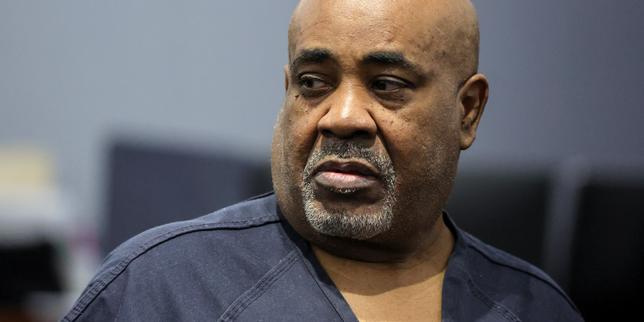
A Los Angeles judge sentenced Pasqual to 32 years to life in prison. He pleaded no contest to one count of first-degree residential burglary with person present and one count of injuring a spouse, cohabitant, fiancé, boyfriend, girlfriend, or child’s parent. The sentence ensures that for the next three decades, the only marks he will hit are the ones dictated by a correctional officer. The spotlight is permanently gone, replaced by the sterile, gray concrete of a maximum-security cell.
But the sentence, as substantial as it is, raises a deeper, more unsettling question. Why does it take a near-fatal tragedy for the system to finally erect a permanent wall between a predator and a victim?
Abuse rarely begins with a knife. It begins with control. It starts with the subtle erosion of autonomy—the monitored text messages, the engineered isolation from friends, the explosive arguments followed by tears and promises of reformation. In the behavioral sciences, this is known as coercive control. It is a slow, methodical poisoning of a relationship. By the time the physical violence manifests, the victim is often trapped in a psychological cage, convinced that any attempt to leave will trigger the very catastrophe they are trying to avoid.
The statistics are a brutal mirror to our society. According to data from the National Coalition Against Domestic Violence, an average of twenty people per minute are physically abused by an intimate partner in the United States. In a single year, that equates to more than ten million individuals. It is a quiet pandemic, happening behind closed blinds, underneath the noise of televisions, and, yes, even in the affluent neighborhoods of Southern California where the elite go to escape the public eye.
The Anatomy of the Aftermath
To look at a survivor of this level of violence is to witness a profound, quiet heroism.
The immediate aftermath of a stabbing is a medical crisis—surgeries, blood transfusions, intensive care, the frantic effort of doctors to keep a heart beating. But the long-term aftermath is a lonely, grueling reconstruction project. The human body remembers trauma. A sudden noise, a shadow moving too quickly past a window, or the specific click of a door lock can trigger a flood of adrenaline, sending the nervous system right back to that midnight bedroom.
Consider the reality of what it means to rebuild a life from the studs. You have to learn to trust your own shadow again. You have to look at the world through eyes that have seen the absolute worst of human capability.
The public often wants a neat narrative arc. We want the victim to heal, the villain to go to jail, and the story to conclude with a reassuring message about resilience. But resilience is an exhausting requirement. It is a heavy burden placed on people who never asked to be strong in the first place; they just wanted to be safe.
The sentencing of an actor to life in prison shouldn't be treated as a piece of Hollywood trivia. It shouldn't be a footnote in the history of a television show. It must be viewed as a stark, uncompromising warning about the lethality of domestic obsession. When we dismiss early red flags as mere "relationship drama," we pave the road that leads to these violent crescendos.
The courtroom is empty now. The reporters have moved on to the next trial, the next scandal, the next breaking news alert. Pasqual is processing into a system that will hold him until he is an old man, stripped of the charm and the ambition that once defined his aspirations.
But far away from the prison walls, in a quiet room, a survivor wakes up. The sun is shining through the window. The door is locked. The air is still. She takes a breath, deep and unhurried, claiming a future that someone tried, with twenty desperate strokes, to steal away forever.
_Steam_Key-GLOBAL_1.webp)