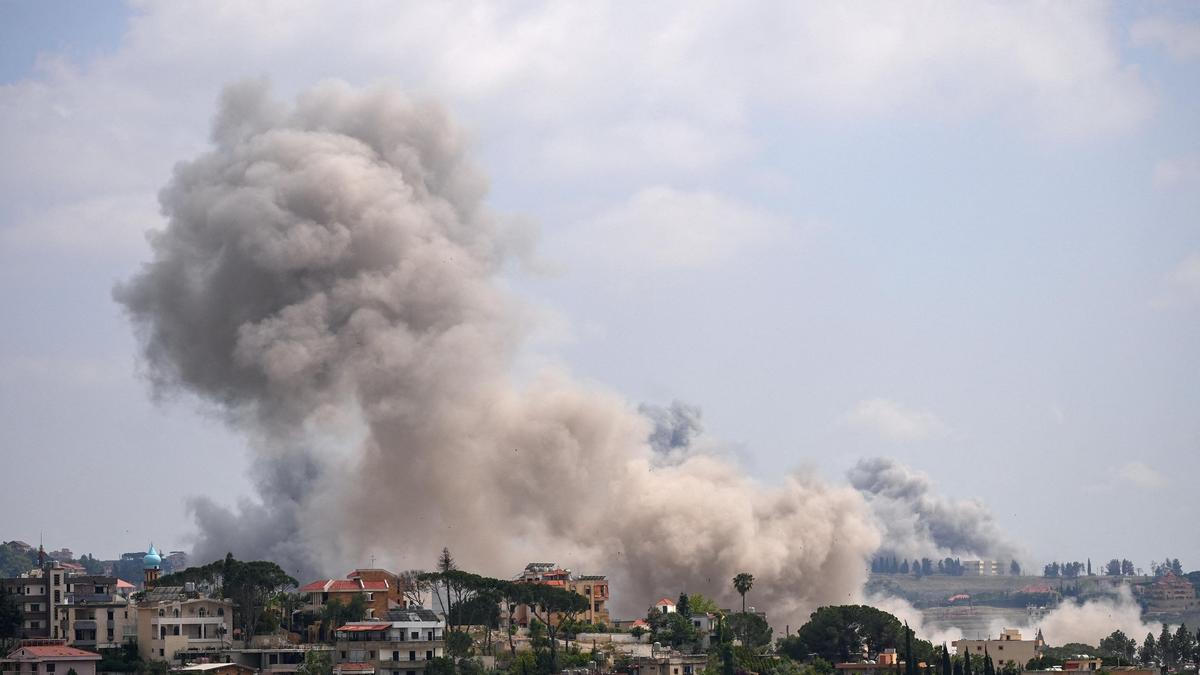
White House announcements no longer carry the weight of enforcement on the ground in the Middle East. President Donald Trump declared on social media that Israel and Hezbollah had agreed to a mutual de-escalation, claiming all shooting would stop and troops heading toward Beirut had been turned back. Hours later, Israeli drone strikes killed eight people in southern Lebanon, including a father and his two children. The disconnect between Washington rhetoric and the reality in southern Lebanon exposes a glaring structural flaw in current diplomatic efforts. The conflict is no longer governed by top-down announcements but by tactical opportunism and a fundamental mismatch of strategic goals.
A deal negotiated through intermediaries and proclaimed via social media posts cannot survive when both combatants view the battlefield as an active theater for carving out long-term security margins. While the White House sought a quick diplomatic victory to keep broader negotiations with Iran on life support, the Israeli military expanded its deepest ground incursion into Lebanon in twenty-six years. The strikes in southern Lebanon on Tuesday hit a car on the road between Marjayoun and Nabatiyeh, killing a local dentist, James Karam, along with his daughter and son. Other strikes targeted agricultural workers and civilian vehicles in Jibchit, Toul, and Harouf.
The immediate tactical trigger for the continued violence lies in a highly localized, asymmetric war of attrition that bypasses international diplomatic channels entirely. Hezbollah has increasingly relied on hard-to-detect fiber-optic drones and anti-tank guided missiles to inflict steady casualties on advancing Israeli forces. Just before the latest strikes, an Israeli soldier was killed and seven others were wounded in a single engagement in southern Lebanon. For the political leadership in Jerusalem, an agreement that spares Beirut while leaving troops exposed to ambush in the south is strategically unviable.
This dynamic reveals a stark divergence in how the two sides interpret the parameters of engagement. The Lebanese presidency understood the proposed arrangement as a localized trade-off: Israel would refrain from bombing Beirut's southern suburbs of Dahiyeh if Hezbollah stopped attacking Israeli cities. Yet Prime Minister Benjamin Netanyahu quickly clarified his stance, stating that Israel will continue to operate as planned in southern Lebanon regardless of the status of the capital. Defense Minister Israel Katz confirmed that any restraint regarding Beirut was merely a temporary nod to U.S.-Iran negotiations, not a permanent halt to operations.
The underlying architecture of the April ceasefire framework has effectively fractured under the weight of regional geopolitical maneuvering. Iran had previously conditioned its broader diplomatic engagement with the United States on a sustained cessation of hostilities in Lebanon. Following the recent Israeli push toward strategic landmarks like Beaufort Castle and the subsequent threat to resume the heavy bombardment of Beirut, Tehran announced a suspension of indirect talks with Washington. This move forced the White House into frantic damage-control mode, resulting in the flurry of phone calls that produced Trump’s premature announcement of a total halt to shooting.
The core failure of this diplomatic approach is the reliance on ambiguous, unwritten understandings that lack formal enforcement mechanisms. Hezbollah MP Hassan Fadlallah openly rejected the concept of a partial truce that protects the capital while leaving the southern front open to unchecked Israeli maneuvers. For Hezbollah, the war in the south is inextricably linked to its broader survival and its standing as a regional proxy. It cannot accept an arrangement that decouples the security of Beirut from the security of its traditional strongholds along the Litani River.
Meanwhile, Lebanese diplomats are arriving in Washington for a second round of direct bilateral talks with Israeli officials. These talks represent the first formal diplomatic engagement between the two nations in over thirty years, yet they are occurring in a vacuum. Hezbollah refuses to participate directly, relying instead on the leverage exerted by Iran’s overarching negotiations with the United States. Without a mechanism to bind the actual fighters on the ground to the commitments made by diplomats in Washington hotels, any document produced remains largely academic.
The human cost of this diplomatic disconnect continues to mount rapidly. The latest escalation has pushed the total death toll in Lebanon past 3,400, while displacing over a million people from their homes. In northern Israel, rocket fire continues to trigger sirens and disrupt civilian life, while the Israeli military acknowledges losing nearly thirty soldiers in the southern border operations alone. The reality on the ground is not one of de-escalation, but of a calculated intensifying of pressure by both sides ahead of potential policy shifts in Washington.
International diplomacy operates on the assumption that state leaders can control the forces under their command and deliver on their public promises. When a U.S. president asserts that troops have turned back and shooting will stop, only to be answered by drone strikes and anti-tank fire within hours, that assumption crumbles. The events in southern Lebanon demonstrate that the conflict has evolved past the point where it can be resolved by verbal assurances or social media declarations. The fighting continues because the core strategic objectives of Israel and Hezbollah remain fundamentally irreconcilable through the current framework of indirect negotiation.