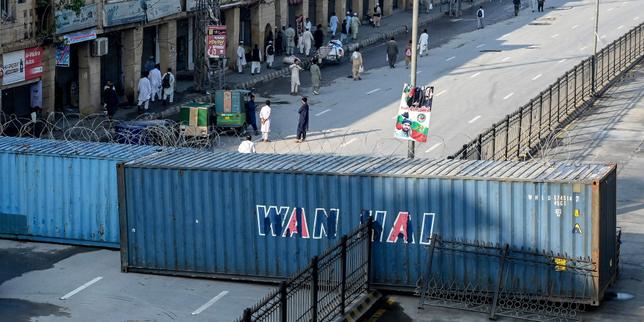
Western media and digital echo chambers love a simple narrative. Give them an ousted populist prime minister facing legal battles, prison walls, and a state apparatus bearing down on his party, and they will instinctively reach for the classic script. David versus Goliath. Democracy versus the deep state. A noble crusader fighting an unyielding military establishment for the soul of a nuclear-armed nation.
It is a tidy story. It is also dangerously wrong. Also making waves in this space: Why NATO Insists Surprise Attacks Are Practically Impossible Now.
The standard media treatment of Pakistan Tehreek-e-Insaf and its charismatic leader Imran Khan relies on a lazy consensus. The premise goes that if the military establishment is fighting Khan, Khan must inherently be the champion of democratic reform, civilian supremacy, and progressive governance. This is binary thinking for people who refuse to look at a ledger. It ignores how political power actually functions in Islamabad, Rawalpindi, and the provinces. It erases Khan’s own history of using the exact same playbook, institutions, and extra-constitutional levers when he held the office.
Let us look at the mechanics of power in Pakistan without the romantic haze. Additional information on this are covered by TIME.
When Khan swept to power in 2018 with the heavy, heavy thumb of the military establishment resting squarely on the scales, the international commentariat largely shrugged or bought into the "hybrid regime" novelty. Back then, the marriage of convenience between Khan’s populist anti-corruption rhetoric and the military high command was celebrated by his supporters as a clean break from dynastic politics. The Pakistan Muslim League-Nawaz and the Pakistan Peoples Party were cast as corrupt syndicates, while Khan was framed as the honest outsider.
The reality was far more transactional. Khan did not dismantle the establishment; he outsourced his governance to it while using its coercive apparatus to grind down his political opposition. Accountability bureaus were weaponized. Media outlets critical of the administration were squeezed through financial starvation and signal blocking. Legislative measures were forced through parliament with minimal debate via ordinances.
To pretend that Khan’s current persecution makes him a martyr for constitutionalism is to rewrite the timeline of his own premiership. A politician who rode into office on the back of institutional engineering does not suddenly become Thomas Jefferson the moment those same engineers turn the machine against him. He simply becomes an out-of-power operator trying to break the board because he no longer controls the pieces.
The Western fixation on personalities blinds observers to structural decay. Pakistan does not suffer from a lack of charismatic leaders; it suffers from a political culture utterly devoid of institutional fidelity. Every major party—whether it is PTI, PML-N, or PPP—adores the rules when they benefit them and denounces them as illegitimate tyranny the second they are used against them.
When Khan was prime minister, dissenting voices within journalism and civil society were routinely silenced under the guise of national security and anti-corruption. Journalists critical of the hybrid arrangement faced intimidation, abduction, and legal harassment. Now that the shoe is on the other foot, the PTI fan base has discovered the language of human rights and due process. The hypocrisy is breathtaking, yet predictable.
This brings us to the core misconception peddled by headline-chasers: the idea that removing the military from political engineering will automatically produce a stable, liberal democracy in Islamabad.
History suggests otherwise. Civilian governments in Pakistan have a dismal record of institutional strengthening. When civilian leaders attain absolute dominance, they routinely stack the judiciary, undermine local government structures, and centralize financial patronage. The military establishment remains the ultimate arbiter precisely because civilian politicians have consistently proven incapable of resolving structural economic crises without retreating into populist handouts, rent-seeking, and sectarian or ethnic pandering.
Khan’s economic legacy is a prime example. During his tenure, negotiations with the International Monetary Fund were marked by erratic stop-and-start compliance, fueled by domestic political imperatives that prioritized short-term price freezes over structural fiscal discipline. The current economic misery in Pakistan is not solely the product of the caretaker regimes or the current coalition; it is deeply baked into the structural imbalances that both Khan and his predecessors refused to fix because doing so would alienate their urban, middle-class tax bases and rentier supporters.
To understand why the state continues its aggressive containment of PTI, one must abandon the comforting notion that this is a simple battle between good and evil. It is a ruthless intra-elite war for resource allocation and rent distribution. The military, having built a vast commercial and political empire over decades, views any populist force that commands genuine street power as an existential threat to its institutional autonomy and economic interests. Khan, sensing that his mass mobilization is his only remaining leverage, has crossed red lines that previous civilian leaders usually avoided, directly challenging the institutional prestige and command structure of the armed forces in public squares.
When an immovable object meets an irresistible force, something has to break. In Pakistan, what breaks is constitutional continuity, economic stability, and the social fabric.
The tragedy of the current discourse is that it reduces a complex, multi-layered systemic crisis into a soap opera about one man's freedom. If Khan were to walk out of prison tomorrow and return to power, the structural rot of the Pakistani state would remain untouched. The tax-to-GDP ratio would still hover near the lowest in the region. The civil service would still be bloated and politicized. The judiciary would still be paralyzed by massive case backlogs and executive interference. The external debt trap would still demand agonizing structural adjustments that no populist leader has the political courage to implement.
Stop looking for heroes in a system built on patronage. There are no democratic saviors in this arena; there are only operators playing a high-stakes game of musical chairs while the country teeters on the edge of fiscal insolvency. Until Pakistani politics moves past the cult of personality and builds institutional checks that survive the exit of any single leader, every cycle of crackdowns, crackups, and comebacks will simply repeat the same tragic script.