The Independent is accelerating its multimedia content strategy because the traditional referral economy that built modern digital journalism is dying. Faced with declining search traffic from artificial intelligence summaries and volatile social media algorithms, the British digital-only publisher is aggressively expanding its video production, connected television presence, and audio programming to build direct audience habits and capture higher-margin advertising dollars.
If you have spent the last twenty years watching legacy newspapers try to survive the internet, this playbook looks familiar on the surface. Every publisher claims to be "video-first" when display ad rates tank. Yet what separates the current push by Independent Digital News and Media from the disastrous "pivot to video" of the mid-2010s is sheer survival math. In 2016, publishers burned millions chasing cheap, auto-playing Facebook views that generated pennies in revenue and destroyed newsroom morale. Today, The Independent is treating multimedia not as a social media vanity metric, but as an owned-and-operated broadcast network designed to bypass search engines entirely.
The Economics Behind the Camera Lens
Text journalism on the open web has a structural ceiling. A standard written news article relies heavily on programmatic display advertising—those banner ads that clutter your screen and yield dwindling cost-per-thousand impressions (CPM) rates as third-party cookies vanish and ad blockers proliferate. Even with massive scale, a text-heavy site must churn out hundreds of articles a day just to keep the lights on.
Video and audio change the unit economics entirely. Pre-roll and mid-roll video advertisements routinely command CPMs three to five times higher than standard display banners. Connected TV (CTV) inventory—such as streaming apps on Roku, Samsung, or Apple TV—pushes those rates even higher, tapping into traditional television brand budgets rather than scraped-together digital remnants.
Consider a hypothetical example of how this math plays out on a publisher's balance sheet. If a breaking news text article attracts 100,000 pageviews at a $3 display CPM, it generates $300. If that same newsroom produces a tightly edited, four-minute video explainer on the exact same topic that garners 100,000 streams across its website, YouTube, and CTV channels at an average $18 video CPM, the revenue jumps to $1,800. You do not need an MBA to see why editors are suddenly obsessed with studio lighting and teleprompters.
The Independent actually holds a distinct structural advantage here compared to rivals like The Guardian or The Telegraph. When the title shuttered its print edition in 2016 to become the first major UK national newspaper to go digital-only, it shed the crippling fixed costs of printing presses, newsprint paper, and physical distribution trucks. That financial agility allowed the company to reach profitability while competitors were still negotiating buyouts for print layout editors. Now, it is taking that same unburdened operating model and applying it to broadcast-style production without the legacy union rules or massive studio overhead of traditional television networks like ITV or the BBC.
Inside the Modern Multimedia Newsroom
Building a credible multimedia operation requires far more than handing a smartphone to a print reporter and telling them to film a vertical clip for TikTok. Audiences can smell cheap, repurposed content instantly, and they punish it by swiping away within two seconds.
To make this strategy work, a digital publisher has to re-architect its entire editorial workflow around three distinct pillars:
- Platform-Native Documentary and Explainer Video: Instead of just narrating a text article over stock footage, newsrooms are investing in presenter-led journalism. Viewers form parasocial bonds with recognizable hosts, not mastheads. A correspondent standing in front of an interactive screen breaking down an economic crisis or a geopolitical conflict builds recurring appointment viewing.
- Connected TV and FAST Channels: Free Ad-Supported Streaming Television (FAST) has become the new cable bundle. By packaging news bulletins, documentaries, and lifestyle shows into linear streaming feeds, publishers place their brand directly on the living room television screen, competing head-to-head with traditional 24-hour news channels.
- Serialized Audio and Podcasts: Audio commands unmatched listener attention. While a website visitor might skim a headline for twelve seconds, a podcast listener stays locked in for thirty to forty-five minutes during a commute or a workout. That sustained attention creates high-trust environments for host-read sponsorships, which remain largely immune to ad-blocking software.
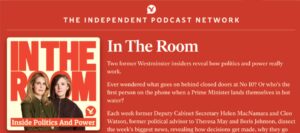
The Independent has systematically built out its Independent TV platform alongside dedicated audio strands to capture these exact behaviors. By housing video directly on its own domain while simultaneously syndicating clips to YouTube, Apple Podcasts, and Spotify, the company plays both sides of the distribution game. It uses third-party platforms as customer acquisition funnels while keeping the highest-margin ad inventory inside its own digital walls.
The Search Engine Extinction Event
You cannot understand the urgency of this multimedia push without looking at what Google and generative AI are doing to the open web. For two decades, the unspoken bargain between publishers and search engines was simple: publishers allowed crawlers to index their reporting for free, and in exchange, Google sent billions of clicks back to publisher websites.
That bargain is dead.
With the rollout of AI-generated answers sitting directly at the top of search results pages, users no longer need to click through to a news website to find out why the stock market dropped or what time a football match starts. Industry analysts routinely project that AI search summaries will strip away 20 to 40 percent of traditional organic search traffic from informational and news websites. If your business model depends on someone typing a question into a search bar and clicking your link, you are standing on a melting ice floe.
Multimedia acts as an insurance policy against AI summarization. An algorithm can easily scrape five text articles, synthesize the facts, and spit out a bulleted summary in half a second. It cannot replicate the emotional weight of raw footage from a disaster zone, the nuance in an investigative journalist's voice during a tense interview, or the charisma of a sharp panel discussion. Humans still want to watch and listen to other humans. By shifting focus toward personality-driven video and immersive audio, The Independent is creating content that cannot be easily digested and regurgitated by a large language model.
The Hidden Traps of the Multimedia Gamble
Despite the compelling financial logic, betting heavily on video and audio carries severe operational risks. History is littered with the corpses of digital media companies that expanded their production budgets faster than their ad sales teams could sell the inventory.
First, there is the brutal reality of production costs. A single investigative print journalist armed with a laptop, a phone, and a public records request can break a major story for the cost of their salary. Producing a high-grade video documentary or a daily studio broadcast requires camera operators, sound engineers, video editors, motion graphics designers, and expensive equipment. Fixed costs balloon quickly. If advertising demand softens during an economic downturn, a bloated video studio becomes an anchor that drags down the entire balance sheet.
Second, publishers face a dangerous dependency trap on third-party platforms. YouTube is currently the undisputed king of digital video, offering massive reach and a reliable revenue-sharing program. Yet YouTube controls the algorithm, the recommendation engine, and the monetization rules. If a news publisher covers war, crime, political extremism, or public health crises—the exact topics that drive hard news engagement—YouTube's automated brand-safety filters frequently demonetize the videos. A publisher can spend ten thousand pounds producing a stellar piece of conflict journalism only to have it flagged as "unsuitable for most advertisers," wiping out its revenue potential overnight.
Third, there is the problem of audience dilution. Readers who visit a website for sharp, fast-loading text analysis often hate being ambushed by auto-playing video players that hijack their screen and drain their phone battery. If a newsroom forces video onto every page just to juice view counts, it degrades the user experience, increases bounce rates, and erodes the very brand loyalty it is trying to build.
The Talent Bottleneck
Technology is easy to buy; hybrid journalistic talent is nearly impossible to find.
For generations, journalism schools and newsrooms sorted people into neat boxes. Print reporters wrote crisp prose and dug up documents. Broadcast journalists knew how to project their voices, hit a thirty-second mark, and look comfortable on camera. Rarely did those skill sets overlap.
Accelerating a multimedia strategy forces a cultural collision inside the newsroom. Traditional investigative reporters often resent being asked to summarize their six-month investigation into a punchy sixty-second vertical video. Meanwhile, young social-first video producers sometimes lack the rigorous editorial training, legal awareness, and fact-checking discipline required to cover sensitive breaking news without triggering a libel lawsuit.
The publishers that win this transition are not the ones with the flashiest cameras. They are the ones that successfully retrain their veteran beat reporters to speak naturally on camera and behind a microphone, pairing deep subject-matter expertise with modern visual storytelling. When a seasoned political editor can break down a parliamentary crisis in a three-minute video with the same authority they bring to a 1,500-word column, the audience notices.
What Separates Survivors from Casualties
Looking across the global media sector, the divergence between thriving digital publishers and struggling ones comes down to discipline. The winners refuse to chase empty scale.
Instead of measuring success by raw video views—a metric easily inflated by three-second silent scrolls on social feeds—smart operators track completion rates, watch time per session, and direct app opens. They treat YouTube and TikTok strictly as billboards to drive viewers back to their owned properties, where they can capture first-party email addresses, push notifications, and subscription dollars.
The Independent's push into multimedia is a calculated recognition that the era of passive text consumption on the open web is closing. News organizations can no longer sit back and wait for search engines to deliver an audience to their doorstep. They have to become broadcasters, podcasters, and documentary makers capable of commanding attention across every screen in a consumer's life.
The cameras are rolling, the studios are built, and the ad rates are there for the taking—provided the journalism itself stays sharp enough to keep viewers from reaching for the remote.