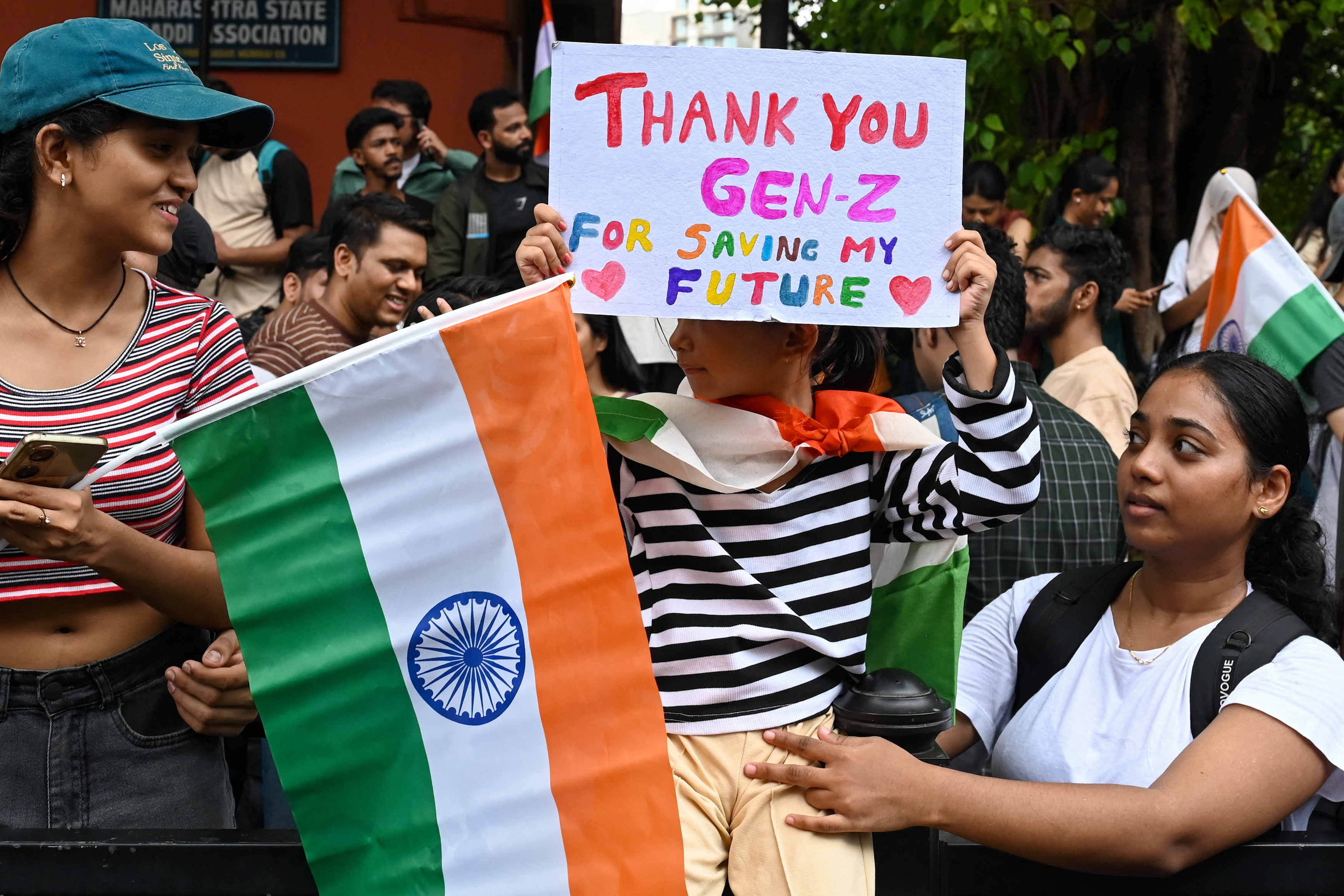
Western commentators love projecting their own domestic anxieties onto foreign superpowers. When they look at India, they see a mirror image of Washington or London: a massive cohort of disaffected youth, a panicked administration desperately chasing TikTok trends, and an inevitable generational collision course. The lazy consensus is that Prime Minister Narendra Modi is caught in a trap, trying to woo an electorate of digital natives while simultaneously building an authoritarian apparatus that clamps down on their digital freedoms.
It is a neat narrative. It is also completely wrong.
I have spent the last decade watching political strategies mutate across South Asia, and the foreign press consistently misses the structural reality on the ground. Modi is not pandering to Gen Z; he is weaponizing their economic ambition while aggressively pruning their political radicalism. The simultaneous charm offensive and the regulatory crackdown are not a contradiction. They are two halves of the exact same strategy designed to create hyper-capitalist loyalists who care more about stock options and infrastructure than abstract theories of free speech.
The Myth of the Rebellious Youth
The core fallacy underpinning every mainstream analysis of Indian youth is the assumption that twenty-somethings in New Delhi or Bengaluru think like twenty-somethings in Brooklyn or Berlin. Western political theory assumes that economic development naturally marches in lockstep with Western-style individual liberties.
History disagrees. Rapidly industrializing nations rarely prioritize civil libertarianism during their ascension. When you lift hundreds of millions of people out of rural poverty over the span of a single generation, the mood music of the youth is not anti-establishment rage; it is unbridled, hyper-nationalist optimism.
I have sat in tech hubs from Noida to Hyderabad. The average Indian twenty-something is not losing sleep over internet throttling or content moderation laws passed by the Ministry of Electronics and Information Technology. They are obsessing over UPI transaction volumes, the explosion of domestic venture capital, the expansion of expressways, and India's seat at the G20 table.
When the administration deploys digital charm offensives—courting content creators, backing domestic app ecosystems, and flooding social feeds with high-production reels of national modernization—they are not begging for approval. They are building a digital hegemony. They are showing young voters that national pride and personal upward mobility are the exact same product.
The Crackdown Is a Feature Not a Bug
Foreign observers clutch their pearls whenever New Delhi blocks a foreign platform, arrests a provocative internet personality, or demands algorithmic transparency from multinational tech giants. They call it censorship.
Let us call it what it actually is: sovereign protectionism.
Every major geopolitical power goes through a phase where it asserts control over its domestic communications infrastructure. The United States spent decades quietly weaponizing the NSA and is currently trying to ban TikTok outright under the guise of national security. Yet when India does it to maintain social cohesion in a fragile multi-ethnic state of 1.4 billion people, Western pundits act like the sky is falling.
The crackdown on online dissent is precise. It targets foreign-funded narrative operations, domestic polarization tactics, and platforms that threaten to fracture social stability. If you are an Indian kid building an e-commerce startup or a local creator making content about regional cuisine, nobody is cracking down on you. In fact, tax incentives and digital infrastructure are being handed to you on a silver platter.
The restriction is placed strictly on digital anarchy. The state has made a cold, calculated bet: social stability yields economic growth, and economic growth secures generational loyalty. So far, the data proves them right. Look at the numbers. Domestic consumption is soaring. Foreign direct investment treats political stability as a premium asset, not a bug. The youth are buying houses, building portfolios, and riding the fastest-growing major economy wave in the world.
The Economic Realpolitik
To understand why the youth vote is firmly locking in behind the current administration, look past the headlines about protests and look at the capital allocation.
India's digital public infrastructure—known locally as India Stack—is the envy of the planet. Aadhaar, UPI, and the Open Network for Digital Commerce have democratized entrepreneurship in a way Western regulators can only dream of. A twenty-year-old in a Tier-2 city can spin up a fintech app, plug into a national payment rail with zero merchant fees, and scale to millions of users in months.
That is not an administration that is hostile to youth. That is an administration handing young people the keys to the kingdom, provided they drive on the state's paved roads.
The trade-off is transparent. You get unprecedented economic velocity, world-class digital rails, and a geopolitical heavyweight status that makes your passport mean something abroad. In exchange, you accept that the state holds a monopoly on political destabilization. For a generation that remembers the economic stagnation and bureaucratic paralysis of previous decades, it is a bargain they take every single day of the week.
The Flaw in the Contrarian Bet
Every strategy has a breaking point, and mine is no exception. The risk of hyper-centralized digital control is calcification. When you tightly manage the information ecosystem, you risk stifling the chaotic, messy friction that breeds genuine technological breakthroughs. Silicon Valley did not become a global behemoth by being orderly; it won because it tolerated a staggering amount of cultural and corporate deviance.
If India’s administrative apparatus becomes too heavy-handed, it risks turning its most brilliant engineers and founders into expatriates. We are already seeing murmurs of talent leakage to more permissive tech jurisdictions. If the state cannot distinguish between malicious political subversion and harmless intellectual dissent, it will eventually choke the very golden goose it is trying to feed.
Yet, betting against the current administration's hold on the youth demographic based on Western metrics of freedom is an amateur mistake.
Stop viewing Indian youth through the lens of western protest movements. They are not waiting for a savior to rescue them from digital authoritarianism. They are too busy building the next financial empire on a government-backed API.