The Strait of Hormuz is a choke point that keeps Indian energy planners awake at night. Through this narrow strip of water, barely 21 miles wide at its narrowest point, flows one-sixth of the world’s oil and a third of its liquefied natural gas. For India, which imports over 80% of its crude and roughly half of its natural gas, the math is simple and terrifying. Any regional flare-up between Iran and its neighbors could instantly throttle the Indian economy. To break this dependency, New Delhi is now aggressively pursuing a ₹40,000 crore ($4.8 billion) subsea gas pipeline project that would link the Middle East directly to the Gujarat coast.
This is not a mere infrastructure project. It is a geopolitical escape hatch.
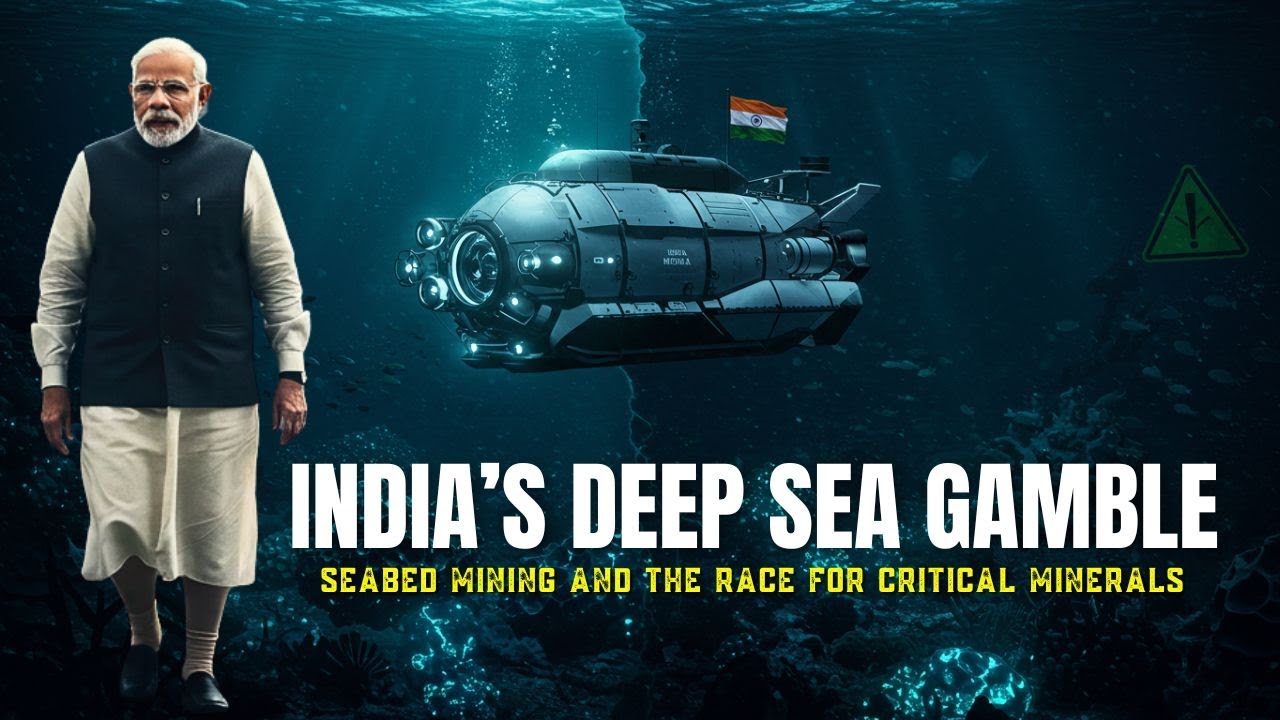
The proposed Middle East-India Deepwater Pipeline (MEIDP) aims to transport natural gas from the massive fields of Oman and potentially the UAE and Iran across the Arabian Sea. By laying pipe at depths of 3,500 meters below the surface, India hopes to create a permanent, high-volume energy artery that remains immune to the surface-level skirmishes, tanker seizures, and drone strikes that have come to define the Persian Gulf.
The Choke Point Reality
Relying on tankers is a logistical nightmare during times of conflict. When tensions rise in the Middle East, insurance premiums for maritime transport skyrocket. These "war risk" surcharges are passed directly to the Indian consumer at the pump and in electricity bills. Furthermore, the physical vulnerability of a slow-moving LNG carrier is a liability that no amount of naval escorting can fully mitigate.
The subsea pipeline solves the "Hormuz Problem" by going under it—or rather, around it. Starting from Middle Eastern hubs like Ras Al Jafurah or Sohar, the pipeline would bypass the narrowest parts of the Gulf and head straight into the deep waters of the Arabian Sea. This path puts the infrastructure well outside the reach of the small-boat harassment and coastal battery threats that plague the surface lanes.
Engineering at the Edge of Possibility
Building a pipeline at these depths is a feat that has rarely been attempted on this scale. The pressure at 3,500 meters is immense. It is roughly 350 times the atmospheric pressure at sea level. To prevent the pipe from imploding, the steel walls must be exceptionally thick, and the welding must be flawless.
India is looking at a "S-Lay" or "J-Lay" methodology for deployment. In these scenarios, specialized vessels slowly unspool kilometers of heavy-duty pipe into the abyss, using GPS-guided tensioners to ensure the line doesn't snap under its own weight before it hits the seabed. Unlike shallow-water pipelines, repairs at these depths are nearly impossible for human divers. Every inch must be monitored by Remotely Operated Vehicles (ROVs) and autonomous sensors that can detect a hairline fracture before it becomes a catastrophic leak.
The project is slated to deliver roughly 31 million standard cubic meters of gas per day (mmscmd). For context, that is enough to power several large industrial clusters or fuel a massive transition toward gas-based power generation in India’s western states.
The Cost of Sovereignty
A price tag of ₹40,000 crore is a significant commitment, but the alternative is more expensive. Every time a tanker is delayed or diverted, the volatility in the spot market for LNG can cost Indian buyers hundreds of millions of dollars in a single quarter.
The project structure is expected to involve a consortium of state-run entities like GAIL and Indian Oil, likely in partnership with international engineering giants who possess the deep-sea expertise India currently lacks. However, the financing is more than just a corporate balance sheet issue. It is a strategic investment in price stability. By locking in long-term supply contracts delivered via a fixed pipe, India can insulate its domestic manufacturing sector from the wild price swings of the global LNG market.
Geopolitical Friction and the Iranian Factor
No pipeline in this region exists in a vacuum. The elephant in the room is Iran. While the pipeline is currently discussed as a link to Oman and the UAE, the geographic reality is that Iran holds some of the world’s largest gas reserves (the South Pars field). Integrating Iran into this network would provide India with virtually limitless fuel, but it would also trigger a diplomatic collision with Washington.
U.S. sanctions remain the primary hurdle for any project involving Iranian gas. New Delhi has spent years performing a delicate balancing act—maintaining a strategic partnership with the U.S. while keeping its energy doors open to Tehran. If the MEIDP is to be successful, it must be designed as a "multi-user" corridor. This allows India to start with "safe" partners like Oman while keeping the infrastructure ready for a future where Iranian sanctions might be eased or bypassed through complex swap agreements.
Environmental and Seismic Obstacles
The Arabian Sea is not a flat desert underwater. The pipeline must traverse the Owen Fracture Zone and navigate around underwater ridges and canyons. This is an active seismic area. An earthquake on the seabed could shear a rigid steel pipe in seconds.
To mitigate this, engineers are proposing a "flexible" routing system in high-risk zones, using specialized joints that allow for minor movement without compromising the seal. There is also the matter of the marine ecosystem. The construction phase will involve heavy dredging and displacement of sediment, which has already drawn scrutiny from environmental groups concerned about the impact on deep-sea biodiversity and the livelihoods of fishing communities along the Gujarat coast.
Why LNG Isn't Enough
Critics argue that India should simply build more LNG regasification terminals. These are onshore facilities that take liquid gas from ships and turn it back into a vapor. While India is indeed building these at a rapid clip, they do not solve the fundamental problem of transit risk.
An LNG terminal is only as useful as the ships that can reach it. In a conflict scenario where the Strait of Hormuz is closed, those terminals become billion-dollar monuments to a broken supply chain. A pipeline, conversely, provides a continuous flow that is much harder to interrupt through traditional naval blockades or localized maritime skirmishes.
The Race Against the Energy Transition
India is in a unique position. While the West is trying to move away from fossil fuels, India is still trying to move into cleaner fossil fuels. Coal still dominates the Indian power grid. Natural gas is the "bridge fuel" that the government needs to lower the carbon intensity of its economy while it waits for green hydrogen and large-scale solar storage to become commercially viable.
If this pipeline is not built within the next decade, India may find itself stuck with a coal-heavy infrastructure that it cannot easily dismantle. The ₹40,000 crore investment is a bet that natural gas will remain relevant for at least the next thirty to forty years. If the world moves toward green energy faster than expected, the MEIDP could become a "stranded asset"—a multi-billion dollar pipe sitting empty on the ocean floor.
Negotiating the "Take or Pay" Trap
The commercial success of the pipeline hinges on "Take or Pay" contracts. These agreements require the buyer (India) to pay for a set amount of gas regardless of whether they actually use it. This ensures the developers can pay back the massive construction loans.
However, these contracts have burned Indian utilities in the past. If domestic renewable energy prices continue to plummet, gas-fired power might become too expensive to compete. The Indian government will have to provide significant sovereign guarantees to back these contracts, effectively putting the taxpayer on the hook if the economics of gas sour in the 2030s.
Strategic Redundancy
The MEIDP is not the only pipeline on the drawing board. For years, the TAPI (Turkmenistan-Afghanistan-Pakistan-India) pipeline has been the "holy grail" of Indian energy security. But TAPI is a geopolitical nightmare, requiring a pipe to run through some of the most unstable terrain on the planet.
The subsea route to the Middle East is, by comparison, a model of stability. It avoids the transit risks of hostile or unstable neighboring countries on land. The only "neighbor" to deal with in the Arabian Sea is the ocean itself. This shift from overland to subsea reflects a broader change in Indian strategic thinking: it is easier to fight the elements than it is to negotiate with a volatile neighbor.
The Gujarat Connection
The landfall point in Gujarat is strategically chosen. The state already serves as the energy gateway for India, with the highest concentration of pipelines, refineries, and industrial zones in the country. By landing the MEIDP here, the gas can be immediately injected into the National Gas Grid, reaching the industrial heartlands of the north and west within hours.
This existing infrastructure reduces the "last mile" costs of the project. It also allows for the gas to be diverted to various sectors—from fertilizer plants in Uttar Pradesh to ceramics factories in Morbi—depending on where the demand is highest at any given moment.
The Military Dimension
While marketed as a commercial project, the pipeline will require a new level of maritime surveillance. The Indian Navy will likely play an increased role in patrolling the Arabian Sea corridor to ensure that the infrastructure is not tampered with. This creates a "security umbrella" that further cements India's role as the net security provider in the Indian Ocean Region.
Subsea sensors meant to monitor the pipeline's health can also serve a dual purpose, providing the Navy with acoustic data on submarine movements in the area. This merging of commercial infrastructure with national security is a tactic straight out of the modern superpower playbook.
The Project Timeline
Official feasibility studies are nearing completion, and the government is expected to move toward the tendering phase by late 2026. If the project receives the green light, construction could take five to seven years. This means the first molecules of gas might not flow until the early 2030s.
The question is whether India has that much time. As global energy markets become increasingly fragmented and the "Hormuz risk" shifts from a theoretical threat to a recurring reality, the urgency to break ground has never been higher.
India must now decide if it is willing to write the check for a project that is as much about naval strategy as it is about thermal units. The ₹40,000 crore price tag is steep, but it is the price of admission for a nation that no longer wants its economic future held hostage by a 21-mile stretch of water in the Persian Gulf.
Secure the funding, lock the contracts, and start the ships.