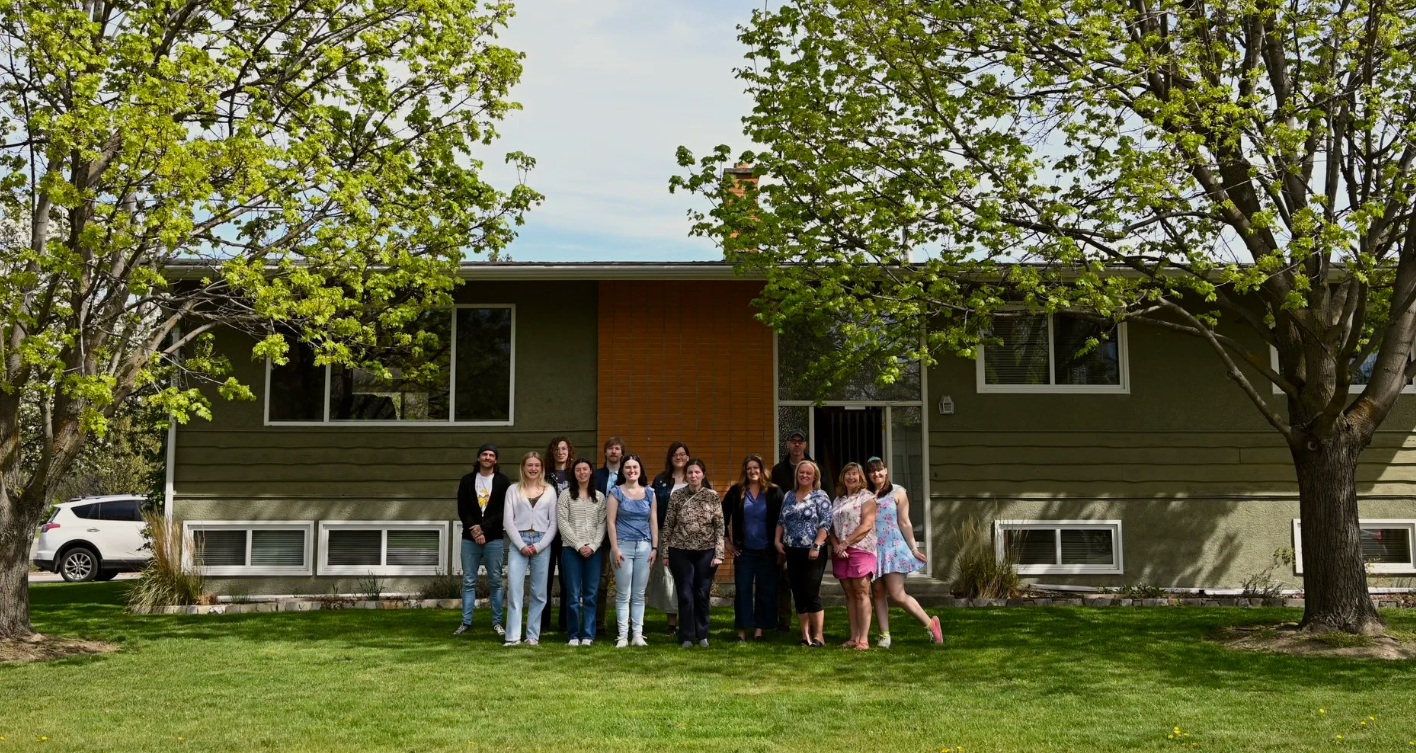
Community support for neurodivergent adults fails primarily through spatial and temporal fragmentation. When a municipality or non-profit relies on rented rec-center rooms, pop-up workshops, and rotating clinical appointments, the neurodivergent participant absorbs the cognitive tax of constant environmental recalibration. Establishing a permanent physical hub—exemplified by Kelowna’s dedicated "Home for Belonging" model—shifts the burden of adaptation from the individual nervous system to the built environment.
Standard community programming operates on a transient service model. Organizations book temporary spaces, run a two-hour social group or skill-building seminar, and pack up. For neurotypical participants, adapting to fluorescent lighting, unfamiliar acoustics, and shifting room layouts is a minor friction cost. For autistic individuals, people with ADHD, and those with sensory processing differences, that friction represents a massive executive function barrier. Every change in venue requires a complete sensory and logistical mapping of the space before social connection can even begin. A permanent facility eliminates this baseline neurological tax by establishing sensory predictability, spatial ownership, and continuous operational availability.
The Structural Failure of Transient Programming
To understand why a permanent facility alters outcomes for neurodivergent populations, one must examine the mechanics of cognitive load and sensory gating. Neurotypical brains automatically filter out background stimuli—the hum of an HVAC system, the glare of overhead LEDs, the unpredictability of foot traffic. Neurodivergent brains frequently exhibit reduced sensory gating, meaning every environmental input is processed with equal priority.
Transient community programs inadvertently maximize these stressors:
- Sensory unpredictability: Rented municipal halls or shared commercial spaces cannot be permanently modified for acoustic dampening, circadian lighting, or low-stimulation retreat zones.
- Transition friction: Navigating to new locations, deciphering unfamiliar transit routes, and managing irregular schedules deplete executive function reserves prior to arrival.
- Relational discontinuity: When physical space is temporary, social bonds remain tethered to scheduled programming rather than organic, drop-in familiarity. Relationships stall at the acquaintance stage because the environment does not support unscripted co-existence.
When support services treat space as an afterthought, attendance drops. Program administrators often misdiagnose this attrition as a lack of interest or social motivation among neurodivergent adults. In reality, the attrition is a rational neurological response to an unoptimized environment.
The Three Pillars of a Permanent Neurodivergent Hub
A dedicated facility like Kelowna’s Home for Belonging solves the fragmentation problem by altering the underlying infrastructure of community support. Analyzing this operational shift reveals three structural pillars that differentiate a permanent hub from traditional outreach.
1. Sensory Architecture as Baseline Infrastructure
In a temporary space, sensory accommodation is reactive—handing out earplugs or dimming a single switch. In a permanent hub, sensory regulation is engineered into the architecture. This includes acoustic baffling to eliminate echo, indirect warm-spectrum lighting to prevent visual fatigue, and zoned floor plans that separate high-energy collaborative areas from zero-stimulation decompression rooms. When the physical plant does the sensory regulation work, participants retain the cognitive bandwidth required for conversation, skill acquisition, and peer connection.
2. Spatial Anchoring and Routine Stabilization
Neurodivergent adults disproportionately rely on environmental cues to initiate and sustain habits. A permanent address acts as an externalized executive function anchor. Because the layout, staff, and sensory profile remain invariant week over week, the brain automates the logistics of attendance. Over time, the space transitions from an unfamiliar destination into an extension of the individual's safe territory. This territorial familiarity lowers baseline cortisol levels, making spontaneous social interaction possible without the scaffolding of a formal, facilitator-led icebreaker.
3. Peer-Led Co-Ownership Over Clinical Hierarchy
Traditional disability and neurodivergence services operate on a provider-recipient dyad: a clinician or social worker delivers an intervention to a passive client. Permanent community hubs invert this dynamic by enabling peer-led governance and organic mentorship. When neurodivergent individuals share a permanent space, they observe peers navigating employment, housing, and self-advocacy in real time. Knowledge transfers laterally rather than top-down. The facility becomes an incubator for mutual aid, reducing reliance on expensive, bottlenecked clinical interventions for everyday life navigation.
The Economics of Belonging and the Cost of Isolation
Building or leasing permanent real estate in a high-cost mid-sized market like Kelowna requires significant upfront capital and ongoing operational overhead. Skeptics often view dedicated physical spaces as capital-inefficient compared to decentralized, virtual, or pop-up programming. This critique ignores the downstream economic externalities of neurodivergent isolation.
Unaddressed social isolation in neurodivergent adults correlates directly with elevated rates of autistic burnout, severe anxiety, depression, and chronic underemployment. When an adult experiences burnout due to masking in unaccommodating environments, the economic consequences cascade across multiple systems:
- Healthcare utilization: Acute mental health crises drive emergency room visits and intensive psychiatric interventions that cost orders of magnitude more than preventative community infrastructure.
- Labor market attrition: Neurodivergent adults possess high rates of specialized competence, yet workplace turnover remains elevated when employees lack off-the-clock decompression spaces and peer support networks to troubleshoot workplace friction.
- Caregiver dependency: Without independent community anchors, aging neurodivergent adults remain disproportionately reliant on aging parents or state-funded residential care, straining municipal and provincial social safety nets.
A permanent hub functions as preventative infrastructure. By stabilizing daily routines and providing a low-friction environment for social and professional skill-building, the facility absorbs stress before it metastasizes into a clinical crisis. The capital expenditure on real estate offsets long-term public expenditure on acute healthcare and unemployment support.
Operational Realities and Execution Bottlenecks
Establishing a physical space does not guarantee functional inclusion. Non-profits and municipal initiatives launching permanent neurodivergent hubs face distinct operational failure modes that must be engineered out of the operating model from day one.
The primary risk is sensory conflict within the neurodivergent spectrum. Neurodivergence is not a monolith. An autistic adult seeking strict quiet and predictable rules may experience acute distress sharing a room with an unmedicated ADHD peer who regulates through vocalization, pacing, and high-energy brainstorming. If a hub relies on a single open-concept floor plan, these competing regulatory needs will cannibalize the space, driving away the most sensory-sensitive members. Effective floor plans require strict acoustic and visual compartmentalization—distinct zones for kinetic energy, quiet co-working, and total sensory deprivation.
The second limitation involves governance and demographic capture. Without intentional outreach and structured onboarding, a permanent drop-in center can quickly become dominated by a single vocal clique or a narrow demographic slice—such as high-masking, verbally fluent adults—inadvertently excluding non-speaking individuals, those with higher support needs, or newly diagnosed older adults. Operational protocols must balance open-door spontaneity with structured affinity blocks to ensure equitable access across varying communication styles and support profiles.
A third constraint is funding durability. Capital grants frequently cover the initial renovation or launch of a physical space, while operational grants for utilities, insurance, maintenance, and core facilitation staff remain scarce. A permanent building with unstable operational funding rapidly degrades into a chaotic, understaffed environment—reintroducing the exact unpredictability that harms neurodivergent users.
Scaling the Hub Model Across Mid-Sized Municipalities
Kelowna’s initiative demonstrates that permanent neurodivergent infrastructure is viable outside major metropolitan centers. Mid-sized cities often suffer from a service gap: they possess enough population density to generate acute demand for neurodivergent support, yet lack the specialized clinical ecosystems of major urban hubs.
To replicate this model effectively without falling into operational traps, municipal planners and non-profit directors must execute a specific sequence of structural decisions:
- Prioritize acoustic and lighting retrofits over aesthetic finishes. Allocate capital budgets toward soundproofing, dimmable indirect lighting, and HVAC noise reduction before spending on decorative furnishings. Physical comfort dictates retention.
- Designate non-negotiable quiet zones. Enforce strict behavioral boundaries in decompression areas so sensory-avoidant users have guaranteed refuge regardless of peak building occupancy.
- Implement hybrid staffing models. Pair trained neurodivergent peer navigators with clinical or social work oversight. Peer staff establish immediate cultural trust, while professional staff manage crisis de-escalation and systemic referrals.
- Anchor operational revenue through multi-use partnerships. Offset fixed real estate overhead by leasing specialized sensory-friendly rooms during off-peak hours to aligned practitioners—such as occupational therapists, speech-language pathologists, or inclusive employers—creating a self-reinforcing ecosystem under one roof.
The transition from transient programming to permanent physical infrastructure marks a maturation in how communities address neurodivergence. True inclusion requires more than awareness campaigns or temporary accommodation; it demands permanent, predictable real estate engineered for neurological diversity. Municipalities and non-profits still relying on rented rooms and temporary schedules must immediately audit their facility budgets and begin consolidating fragmented programming into dedicated, sensory-regulated physical hubs.