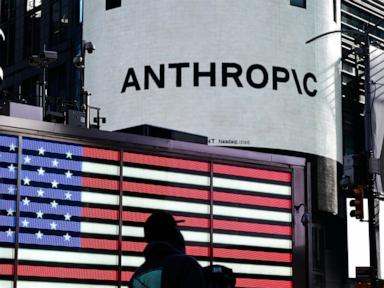
Anthropic just pulled off the largest initial public offering in financial history, raising $81.34 billion in its base offering—and $119.5 billion total when factoring in underwriters' overallotment options and concurrent private placements—at a valuation hovering near $1.5 trillion. Yet beneath the celebratory headlines lies a sobering balance sheet reality: the company carries $900.9 billion in off-balance-sheet compute commitments and has already seen its stock surrender most of its opening-day surge.
Wall Street loves a clean narrative. When Anthropic rang the opening bell on the Nasdaq Global Select Market on November 19, 2026, under the ticker ANT, the pitch was straightforward. Investors were buying the purest public proxy for enterprise artificial intelligence, a company whose annualized revenue run rate had rocketed past $81 billion by October. The base offering of 980 million Class A shares priced at $83.00 each, blowing past its marketed range of $70.00 to $78.00 and eclipsing SpaceX’s June 2026 listing to claim the crown as the biggest public debut on record.
Then the opening bell rang, and the market had to digest the S-1 filing. Shares opened at $111.50, briefly handing IPO buyers a paper windfall exceeding $31 billion. By the closing bell, nearly half of those gains had evaporated. Within days, the stock slid below $88, leaving late retail buyers underwater and exposing a sharp divide among institutional analysts over what a frontier AI lab is actually worth.
Deconstructing the $119.5 Billion Capital Raise
To understand the Anthropic IPO, you have to separate the headline triumph from the financial engineering underneath it. The raw capital mobilized is staggering, surpassing the previous annual record for all U.S. IPOs combined in a single stroke.
Goldman Sachs and Morgan Stanley led a 22-bank underwriting syndicate that initially planned to sell 825 million shares. When institutional order books hit six times oversubscription, management upsized the primary offering by 155 million shares and pushed the price $5 above the top of the range. Exercising the 147-million-share greenshoe option pushed gross public proceeds to roughly $93.5 billion.
| Transaction Component | Share Count / Structure | Gross Value | Key Counterparties |
|---|---|---|---|
| Base Public Offering | 980,000,000 Class A shares at $83.00 | $81.34 billion | Institutional funds & ~15% retail allocation |
| Greenshoe Option | 147,000,000 Class A shares at $83.00 | $12.20 billion | Underwriting syndicate (no commission fee) |
| Private Placement | Non-voting Class N stock at $83.00 | $26.00 billion | Google, Nvidia, Microsoft, AMD, Broadcom, Micron, TSMC |
| Total Capital Mobilized | Combined equity issuance | $119.54 billion | ~$117.0 billion net to Anthropic |
Look closely at that third row. Alongside the public offering, Anthropic executed a $26 billion concurrent private placement of non-voting Class N stock at the exact same $83 price. The buyers were not traditional mutual funds. They were seven semiconductor and cloud giants: Google, Nvidia, Microsoft, AMD, Broadcom, Micron Technology, and TSMC. Google and Nvidia alone absorbed roughly $10 billion apiece.
This is not merely a vote of confidence; it is a closed-loop financing mechanism. In the current AI economy, chipmakers and hyperscalers invest billions into model builders, who immediately wire that cash back to the investors to pay for GPU clusters and data center capacity. For Anthropic, the IPO was never about funding ordinary corporate expansion. It was a mandatory liquidity event to secure survival chips in a multi-year infrastructure arms race.
The $900.9 Billion Compute Overhang
Buried inside Anthropic’s amended Form S-1 is a number that dwarfs even its $1.5 trillion fully diluted valuation. The company has entered into $900.9 billion in long-term compute and infrastructure commitments, with $70.7 billion coming due within the twelve months following September 2026.
That figure changes the entire risk profile of the stock. In traditional enterprise software, a company builds a product once and sells copies at 80% gross margins. Frontier AI operates more like a heavy utility crossed with a speculative pharmaceutical pipeline. Every query processed by Claude consumes expensive electricity and depreciating silicon, while training next-generation models demands exponential capital outlays before a single dollar of enterprise revenue is booked.
Anthropic’s own investor disclosures reveal early signs of margin friction. During the third quarter of 2026, the ratio of revenue to computing and infrastructure costs slipped from 2.08x in Q2 down to 1.72x, dragged lower by reliance on high-cost, short-term compute capacity to meet surging demand.
To justify its listing price, Anthropic cannot simply reach $100 billion in annual revenue. It must prove that inference efficiency and enterprise pricing power can expand faster than its locked-in vendor obligations. If model commoditization forces token prices down while those $900.9 billion in fixed compute contracts remain rigid, shareholders will absorb the squeeze.
Decoding the $104 Billion Net Loss Mirage
Headline scanners looking at the S-1 income statement often recoil at a glaring anomaly: for the first nine months of 2026, Anthropic reported $33.24 billion in revenue alongside a staggering $104.04 billion GAAP net loss.
Experienced market watchers know better than to take that bottom-line figure at face value. Exactly $94.3 billion of that loss is a non-cash accounting artifact triggered by fair-value adjustments on convertible notes, derivative liabilities, and SAFEs issued during earlier funding rounds. Under standard accounting rules, the faster a private startup’s valuation climbs toward a trillion dollars, the larger its paper "loss" becomes when revaluing those instruments prior to conversion.
Strip away the accounting noise, and the operational picture looks far healthier—though still razor-thin:
- Explosive Top-Line Velocity: Nine-month revenue jumped more than thirteen-fold from $2.54 billion in the same period of 2025, with Q3 2026 alone generating $17 billion. Full-year 2025 revenue had stood at just $4.6 billion.
- Deep Enterprise Penetration: More than 11,900 corporate customers now spend at least $100,000 annually on Claude deployments, and over 1,900 accounts exceed $1 million a year.
- Approaching Operational Breakeven: GAAP operating loss narrowed sharply from $5.22 billion in the first nine months of 2025 to $1.26 billion in 2026. On an adjusted basis, Anthropic posted $4.08 billion in operating income, and operating cash flow has already crossed into positive territory.
Compared to its closest private rival, OpenAI—which reported roughly $10 billion in Q3 revenue alongside widening adjusted operating losses exceeding $10.9 billion—Anthropic enters the public markets with noticeably tighter cost discipline and stronger enterprise retention.
Scarcity Engineering and the Lock-Up Cliff
Why did institutional funds bid the offering up to an 18x run-rate revenue multiple, valuing Anthropic at roughly 40% of Microsoft or Alphabet despite lacking decades of diversified cash flows? Because Wall Street engineered a classic supply squeeze.
At listing, only roughly 5% to 6% of Anthropic’s fully diluted shares are freely tradable on the open market. Even with a valuation brushing $1.5 trillion, its float-adjusted market capitalization sits near $80 billion—a structural quirk mirrored during SpaceX’s June listing. Index-tracking funds forced to benchmark against major technology indices have had to scramble for a tiny pool of available shares, creating artificial upward pressure during book-building.
That artificial scarcity carries an expiration date. Unlike traditional IPOs that freeze insider selling for a flat 180 days, Anthropic’s prospectus structures a rolling series of lock-up releases that will steadily flood the market with supply:
- Day One Liquidity: Selected early employees and insiders were permitted to sell up to 315 million Class A and Class N shares immediately upon the November 19 debut, contributing to the 846 million shares that churned on opening day.
- The December 15 Trigger: Just 27 days after the final prospectus, the first major post-IPO lock-up window opens on December 15, 2026.
- The Winter Supply Wave: Subsequent tranches unlock at 48, 62, and 76 days post-listing, effectively doubling the public float by February 2027.
- Founder Retention: Seven co-founders sold 23.65 million secondary shares in the IPO for roughly $1.95 billion, while retaining 50.1% voting control. They remain barred from selling up to 29% of their remaining holdings until day 180, with the rest locked for a full year.
With roughly 5,300 employees sitting on an estimated $230 billion in vested stock and options—an average book windfall exceeding $44 million per worker—the temptation to diversify into cash will be immense every time a lock-up calendar date passes.
Governance Guardrails and the Valuation Divide
The Anthropic IPO also tests whether public equity markets will tolerate a dual-mission corporate structure at trillion-dollar scale. Co-founders Dario and Daniela Amodei and their fellow executives maintain majority voting control through multi-class shares, insulating management from activist hedge funds. Simultaneously, contractual caps restrict outside backers like Google from exceeding a 14.99% voting stake without explicit waivers, preventing any single hyperscaler from quietly absorbing the company.
On Wall Street, that governance moat hasn't stopped a fierce analytical civil war. Following the debut, research desks split down the middle. Bullish analysts, including Morningstar, assigned Anthropic a fair value of $1.7 trillion—with bull-case scenarios stretching past $3 trillion—arguing that Claude’s deep integration into enterprise workflows creates sticky, high-switching-cost infrastructure.
Skeptics see a classic capital-cycle trap. Several prominent independent analysts slapped immediate Sell ratings and sub-$60 price targets on ANT within days of listing, warning that the market is pricing a competitive oligopoly as if it were an unassailable monopoly. Open-weight models continue to erode pricing at the low end, while tech titans with $3.5 trillion balance sheets—Alphabet, Microsoft, and Meta—can subsidize frontier model training indefinitely using cash flows from search, cloud, and digital advertising.
Anthropic no longer enjoys the forgiving obscurity of private venture rounds where valuation marks are negotiated behind closed doors. Every ninety days, management must now stand before public shareholders and prove that $81 billion in annualized revenue can outrun $900.9 billion in compute bills before the lock-up calendar empties the float.