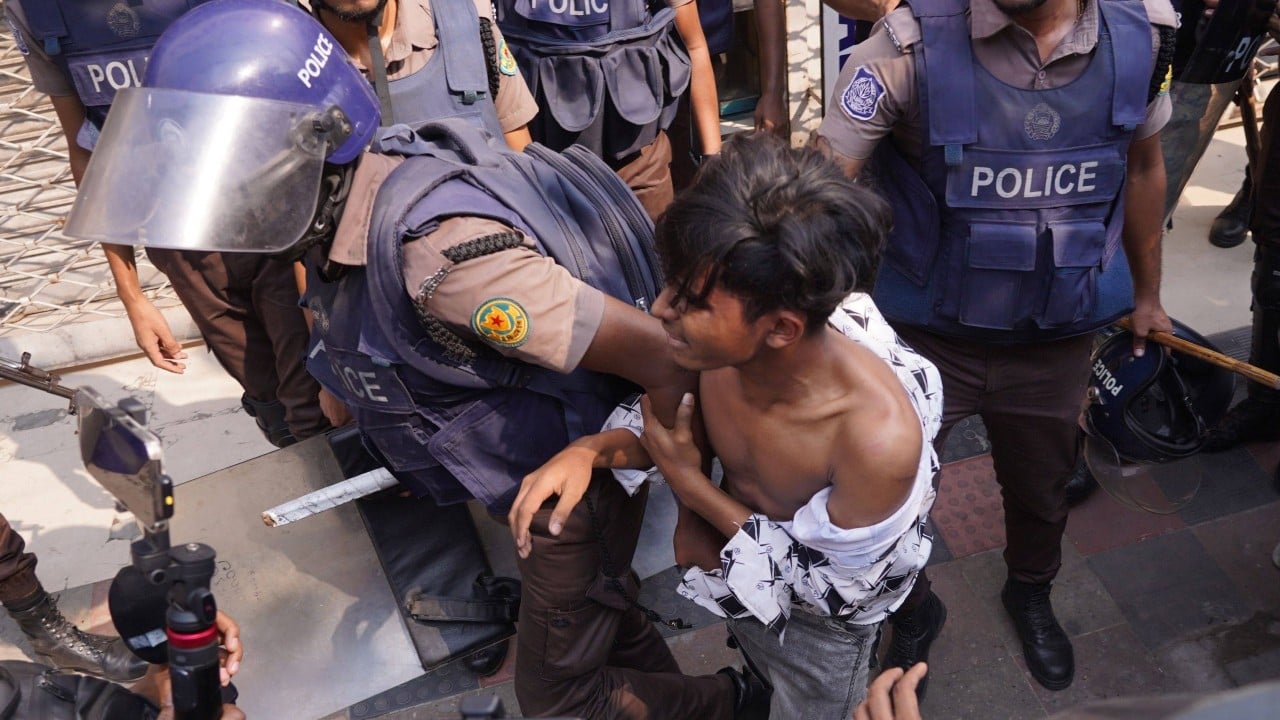
Thousands of Bangladeshi garment workers are flooding the streets of Ashulia, Gazipur, and Dhaka because their statutory wages no longer cover basic survival costs, triggering a volatile clash between labor unions, local factory owners, and Western apparel conglomerates. While mainstream headlines frame these demonstrations as isolated outbursts of civil unrest, the reality on the factory floor tells a far more calculated story. The protests represent the inevitable breaking point of an economic model built on suppressed labor costs, runaway local inflation, and razor-thin supplier margins dictated by multinational fashion brands.
Walk through the industrial belts outside Dhaka during a shift change and the math becomes immediately obvious. The workers sewing the t-shirts, denim, and activewear sold across North America and Europe are operating at a severe monthly financial deficit. When food, rent, and utility prices spike faster than the government-mandated five-year wage review cycle, anger stops being an abstract political sentiment and turns into a physiological necessity.
The Anatomy of a Broken Wage Formula
To understand why Bangladeshi garment workers are risking arrest, blacklisting, and physical injury on the pavement, you have to look at how their paychecks are actually constructed. Bangladesh is the world's second-largest ready-made garment exporter, trailing only China. The entire national economy relies heavily on this single sector, which accounts for more than eighty percent of the country's total export earnings.
Yet the workers powering this multi-billion-dollar engine are compensated through a tripartite wage board system comprising government officials, factory owners, and labor representatives. In theory, this board adjusts the minimum wage every five years to reflect economic reality. In practice, the adjustments consistently lag behind real-world purchasing power.
Consider a hypothetical example of a typical sewing machine operator in Gazipur. Suppose this worker earns the base entry-level minimum wage established during the last board revision, supplemented by mandatory overtime hours just to make ends meet. On paper, the paycheck looks like an improvement over the previous decade's rates. In reality, local landlords in industrial zones routinely raise room rents the exact week a minimum wage hike is announced. Grocery vendors follow suit. Within sixty days of a celebrated wage increase, the worker's disposable income drops right back to zero, or worse, slides into high-interest informal debt just to buy rice, lentils, and cooking oil.
Why Overtime Is No Longer a Safety Net
For decades, the unspoken compromise in Bangladesh's ready-made garment sector was simple. Base pay stayed artificially low, and workers survived by clocking sixty to seventy hours a week, relying on overtime premiums to bridge the gap between survival and poverty.
That safety net has largely collapsed. Global retail demand has grown erratic, leaving many factories with fluctuating order books. When Western brands scale back seasonal orders due to inventory gluts in their home markets, Bangladeshi factories slash overtime hours first. Workers suddenly find themselves surviving strictly on their base pay, which was never designed to sustain a single adult, let alone a family sending remittances back to rural villages.
The Squeeze Between Western Buyers and Local Owners
If you ask a factory owner in Dhaka why they cannot simply double worker salaries tomorrow, they will pull out a spreadsheet that exposes the core hypocrisy of modern supply chains. Factory owners are undeniably powerful figures in Bangladeshi politics, often holding parliamentary seats and wielding immense institutional influence. However, they are also trapped in a brutal buyer-driven price war.
Multinational apparel brands hold almost absolute pricing power. Over the last decade, while the cost of cotton, energy, shipping, and labor in South Asia climbed steadily, the unit prices Western brands paid to Bangladeshi suppliers remained stagnant or actually declined. Brands demand faster turnaround times, stricter environmental compliance, and upgraded building safety standards—all necessary improvements—while simultaneously refusing to pay a single cent more per garment.
Here is how the financial squeeze operates across the supply chain:
- Brand Pricing Demands: Global retailers issue "take it or leave it" purchase orders based on target retail margins, forcing suppliers to absorb rising input costs.
- Subcontracting Pressures: When primary factories cannot meet tight deadlines at rock-bottom prices, orders quietly filter down to smaller, less regulated subcontractors where labor abuses are hardest to monitor.
- Payment Delays: Many international buyers routinely stretch payment terms to ninety or one hundred twenty days, forcing local factory owners to take on expensive local bank loans just to cover monthly payroll.
- Cancellation Clauses: As seen during global economic downturns, major brands frequently invoke force majeure or obscure contract clauses to cancel finished orders without paying for raw materials already purchased.
Factory owners respond to this margin compression by squeezing the only variable cost they directly control. Labor. They resist unionization efforts, set aggressive hourly production targets that force workers to skip bathroom breaks, and lobby the government aggressively to keep minimum wage hikes as low as possible. When protests erupt, owners warn that higher wages will destroy Bangladesh's competitive edge, driving orders to cheaper frontiers like Ethiopia or Myanmar, or more automated hubs in Vietnam.
The Myth of Ethical Sourcing Audits
Western consumers often assume that the clothes hanging in major shopping malls are vetted by rigorous ethical standards. After the catastrophic 2013 Rana Plaza factory collapse killed over eleven hundred workers, the global apparel industry poured millions of dollars into structural safety initiatives and social compliance audits. Buildings in Dhaka are undeniably safer today than they were fifteen years ago. Fire exits are wider, electrical wiring is inspected, and structural columns are reinforced.
Yet structural safety is not the same thing as economic justice. A worker can stand inside a structurally sound, ISO-certified factory building and still suffer from chronic malnutrition.
The social auditing industry remains fundamentally compromised by a basic conflict of interest. Auditing firms are typically hired and paid by the very brands or factory owners they are evaluating. Inspections are frequently announced in advance, allowing management to coach workers on what to say, hide secondary sets of payroll books, and temporarily clean up shop floors. Even when auditors flag wage violations or anti-union retaliation, the consequences rarely alter the underlying purchasing practices of the Western brand. Brands issue corrective action plans, demand compliance, and continue placing orders at prices that make genuine compliance mathematically impossible.
State Response and the Criminalization of Dissent
When thousands of workers walk off the production line and block major highways connecting Dhaka to its northern industrial districts, the state apparatus reacts with swift, heavy-handed force. The Bangladeshi government views the garment sector not merely as a private industry, but as a matter of national security and sovereign solvency. Every day that factories remain shuttered costs the nation tens of millions of dollars in delayed exports and threatens vital foreign currency reserves.
Consequently, labor disputes rarely remain civil negotiations. Industrial police units deploy tear gas, rubber bullets, and water cannons to clear arterial roads. Following major waves of protests, factory management frequently files sweeping criminal complaints against "unnamed" workers for vandalism and unlawful assembly.
These blanket charges serve a dual purpose. First, they allow local authorities to arrest vocal union organizers without immediate judicial scrutiny. Second, they create a climate of pervasive fear across working-class neighborhoods. Workers who participate in strikes risk losing not only their current jobs, but also their ability to find employment anywhere else in the sector, as biometric databases and informal blacklists circulate among factory human resources departments.
The Overlooked Factor of Currency Devaluation and Import Inflation
Mainstream coverage of the Bangladesh garment protests tends to focus exclusively on the nominal taka amount workers are demanding versus what owners are offering. This misses a critical macroeconomic driver behind the current fury.
Bangladesh imports a massive portion of its essential commodities, including fuel, fertilizer, edible oils, and wheat. Over the past several years, severe pressure on foreign exchange reserves forced the central bank to allow the Bangladeshi taka to depreciate significantly against the US dollar. In theory, a weaker currency should benefit export-oriented factory owners, because they get paid in dollars while paying their local expenses and wages in devalued taka.
In practice, that currency windfall never trickled down to the sewing floor. Instead, the depreciating taka made imported food and fuel dramatically more expensive for ordinary citizens. Energy subsidies were slashed to meet international lending conditions, causing electricity and cooking gas prices to surge. Garment workers found themselves trapped in an economic vice. Their employers were receiving more local currency for every dollar of exported clothing, while the workers' own paychecks lost purchasing power every single month at the local market.
What Meaningful Reform Actually Requires
Fixing this cycle requires dismantling the convenient fiction that Bangladeshi factory owners and Western apparel executives are separate entities with conflicting morals. They are business partners operating a unified financial machine. Until the mechanics of that machine change, protests will continue to erupt every few years with increasing violence and disruption.
True stabilization in the ready-made garment sector demands structural shifts that go far beyond temporary wage board adjustments:
- Ring-Fenced Labor Costs: Western brands must adopt open-book costing models where labor costs are explicitly separated from raw material and profit margins, guaranteeing that the price paid per garment automatically scales whenever local minimum wages increase.
- Annual Inflation Indexing: Replacing the erratic five-year wage board review with an automatic annual adjustment tied directly to a verified consumer price index for industrial zones would prevent purchasing power from eroding to crisis levels.
- Freedom of Association: Eliminating arbitrary bureaucratic hurdles for union registration and enforcing strict legal penalties against factories that retaliate against organizers would allow disputes to be resolved at the bargaining table rather than on the highway.
- Binding Purchasing Commitments: International buyers must face legal accountability for unilateral order cancellations and predatory payment delays, forcing them to share the financial risks of retail volatility rather than dumping them entirely onto suppliers and workers.
Western fashion executives routinely publish glossy sustainability reports praising the empowerment of women in their global supply chains, knowing full well that over eighty percent of Bangladesh's garment workforce is female. Yet empowerment cannot survive on starvation wages. Every time a shopper buys a heavily discounted shirt in London, New York, or Berlin, the missing cost of that garment has not vanished into thin air. It has simply been transferred onto the backs of the people sewing the seams in Dhaka, until the pressure becomes too heavy to bear and the streets fill up once again.

