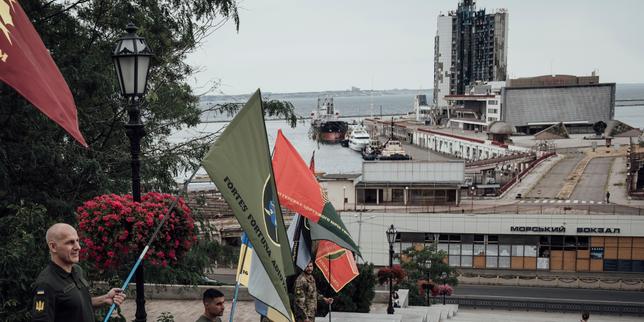
The maritime chokehold in the Black Sea has quietly severed the carotid artery of international agricultural trade. While global headlines focus on competing geopolitical flashpoints, a systematic campaign of naval strikes and port closures has reduced Ukrainian grain shipments to a fraction of their required volume. Ukraine is currently exporting barely a third of the monthly tonnage necessary to sustain its agricultural economy, leaving millions of metric tons of wheat and corn trapped in temporary silos and makeshift plastic bags. This is not merely a regional shipping dispute. It is an unfolding structural crisis that threatens to empty granaries across developing nations and rewrite the economics of global food security.
Before the full-scale conflict reshaped the region, deep-water ports along the Ukrainian coast functioned as the world's most reliable high-speed conveyor belt for staple crops. Panamax vessels docked in Odesa and Chornomorsk around the clock, loading millions of tons of wheat, corn, and sunflower oil bound for North Africa, the Middle East, and Asia. That high-volume maritime conduit has been systematically dismantled. Following intense escalations and naval drone attacks on civilian cargo vessels, commercial shipping companies have largely abandoned Ukrainian ports. Insurance underwriters have responded by pricing underwriting risks so high that voyages have become financially untenable.
The mathematics of the current standstill reveal a stark operational reality. Ukraine requires an outflow of roughly five million metric tons of agricultural products per month to clear its domestic surplus and maintain financial solvency. Current outbound shipments hover around one and a half million tons. The deficit accumulates daily. Warehouses that should be emptying ahead of upcoming harvest cycles are already reaching maximum capacity. Grain that cannot find a path to a cargo hold is piling up on farms, forcing producers into extreme logistical contortions, including storing harvested wheat in heavy-duty plastic sleeves that offer only temporary protection against moisture and pests.
Compounding the crisis, the disruption is no longer one-sided. Recent retaliatory strikes targeting major Russian export hubs in the Azov-Black Sea basin, including critical terminal infrastructure in Novorossiysk, have crippled Moscow's own maritime shipping capacity. With vital terminals temporarily shuttered or operating at severely reduced capacity, Russian grain exports have experienced a sharp multi-year low. When the world's two primary low-cost granaries are simultaneously blocked from accessing efficient deep-water routes, the global market absorbs an immediate shock. International wheat prices have climbed steadily, and importing nations in regions heavily reliant on Black Sea staples are scrambling for alternative, cost-proliferative suppliers.
Overland alternatives offer cold comfort to desperate producers. The expansion of land corridors through European Union member states—the so-called Solidarity Lanes—faces steep physical and political hurdles. Moving grain by rail or truck introduces massive freight overheads that crush farm-gate profit margins. Furthermore, neighboring transit countries such as Poland and Hungary have previously implemented strict import restrictions to protect domestic agricultural sectors from being undercut by cheaper regional grain. Alternative water routes, including the Danube River ports, are simultaneously constrained by seasonal low water levels that prevent barges from loading to full draft capacity. Secondary corridors through the Caspian Sea or Baltic ports lack the throughput capacity to make up the missing millions of tons.
The human and economic toll extends far beyond immediate storage bottlenecks. Commercial contracts are breaking under the weight of force majeure declarations. Foreign exchange revenues for the Ukrainian state have plummeted, undercutting government budgets at a time of severe fiscal strain. Yet the most damaging consequence of the blockade may not be felt in the current ledger, but in the fields during the upcoming spring planting cycle.
Agricultural conglomerates and independent landholders operate on tight financial predictability. Producers must secure seed, fertilizer, and operational capital months before turning the soil. If current inventory remains unsold and debt obligations go unmet, capital evaporates. Major agricultural operators warn that without a functional export mechanism restored ahead of major cultivation windows, a substantial percentage of arable land will simply be left fallow. Taking twenty percent of Ukraine's productive acreage out of commission means millions of tons of staple food grains will never be sown, let alone harvested.
The global marketplace is currently operating on borrowed time, subsisting on legacy stockpiles while consumers absorb steady price inflation. Past precedents, such as the temporary diplomatic arrangement brokered in the summer of 2022, proved that multilateral intervention can reopen sea lanes when political will aligns. However, diplomatic pathways currently appear gridlocked, and agricultural executives express deep skepticism regarding the long-term viability of maritime trade routes while active hostilities persist.
The window to avert a multi-season agricultural contraction is closing rapidly. Without an immediate breakthrough in export logistics or a fundamental shift in maritime security guarantees, the blockage of the Black Sea will transform from a regional trade crisis into a persistent, high-cost food deficit that reshapes global diets for years to come.


