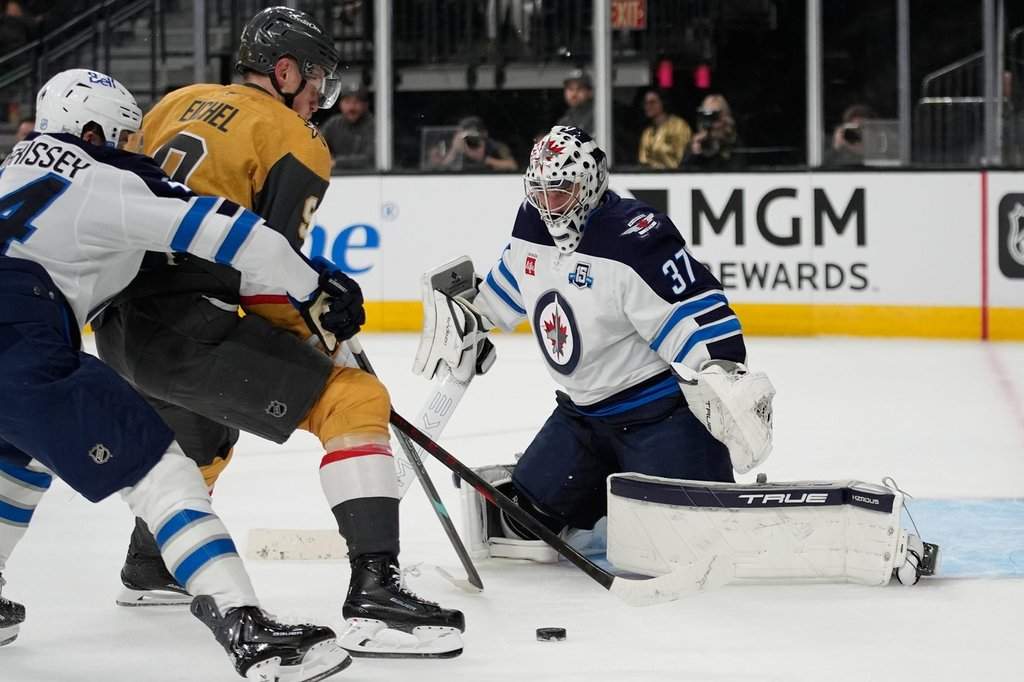
The Connor Hellebuyck trade from the Winnipeg Jets to the New Jersey Devils on October 23, 2026, set off an immediate wave of anger, debate, and second-guessing across the NHL. Most coverage treats the deal as a standard clash between a disgruntled star wanting out and a small-market club forced to take pennies on the dollar. That reading misses the real mechanics of what happened. Winnipeg moved Hellebuyck on the exact day his suspension was scheduled to end to avoid a public war of words, while New Jersey acquired a Hart Trophy winner whose family incidents crossed a personal line.
Reaction has split sharply depending on where you sit. In Winnipeg, loyalty turned bitter fast after an offseason holdout and a messy exit. In New Jersey, front-office brass and fans see a franchise-altering upgrade in net. Beneath the loud reactions sits a harder truth about leverage, timing, and what happens when a superstar's private breaking point collides with salary-cap reality.
Why Winnipeg Pulled the Trigger on October 23
Timing tells you everything in front-office hockey. Winnipeg did not wake up on October 23 and suddenly decide the market had peaked; the organization acted because Hellebuyck's suspension, which began September 16 after he failed to report to training camp, was set to expire.
Allowing a three-time Vezina Trophy winner and the 2025 Hart Trophy recipient back into the building without a resolution carried obvious risks. Once a player who has carried a franchise for eleven seasons is free to speak openly, control over the narrative evaporates. Hockey insiders noted that if Hellebuyck had taken the microphone to air grievances, the gloves would have come off on both sides, turning a dressing room and a fan base already strained by a missed postseason into a daily spectacle.
General manager Kevin Cheveldayoff also had to read the room inside his own locker room. Lingering uncertainty around a star goalie who requested a trade after the previous season—despite having five years left on the seven-year, $8.5 million-per-year extension he signed in 2023—created friction for players trying to prepare for a new campaign and a high-profile Heritage Classic in Winnipeg.
A trade does not erase the bitterness of a broken relationship, yet it gives a beleaguered room a clean line between what happened yesterday and who has to skate tonight.
Moving Hellebuyck when they did was an act of containment. Winnipeg traded away immediate leverage to buy quiet and protect the rest of the roster from another month of distractions.
The No-Move Clause and the Myth of the Fleecing
Scan social media or hockey talk radio and you will hear plenty of outrage that Winnipeg settled for a modest return. The package coming back to the Jets—forward Dawson Mercer, goaltender Nico Daws, forward Nick Bjugstad, unsigned forward prospect Alexander Command, a 2029 second-round pick, and a 2027 seventh-round pick—looks light on paper for an MVP-caliber netminder.
Context strips away much of that shock. Hellebuyck held a full no-move clause through the 2026-27 season before it converted to a 10-team approved trade list in 2027-28. A full no-move clause is not a suggestion; it is a veto. Even if rival clubs in other markets had interest over the summer or around the draft, Winnipeg could not force Hellebuyck to waive protection for a destination that did not fit his family or career priorities.
Add his age and recent mileage into the equation. Hellebuyck turned 33, carried an $8.5 million cap hit, and came off a turbulent 2025-26 campaign in which Winnipeg missed the playoffs and his own numbers dipped to a .895 save percentage and 2.86 goals-against average after dealing with a knee issue earlier in the calendar year. Great goalies are notoriously difficult to price when they are on the wrong side of 30 with years of heavy money still on the books.
| Asset / Factor | What It Means for Winnipeg | What It Means for New Jersey |
|---|---|---|
| Connor Hellebuyck | Ends a painful standoff and removes an $8.5M cap commitment | Adds an MVP-caliber starter who immediately stabilizes the crease |
| Dawson Mercer | Adds a durable, NHL-ready forward with middle-six or top-six upside | Gives up a regular forward to balance cap space and roster spots |
| Nico Daws & Nick Bjugstad | Brings back a young goalie option and veteran center depth | Sheds a netminder who struggled to hold the starter's job |
| Command & Draft Picks | Builds longer-term prospect and draft capital without a first-rounder | Parts with future assets to chase contention right now |
Calling the trade an outright robbery overlooks how narrow Winnipeg's exit door actually was. When a player has contractual control, public friction, and a desire to relocate, a general manager rarely gets prime-market bidding. Getting a young NHL forward like Mercer plus depth and draft picks is closer to damage control than surrender.
What Winnipeg Actually Gained Beyond the Box Score
Winnipeg's immediate pivot told the real story of the plan. Around the trade window, the club added Stuart Skinner on a two-year deal, claimed Clay Stevenson off waivers, and brought in Jacob Trouba to reinforce the blue line.
Those moves reveal a pragmatic shift rather than a white flag. Instead of betting everything on a single goaltender whose relationship with the market had fractured, Winnipeg spread its risk across multiple players and a younger roster core.
Family Pressure and the Hostile Return to Winnipeg
Any honest look at the Connor Hellebuyck trade has to reckon with why he wanted out in the first place. After the deal was done and New Jersey took the ice in Winnipeg on November 10, Hellebuyck spoke openly about what drove his request. While career uncertainty played a role, he stated that incidents involving his family crossed a line that no husband or father could ignore.
Fans in small-market Canadian cities often view star departures through the lens of loyalty versus comfort. That framing feels tidy from the stands, yet it ignores what happens when private life is dragged into public crossfire. Hellebuyck emphasized that he still loved the city and its community, even as he stood by his decision to protect his family.
The reception waiting for him at Canada Life Centre showed how deep the wound ran. Even though New Jersey held Hellebuyck out of the game itself as part of workload management, the crowd booed him during warmups and chanted at him from the upper and lower bowls.
- Expectation vs. Reality: Jets fans spent eleven seasons watching Hellebuyck set franchise records for wins, games played, and shutouts, culminating in a Presidents' Trophy and Hart Trophy run.
- The Breaking Point: A trade request, a training-camp suspension, and vague personal reasons left many supporters feeling blindsided and shortchanged.
- Legacy in Limbo: Boos on a return night do not erase a decade of elite play, yet they complicate any easy talk of jersey retirements or rosy reunions in the short term.
Both sides have a point, even when they talk past each other. Supporters have every right to feel hurt when a homegrown cornerstone asks out mid-contract. At the same time, demanding unconditional devotion from a player's family crosses a boundary that no collective bargaining agreement can patch.
Why New Jersey Pounced When Others Hesitated
While rivals fixated on Hellebuyck's rough 2025-26 stretch and Winnipeg's standoff, Devils general manager Sunny Mehta saw an opening that fit a specific roster equation. New Jersey already had strong five-on-five territorial play and top-end talent, yet weak goaltending had plagued the crease and kept the team from looking like a true Eastern Conference heavyweight.
A hypothetical comparison makes the math clear. Suppose a contender has an elite puck-possession team that generates high-danger chances and limits shots against, yet its goalies sit near the bottom of the league in goals saved above expected. Upgrading to a league-average or above-average starter does not just stop pucks; it changes how aggressively coaches can play and how many tight games tilt toward a win instead of an overtime loss.
Hellebuyck delivered that lift almost immediately in New Jersey, stringing together wins and giving the Devils' skaters breathing room when defensive breakdowns occurred. For a club looking to cement its place near the top of the Metropolitan Division, paying a price that avoided surrendering top draft picks or its highest-end core pieces looked calculated rather than reckless.
The Real Risk New Jersey Still Carries
Buying a 33-year-old goaltender on a long-term contract is never risk-free. Workload management becomes an ongoing balancing act across an 82-game grind, especially when a netminder has logged heavy minutes and postseason or Olympic pressure over the past several seasons.
If Hellebuyck stays healthy and maintains sharp form, New Jersey looks visionary. If age or wear catches up in year four or five of that deal, the Devils will feel every dollar of that $8.5 million cap hit.
What This Deal Signals Across the NHL
Stepping back from the Winnipeg boos and New Jersey celebrations, the Connor Hellebuyck trade highlights a growing reality in modern hockey. Contenders with cap flexibility and clear competitive windows are increasingly willing to step into messy situations when a star player wants out, knowing the selling team has far less leverage than the public assumes.
For Winnipeg, the verdict on the trade will not be written in November. It will be written by how Dawson Mercer develops in a larger role, whether younger pieces like Alexander Command hit their ceiling, and whether the Jets can build a sustainable contender without relying on one goalie to paper over every flaw.
Watch how both clubs handle their creasers over the next two springs, because that is where the real scoreboard of this blockbuster will finally settle.


