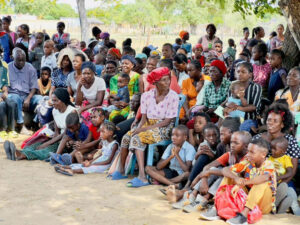
More than 1.5 billion women and girls currently live in severe climate hotspots across the globe, facing compounding threats of extreme heat, displacement, and economic collapse while receiving a fraction of international adaptation funding. As delegates gather for the COP31 climate summit, UN Women is demanding structural changes to how climate finance is distributed and governed. The core problem is not a lack of awareness or diplomatic pledges. It is a global financial architecture that consistently channels billions of dollars into large-scale, male-dominated infrastructure projects while starving the localized, community-led resilience programs that actually keep women alive during extreme weather events.
Follow the money at any major United Nations climate conference, and a stark pattern emerges. Over the past decade, international climate negotiations have produced dozens of Gender Action Plans and high-minded declarations recognizing that climate change is not gender-neutral. Yet the actual ledger tells a very different story. Less than 3 percent of bilateral official development assistance for climate adaptation integrates gender equality as a principal objective. When global climate funds approve multi-million-dollar disbursements, the cash overwhelmingly flows toward massive seawalls, utility-scale solar arrays, and commercial grid upgrades. These projects are easy to audit, attractive to private institutional investors, and staffed almost entirely by men. Meanwhile, smallholder agriculture, decentralized water management, and local disaster early-warning networks—sectors where women make up the vast majority of the workforce—remain chronically underfunded.
The Structural Anatomy of a Climate Hotspot
To understand why 1.5 billion women and girls are trapped on the front lines of environmental breakdown, you have to look beyond meteorological maps. A climate hotspot is rarely defined by weather alone. It is the intersection of severe physical exposure—such as accelerating desertification, coastal erosion, or glacial lake outburst floods—and pre-existing socioeconomic vulnerability.
In rural regions across sub-Saharan Africa, South Asia, and the Pacific Islands, legal and cultural barriers systematically strip women of the exact tools required to survive environmental shocks. Consider land tenure. Across dozens of developing nations, women produce between 60 and 80 percent of the food, yet they own less than 15 percent of the agricultural land. Without a formal land title, a female farmer cannot use her property as collateral for a bank loan to buy drought-resistant seeds, install drip irrigation, or invest in solar-powered cold storage. When a prolonged dry spell hits, she absorbs the entire financial loss without insurance or credit buffers.
Water scarcity introduces a second, brutal layer of friction. As aquifers deplete and surface rivers dry up, the daily burden of water collection falls disproportionately on women and adolescent girls. In many arid districts, walking distances to functioning boreholes have doubled or tripled over the last fifteen years. Every extra hour spent hauling twenty-liter jerrycans across scorching terrain is an hour stripped away from paid labor, agricultural cultivation, or secondary education. Girls pulled out of school to manage household water crises rarely return to the classroom, locking an entire generation out of formal economic mobility before they reach adulthood.
Then there is the physiological reality of extreme heat. Outdoor laborers in informal sectors—brick kilns, open-air markets, subsistence farming, and garment workshops lacking ventilation—face lethal wet-bulb temperatures for months at a time. Pregnant women exposed to chronic heat stress suffer significantly higher rates of preterm birth, stillbirth, and maternal hypertension. Yet national heat-action plans almost never account for reproductive health metrics or informal female labor zones.
Why Diplomatic Pledges Fail at the Local Level
If you spend enough years covering the annual Conference of the Parties, you learn to separate the press releases from the plumbing. Every November, negotiators applaud new commitments to gender-responsive climate action. Every December, those commitments hit a bureaucratic brick wall.
The primary bottleneck is how multilateral climate mechanisms—such as the Green Climate Fund, the Global Environment Facility, and the Adaptation Fund—evaluate risk and distribute capital. These institutions operate under strict fiduciary standards designed to prevent financial mismanagement. On paper, rigorous vetting sounds sensible. In practice, it creates an insurmountable barrier for grassroots women's organizations.
A rural cooperative of female farmers in the Sahel or a coastal women's network in Bangladesh does not have an in-house team of forensic accountants, English-language grant writers, or decades of audited balance sheets. To access international climate finance, these groups must go through accredited intermediary entities—usually massive international development banks, UN agencies, or national ministries. By the time a grant passes through three layers of administrative overhead, compliance fees, and national government priorities, the money is either diluted or redirected toward capital-intensive state projects.
Direct access remains a myth for local actors. Even when national governments draft their Nationally Determined Contributions (NDCs)—the core climate action plans required under the Paris Agreement—women's ministries and grassroots advocates are routinely sidelined during the drafting phase. The finance and energy ministries hold the pen, and they write plans tailored to attract foreign direct investment in heavy industry, leaving social adaptation as an afterthought.
The Unspoken Link Between Climate Shocks and Gender Violence
One of the most uncomfortable realities UN Women is forcing onto the COP31 agenda is the direct correlation between environmental disaster and violence against women. For years, mainstream climate analysts treated gender-based violence as a separate social issue, entirely detached from carbon emissions or rainfall anomalies. Field data from humanitarian agencies has shattered that artificial divide.
When droughts, cyclones, or floods destroy household livelihoods, economic desperation triggers sharp spikes in domestic abuse, sexual exploitation, and early child marriage. In regions hit by multi-year crop failures, impoverished families frequently marry off teenage daughters to reduce the number of mouths to feed or to secure a modest bride price. Humanitarian responders tracking displacement camps after major flooding events consistently document surges in trafficking and assault, particularly when women must walk unlit paths to reach distant sanitation facilities or distribution points.
Ignoring this connection in climate policy is not just a moral failure; it is an operational blind spot. A disaster recovery program that distributes emergency cash transfers solely to male heads of household, or designs evacuation shelters without private, lockable facilities for women and girls, actively compounds the trauma of the storm.
The Economic Counter-Argument and the Limits of Gender Mainstreaming
Critics of gender-focused climate mandates—including several conservative think tanks and budget-conscious finance ministries—argue that tying climate funds to social equity metrics slows down urgent infrastructure deployment. Their counter-argument is straightforward: when a coastal city is sinking or a power grid is failing, engineers need to pour concrete and string transmission lines as fast as possible, without getting bogged down in social impact assessments and quota compliance.
That argument holds a grain of operational truth. Bureaucratic box-ticking can indeed stall critical projects. Over the past decade, the development sector has grown fond of superficial "gender mainstreaming"—a practice where consultants paste a paragraph about women's empowerment onto the back of an infrastructure proposal just to clear compliance hurdles, without changing a single detail of how the project operates on the ground. That kind of performative paperwork wastes time and breeds cynicism among engineers and local communities alike.
However, dismissing genuine gender integration as a distraction ignores hard economic data. Research from agricultural development institutes consistently demonstrates that when female farmers receive equal access to productive resources, climate-smart seeds, and localized weather forecasting, crop yields jump by 20 to 30 percent. During severe droughts, communities where women hold formal seats on local water-management committees maintain functioning water infrastructure far longer than committees run exclusively by men, largely because women possess granular, daily knowledge of aquifer usage and pipe maintenance.
Investing in women's resilience is not charity. It is high-yield risk management.
What Meaningful Reform at COP31 Actually Looks Like
If COP31 is going to avoid becoming another exercise in diplomatic recycling, UN Women and its allied coalitions must push past broad rhetoric and force structural changes to three specific mechanisms.
1. Rewiring Financial Accreditation
Multilateral climate funds must establish dedicated, fast-track small-grant windows that bypass traditional international intermediaries. Instead of requiring a local women's coalition to meet the same fiduciary paperwork as a multi-billion-dollar commercial bank, funds should utilize tiered risk-management frameworks and partner with established regional women's funds that already possess the infrastructure to disburse micro-grants directly to grassroots actors.
2. Binding Gender Metrics in Loss and Damage
The newly operationalized Loss and Damage Fund—designed to compensate vulnerable nations for irreversible climate destruction—cannot repeat the mistakes of older climate finance mechanisms. Disbursements from this fund must include mandatory, auditable tracking of how much capital reaches female-led households, informal workers, and community-level recovery networks. Without transparent tracking, money meant for displaced families will inevitably be absorbed by central government budgets to patch general fiscal deficits.
3. Legal Reform Tied to Adaptation Grants
International donors possess massive financial leverage, yet they rarely use it to address the root legal barriers driving female vulnerability. Bilateral adaptation grants should increasingly be paired with technical assistance and policy incentives that push recipient governments to reform discriminatory inheritance laws, formalize women's land ownership titles, and extend labor protections—including mandatory heat-rest protocols and maternity coverage—to informal agricultural and service workers.
The Cost of Continued Inertia
The math facing global policymakers is unforgiving. Projections from UN agencies indicate that under current emissions trajectories, up to 158 million more women and girls could be pushed into extreme poverty by 2050 directly due to climate change—outnumbering men by millions. Food insecurity will hit female-headed households first and hardest.
Diplomatic summits excel at manufacturing consensus on paper while leaving the underlying machinery untouched. Whether COP31 marks a genuine turning point for the 1.5 billion women living in climate hotspots will not be decided in the plenary halls or the final communiqué. It will be measured six months after the delegates fly home, in the ledgers of the climate funds, the land registries of rural districts, and the bank accounts of the women holding up the world's most fragile ecosystems.


