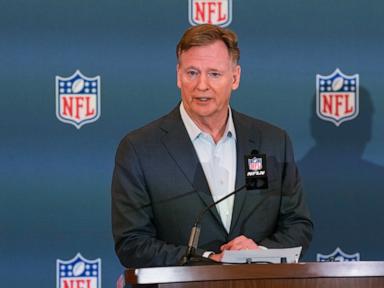
NFL Commissioner Roger Goodell will not testify before the House Judiciary Committee on June 10 regarding the league's migration to paywalled streaming services, officially declining the invitation due to active antitrust litigation. The refusal temporarily shields the league from public cross-examination over its increasingly fragmented broadcasting model. However, it intensifies a deeper political and regulatory battle over the Sports Broadcasting Act of 1961, an outdated piece of legislation that protects the league's multi-billion-dollar media empire from federal antitrust laws.
The NFL is aggressively testing the limits of its legal protections by slicing up its broadcast inventory and selling pieces to tech giants. By declining to face lawmakers, Goodell is betting that corporate legal maneuvers can outrun Washington’s mounting frustration. For another look, see: this related article.
The Sixty Year Old Shield Facing a Modern Reality
The current friction centers entirely on the Sports Broadcasting Act of 1961 (SBA). Passed in an era when televisions required rabbit-ear antennas, the SBA granted professional sports leagues a rare gift: a limited exemption from federal antitrust laws. This allowed the 32 independently owned NFL franchises to pool their media rights and sell them as a collective block to broadcast networks like CBS and NBC, an action that would otherwise trigger immediate collusion charges.
The legislative trade-off was built on an explicit premise. Leagues received protection from antitrust lawsuits, and in return, the American public received free access to local sports on over-the-air television. Similar reporting on this matter has been provided by CBS Sports.
The legal architecture of the SBA contains a glaring omission. The text specifically protects pooling arrangements for "broadcast television." Decades of subsequent federal court rulings have established a narrow interpretation: the exemption does not explicitly cover cable, satellite, or internet streaming.
When the NFL sells an exclusive package of Thursday Night Football games to Amazon Prime Video, or Christmas Day games to Netflix, it steps outside the clear boundaries of the 1961 law. The league is operating in a massive regulatory gray area, gambling that its sheer cultural dominance will prevent Washington from pulling the plug on its antitrust life support.
Behind the Ongoing Litigation Excuse
In a letter sent to House Judiciary Chairman Jim Jordan, NFL General Counsel Ted Ullyot pointed to "ongoing litigation related to the topic of the hearing" as the reason for Goodell’s absence. While standard corporate procedure dictates avoiding public testimony that could jeopardize a court case, the excuse functions as a convenient legal firewall.
The league is currently navigating a treacherous legal environment. A federal judge recently overturned a massive $4.7 billion jury verdict against the NFL in an antitrust lawsuit concerning its Sunday Ticket package on YouTube TV. While the league secured a temporary reprieve in that specific case, the Department of Justice (DOJ) Antitrust Division launched a separate investigation into the NFL’s media distribution strategies. Simultaneously, the Federal Trade Commission (FTC) has begun reviewing how the migration of live sports to streaming affects consumer choice and pricing.
   [SBA Antitrust Exemption]
              |
              v
     (Does it cover?)
       /           \
 [Broadcast TV]   [Streaming Platforms]
   (Protected)      (Legal Gray Area)
Testifying before Congress under oath while federal regulators are actively auditing your business model is a corporate nightmare. Lawmakers would have pressed Goodell on whether the league is actively colluding to inflate consumer costs by forcing fans to purchase multiple digital subscriptions. By sending a polite refusal, the NFL keeps its defense confined to legal briefs where it can control the narrative, away from the unpredictable political theater of a televised congressional hearing.
The Friction Between Free Access and Paywalls
The NFL defends its strategy with a consistent data point. The league notes that more than 87% of all NFL games remain available on free, over-the-air broadcast television through traditional partnerships with CBS, FOX, NBC, and ABC. Furthermore, league rules mandate that any game sold exclusively to a streaming service must still be broadcast on free television in the local markets of the two competing teams.
To the NFL executive suite, this distribution model is the gold standard of fan accessibility. To a family living outside those specific local markets, however, the financial reality looks vastly different.
The modern NFL viewing experience requires a complex web of digital subscriptions. To watch a full season of games, a fan might need a traditional cable package, Amazon Prime Video for Thursdays, Peacock for select exclusive windows, Netflix for holiday broadcasts, and YouTube TV for out-of-market matchups. The financial burden shifts from a single television bill to a fragmented ecosystem of recurring digital fees.
The Department of Justice probe is focusing precisely on this friction point. The investigation aims to determine whether the league's collective bargaining strategy artificially restricts choice and drives up costs for everyday consumers. If individual teams were forced to negotiate their own streaming rights, the market might look radically different. Instead, the centralized power of the league allows it to dictate terms to tech platforms, maximizing revenue while passing the fragmentation cost directly to the viewer.
Bipartisan Frustration on Capitol Hill
The congressional scrutiny facing the NFL is notably bipartisan. The House Judiciary Committee's push is led by conservative Republicans, but it mirrors deep-seated frustrations expressed by progressive Democrats. In a deeply polarized political climate, targeting the rising cost of watching football is a reliable way for politicians to connect with a frustrated electorate.
Capitol Hill has a history of calling sports executives to account when corporate actions alienate the public. In 2009, Congress held hearings that ultimately forced the NFL to change its approach to player concussions. In 2022, lawmakers dragged league leadership into the spotlight to address toxic workplace allegations.
The threat of legislative retaliation remains potent even without Goodell’s testimony. Lawmakers are openly discussing updating or introducing bills to narrow the scope of the Sports Broadcasting Act of 1961. If Congress alters the wording of the SBA to explicitly exclude paywalled digital platforms, the NFL’s entire multi-billion-dollar media strategy could be exposed to immediate, devastating antitrust lawsuits.
The Corporate Power Play
The NFL is banking on its status as the only monoculture left in American media. In a fractured entertainment landscape, live NFL games represent the only programming capable of drawing tens of millions of concurrent viewers. Tech companies are not buying NFL rights just to broadcast games; they are using football as a customer-acquisition vehicle to pull users into their broader corporate ecosystems.
This immense market power gives the NFL a degree of leverage that no other entertainment entity possesses. The league is betting that Washington lacks the political will to fundamentally disrupt an industry that provides millions of Americans with their primary form of entertainment. They believe the public's love for the game will ultimately outweigh their frustration with the paywalls.
Goodell’s refusal to testify is a calculated exercise of that leverage. It signals that the league views its legal defense and its relationships with trillion-dollar tech partners as far more critical than cooperating with a congressional committee's timeline. The hearing will proceed with other witnesses, but the empty chair at the center of the room will serve as a stark reminder of the NFL’s ultimate calculation: as long as the stadiums are full and the ratings remain high, the league can afford to tune out the noise from Capitol Hill.
.jpg?width=1200&auto=webp&crop=3%3A2)