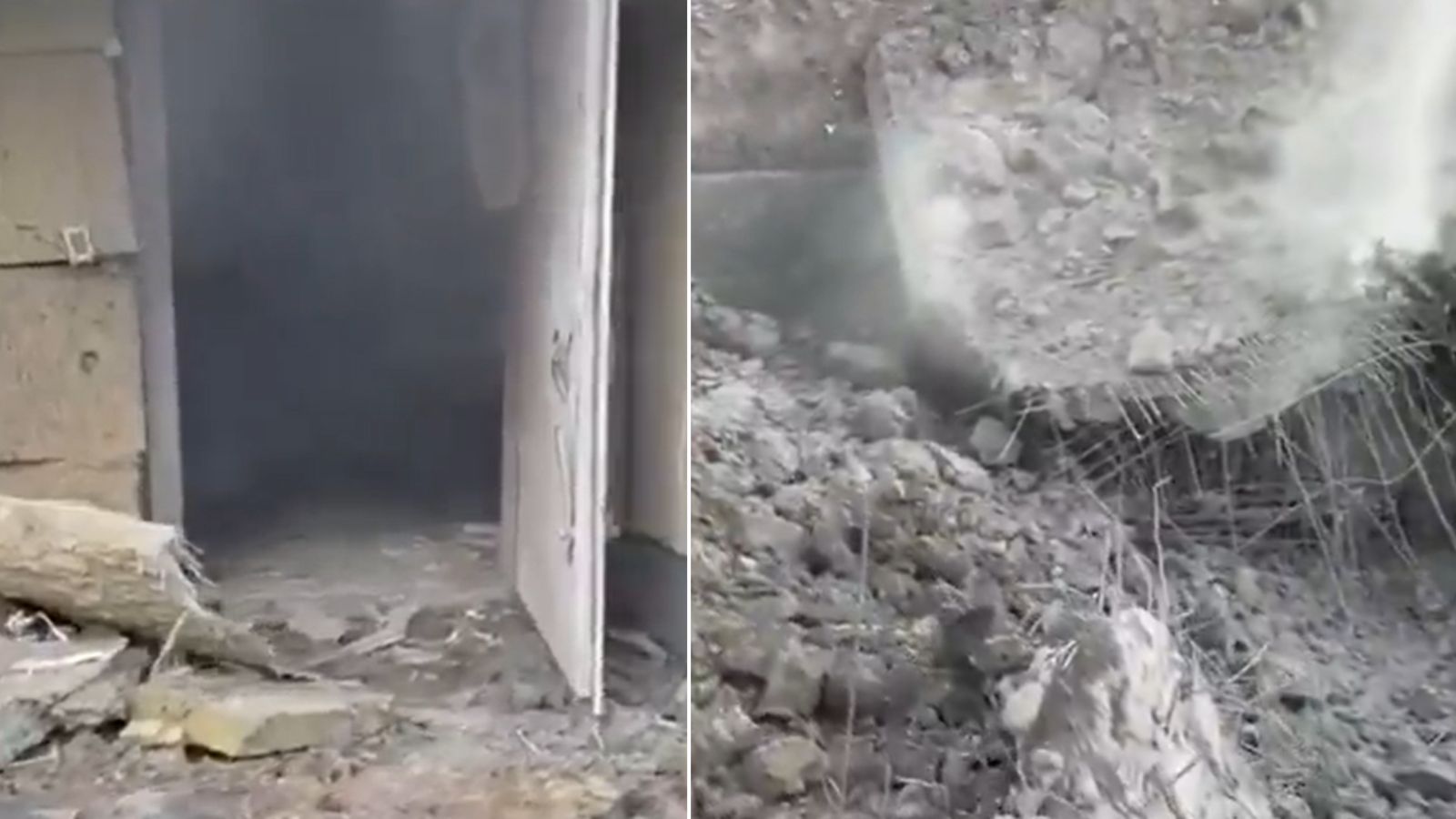
Twenty-six people died in a fresh strike inside Ukraine, forcing President Volodymyr Zelenskyy to push once again for tougher United States pressure on Russia. That headline captures the immediate shock of another lethal assault and the familiar diplomatic reflex that follows every mass-casualty event in this war. Yet reading the news cycle as a simple chain of Russian escalation and Ukrainian pleas misses the colder mechanics driving both sides. When a strike kills 26 civilians or non-combatants in a single blow, Kyiv is not merely asking Washington for sympathy or another round of rhetoric. It is trying to break a structural stalemate where air defense attrition, shifting sanctions enforcement, and competing priorities inside Washington determine how many people survive the next week.
After covering conflict zones and geopolitics for decades, you learn to look past the first tragedy to the second and third layers underneath. A single deadly attack rarely changes grand strategy by itself unless it exposes a widening vulnerability or alters the political math in capitals far from the front line. In Ukraine, high-casualty strikes have become recurring inflection points in a war of industrial endurance. Each wave of missiles, drones, or glide munitions tests how fast interceptors can be replenished, how quickly municipal rescue and power crews can respond, and whether external partners are willing to pay economic or political costs that match the scale of violence on the ground.
Why High-Casualty Strikes Keep Hitting Despite Air Defenses
Ask any defense analyst why lethal strikes still get through after years of aid deliveries, and the answer comes down to arithmetic rather than mystery. Air defense networks are not impenetrable domes. They are layered, finite grids of radar stations, command nodes, medium-range launchers, and scarce high-end interceptors that have to cover vast territory while protecting cities, power plants, rail hubs, and frontline positions all at once.
Massed attacks exploit that math. When Russia combines decoys, long-range one-way attack drones, cruise missiles, and ballistic or glide munitions, defenders face an impossible cost-exchange ratio. Firing two expensive interceptors at an incoming target that may miss or carry a smaller payload drains stockpiles that take months to manufacture. Even a high interception rate leaves gaps over specific neighborhoods or infrastructure clusters when launch volumes spike.
There is also a tactical reality that polite summaries often gloss over. Glide bombs and low-flying strike systems compress warning times and force hard choices about where to concentrate scarce batteries. If you pull a system closer to the front to blunt aircraft launches, a city farther back becomes more exposed to long-range fires. If you keep every battery anchored around major population centers, troops and logistics lines absorb heavier punishment. Every defensive choice carries a price tag measured in territory, equipment, or lives.
Consider a hypothetical example of a regional command center managing two air-defense batteries across three priority sites during a multi-wave night attack. Even if crews track every incoming signature accurately and intercept most threats, depleting interceptor magazines during the opening waves leaves late-arriving munitions with a far higher chance of getting through. In real operations across Ukraine, those late-arriving hits often account for the deadliest outcomes after sirens have already sounded for hours.
What Zelenskyy Actually Wants From Washington Right Now
When President Zelenskyy calls for stronger US pressure on Russia, the phrase often sounds like a catch-all demand for harsher sanctions. In practice, Kyiv treats Washington pressure as a four-part lever that only works when all four pieces move together. Rhetoric alone does not stop a missile factory in Russia or replace a spent air-defense battery in Ukraine.
First comes sanctions enforcement and closing evasion loops. Headline sanctions announced in capital cities frequently lose bite months later through third-country transshipment, shell companies, shadow-fleet shipping, and dual-use electronics routed through neighboring markets. True pressure means going after the financial intermediaries, insurers, and component suppliers that keep Moscow's defense-industrial base running despite export controls.
Second is weapons supply and authorization. Ukraine needs sustained deliveries of air-defense interceptors, artillery ammunition, electronic warfare gear, and deep-strike capabilities, along with clear rules on how those systems can be used against military targets enabling attacks on Ukrainian territory. Delays or piecemeal approvals do not just slow counter-offensives; they shape how boldly Russian planners launch follow-on strikes.
Third is diplomatic and economic isolation across global partners. Kyiv watches closely whether Washington uses its leverage to curb Russian energy revenues, restrict access to Western financial clearing channels, and counter narratives that treat Ukrainian concessions as the easiest path to quiet. When major buyers still find workarounds to purchase discounted oil or critical inputs, Moscow retains fiscal breathing room to fund long-duration war production.
Fourth is credibility and predictability. Long-term commitments matter as much as emergency shipments because defense contractors and military planners cannot run efficiently on month-to-month suspense. If Moscow believes US political attention is fracturing or US support is wavering, the incentive to press harder with brutal strikes increases. If Moscow sees durable backing paired with tight enforcement, the calculus shifts—though rarely overnight.
The Hidden Friction Inside US Policy Toward Russia
Anyone watching Washington closely knows that turning a call for pressure into binding action is rarely straightforward. Even when policymakers agree on the broad goal of supporting Ukraine and constraining Russia, they routinely clash over escalation risks, economic blowback, and competing global commitments.
One persistent fault line runs between maximum pressure and escalation management. Some officials and lawmakers argue that half-measures only prolong the war and invite worse atrocities, making decisive sanctions, asset freezes, and military aid the fastest route to forcing Moscow to negotiate seriously. Others worry that sharp escalations—especially actions affecting energy markets, maritime routes, or direct risk of friction—could trigger unpredictable retaliation or spike domestic fuel and inflation pressures at home.
Global market realities complicate matters further. Russia remains a major supplier of energy and commodities, and aggressive measures that squeeze supply without clear alternatives can rattle allies in Europe and Asia. Policymakers in Washington have to weigh how hard to squeeze Moscow without triggering price shocks that undermine political support for sustained aid in the first place.
Then there is the bandwidth problem. Washington rarely deals with one crisis in isolation. Trade disputes, regional conflicts, domestic budget fights, and shifting electoral calendars all compete for executive attention and legislative votes. A horrific strike in Ukraine can briefly refocus minds, yet sustaining grinding enforcement work—auditing trade flows, coordinating with G7 and European Union partners, and keeping weapons pipelines full—requires bureaucratic stamina long after the initial headlines fade.
| Dimension of Pressure | What Kyiv Seeks | Main Friction Point | Practical Bottleneck |
|---|---|---|---|
| Sanctions & Trade Controls | Tighter secondary pressure on evasion networks and dual-use suppliers | Balancing enforcement against global trade and ally concerns | Tracking complex shell companies and third-country rerouting |
| Air Defense & Munitions | Faster, steadier replenishment of interceptors and strike systems | Stockpile limits and risk-tolerance debates over target rules | Global production capacity and multi-front demand |
| Energy & Revenue Squeeze | Deeper cuts to Russian oil and export earnings | Avoiding sharp global energy price spikes | Shadow fleets, discounts, and non-aligned buyers |
| Diplomatic Alignment | Unified US and allied posture rejecting forced capitulation | Competing foreign policy priorities and domestic politics | Maintaining coordination across capitals over years |
Why Russia Keeps Betting on Attrition and Terror
To understand why Russia keeps launching strikes that kill dozens at a time, look at its broader theory of victory rather than treating each attack as an isolated tantrum. Moscow has leaned heavily into attrition, aiming to exhaust Ukraine's air defenses, strain its power grid and economy, and wear down Western political resolve over time.
High-casualty strikes serve both military and psychological purposes within that strategy. Militarily, they force Kyiv to spend scarce defensive resources and keep emergency services, hospitals, and local administrations under constant strain. Psychologically, they signal that safety is fragile even away from the trenches, pushing Ukrainians toward exhaustion and testing whether foreign backers will press Kyiv toward unfavorable terms just to stop the bleeding.
At the same time, we should be honest about the limits of external pressure. Sanctions and diplomatic isolation rarely cause a sudden regime collapse in a large, resource-rich state overnight. Russia has adapted its economy toward wartime production, leaned on alternative trade partners, and absorbed heavy costs before. Expecting US pressure alone to make Moscow abandon its core objectives quickly is wishful thinking.
Yet acknowledging that limit does not make pressure irrelevant. Wars of attrition are decided by margins over time. Raising Russia's cost of producing munitions, complicating how it finances war budgets, and denying it easy wins on the battlefield still matter enormously—especially when combined with Ukraine's own resilience and domestic defense innovation.
What Separates Serious Leverage From Performative Outrage
After a tragedy that claims 26 lives, public anger is easy to find and cheap to express. Condemnations arrive within hours. Statements of solidarity follow. Weeks later, the real test begins: did anything tangible change in how Russia is financed, supplied, or confronted, or did the system simply absorb another shock and keep grinding along?
Serious leverage shows up in unglamorous details. It shows up when customs authorities block specific component shipments, when banks cut off specific clearing channels, when air defense batteries receive steady resupply before winter or peak strike waves, and when allies align rather than undercut one another on enforcement. Without those mechanics, calls for US pressure risk becoming a ritual repeated after every mass casualty rather than a strategy that alters outcomes.
For Ukraine, surviving this phase means pairing relentless diplomacy in Washington and European capitals with hard-headed adaptation at home—protecting critical infrastructure, scaling drone and electronic-warfare defenses, and keeping society functioning under fire. For Washington, the choice is equally stark: match its stated backing for Ukraine with sustained, enforceable pressure that raises real costs on Russia, or accept that half-measures will keep buying more headlines like this one.