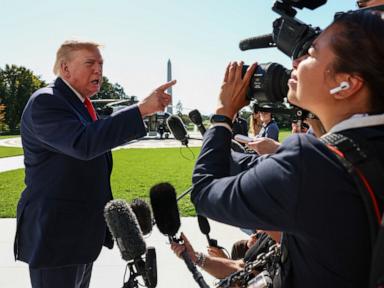
President Donald Trump's renewed attacks on Rep. Ilhan Omar over unsubstantiated immigration allegations are not merely campaign rhetoric; they mark an aggressive escalation in which federal investigators have raided her Washington, D.C., residence and floated stripping her U.S. citizenship. After fleeing Somalia as a child and naturalizing in 2000 at age 17, Omar has spent years as a primary target of Trump's political rallies and social media posts. What sets this phase apart is the deployment of executive enforcement power, sealed search warrants, and grand jury subpoenas weeks ahead of the 2026 midterm elections.
For decades covering Washington and federal enforcement, I have watched political rivals trade accusations of corruption, disloyalty, or rule-bending. Usually, those fights play out on cable news or congressional committees until the next news cycle swallows them. Turning immigration records from a refugee's childhood into an active criminal or civil denaturalization spectacle against a sitting member of Congress crosses a line that changes the stakes for every naturalized citizen in the country.
Why Childhood Paperwork Became a Political Weapon
Routine headlines about political insults often miss the mechanics underneath. Attacking an opponent's background is cheap and familiar. Using federal investigative machinery—such as Homeland Security Investigations executing a sealed warrant on a lawmaker's home or issuing subpoenas to family members before a Minnesota grand jury—turns rumor into a visible state operation.
Reports surrounding the investigation have pointed to decades-old refugee and citizenship paperwork filed when Omar was a minor, including questions raised by administration allies about her family's application history and age documentation. Omar has repeatedly denied wrongdoing and denounced the raid as political intimidation aimed at silencing a vocal critic. Meanwhile, Trump has distanced himself publicly from the operational timing while continuing to attack her rights, her background, and her standing as a citizen on the campaign trail.
Timing matters in politics. Launching or publicizing high-drama enforcement actions right before midterm voting maximizes media coverage, energizes base voters who already view Omar as a symbol of ideological opposition, and forces the target onto the defensive. Even if prosecutors never bring charges—or if charges fail in court—the investigative cloud itself acts as a penalty.
How Denaturalization Actually Works Under U.S. Law
People throw around words like denaturalization and deportation as if they are two steps on an assembly line. They are not. Understanding the legal friction built into American law explains why political bluster often collides with courtroom reality.
First, citizenship cannot simply be canceled by a president's speech, a cabinet secretary's interview, or an agency directive. Under federal law—specifically provisions governing the revocation of naturalization such as 8 U.S.C. § 1451—the government must go before an independent federal judge and prove that citizenship was illegally procured or obtained through concealment of a material fact or willful misrepresentation. That is a heavy evidentiary burden, far steeper than standard administrative removal proceedings before an immigration judge.
Second, denaturalization is not automatic deportation. Former immigration officials and legal analysts note that even if a person loses naturalized status, stripping a green card or securing a final order of removal requires separate legal steps and separate proof. When a case involves paperwork submitted when the individual was a minor, proving personal intent or material fraud decades later becomes even harder.
| Legal Stage | Forum or Decision-Maker | Core Requirement | Practical Hurdle |
|---|---|---|---|
| Criminal or civil investigation | Grand jury, federal agents, DOJ | Probable cause for warrants; evidence for subpoenas | Sealed records limit public proof early on |
| Denaturalization proceeding | Independent federal district court | Proof of illegal procurement or willful material misrepresentation | High legal standard; decades-old records may be thin |
| Removal / deportation | Immigration court and ICE enforcement | Separate legal basis and removal order | Denaturalization alone does not guarantee removal |
The Broader Shift Toward Revoking Citizenship
Looking at Omar's case in isolation misses the wider institutional trend. The Justice Department has expanded denaturalization filings in 2026, bringing dozens of cases and signaling a much larger appetite to revisit past naturalizations than seen across long stretches of modern U.S. history.
Defenders of aggressive enforcement argue that the government has a duty to police fraud at every stage of the immigration system. If someone lied to enter the country, secure asylum, or qualify for citizenship, proponents contend that time should not grant immunity. From that viewpoint, pursuing fraud cases—even high-profile ones—is framed as restoring rules and deterrence rather than playing favorites.
Critics and legal scholars see a far more dangerous dynamic. When an administration pairs broad denaturalization sweeps with personal attacks on a sitting member of Congress—and questions whether a naturalized citizen possesses full constitutional protections—it sends a chilling signal to millions of naturalized Americans. Citizenship is supposed to provide permanent belonging and equal standing under the law, not conditional status subject to shifting political winds.
Where Honest Debate Ends and Selective Enforcement Begins
Nobody serious argues that actual immigration fraud should go unpunished when credible evidence exists. The real test of the rule of law is consistency and restraint. When investigative power concentrates on a prominent political adversary without public proof of a crime, skepticism is not partisan reflex—it is basic accountability.
Consider a hypothetical example to see how selective scrutiny distorts public trust. Suppose two naturalized citizens decades ago both had minor clerical errors or omissions on family applications handled by parents or lawyers, with no evidence of intent to deceive. If federal resources pour into investigating a high-profile critic while routine oversights elsewhere go untouched, citizens rightly ask whether the law is being applied evenly or selectively.
What Readers Should Watch Next
Coverage of fights like this tends to get stuck on loudest quotes and partisan spin. To separate noise from substance, watch three concrete markers as the case unfolds:
- Unsealed filings and actual charges: Look past cable-news leaks and political talking points to see whether prosecutors actually file indictments or civil denaturalization complaints—and what specific facts they allege.
- Judicial pushback: Pay attention to how federal judges handle motions to quash subpoenas, challenge warrant scope, or enforce evidentiary standards.
- Institutional boundaries: Watch whether oversight mechanisms, courts, and voters treat selective law enforcement as acceptable hardball or draw a firm line against turning federal investigations into political weapons.
A democracy weakens the moment citizenship starts feeling conditional on staying in the good graces of whoever holds the gavel.