Australia, the United Kingdom, Canada, and Italy have formally demanded that Israel remove administrative, security, and logistical restrictions blocking critical winter aid from entering Gaza. While mainstream coverage frames this joint statement as routine diplomatic pressure, the real story lies in the mechanics of humanitarian access, the strategic friction between long-standing allies, and the physical realities of an approaching coastal winter where temporary shelters fail against rain, mud, and dropping temperatures.
Diplomacy rarely moves in straight lines. When four major Western nations—three of them core members of the Five Eyes intelligence alliance and one a G7 heavy hitter—align their foreign ministries on a single public warning, the message is not aimed at the general public. It is a calculated signal that private backchannel negotiations have hit a wall.
The Anatomy of a Diplomatic Warning
Joint statements from foreign ministers are the diplomatic equivalent of a flare fired over a dark trench. For months, officials in Canberra, London, Ottawa, and Rome relied on quiet persuasion, phone calls between prime ministers, and behind-the-scenes coordination with Israeli defense authorities. Going public means those private avenues failed to produce the volume of aid trucks, shelter materials, and medical supplies required before seasonal storms turn unpaved displacement camps into swamps.
The timing matters. Coastal weather in the eastern Mediterranean shifts abruptly between late autumn and early winter. Daytime heat gives way to heavy downpours, high winds, and overnight temperatures that drop low enough to cause hypothermia among malnourished populations living under plastic sheeting. Once the rain begins, unpaved access routes inside the enclave deteriorate rapidly, turning a supply chain problem into an engineering crisis.
Western capitals understand the domestic and international optics. All four governments maintain deep intelligence, defense, and trade ties with Israel, yet each faces mounting legal and political scrutiny at home. Under international humanitarian law, third-party states have obligations not to assist in violations of the Geneva Conventions, and domestic courts in countries like the UK and Canada have already heard legal challenges regarding arms exports and diplomatic complicity. Issuing an explicit demand on winter aid access serves a dual purpose: it attempts to force operational changes on the ground while building a paper trail that these governments actively pushed for compliance.
Why Aid Bottlenecks Happen on the Ground
To understand why trucks stall, you have to look past political rhetoric and examine the border inspection architecture. Every pallet entering Gaza passes through a multi-layered vetting process managed by the Coordination of Government Activities in the Territories, known as COGAT, alongside Israeli security agencies.
The friction centers on dual-use items. In military logistics, a dual-use item is any civilian good that could theoretically be repurposed for warfare. On paper, the concept makes security sense. In practice, it creates massive bottlenecks for winterization.
- Tent poles and framing: Aluminum or steel rods used to keep family shelters upright against coastal winds are routinely flagged because metal piping can be machined into rocket casings or tunnel supports.
- Generators and solar panels: Essential for powering field hospitals, water desalination pumps, and heating units, yet frequently delayed over concerns they could ventilate underground networks or power communications gear.
- Waterproof tarpaulins and heavy plastics: Needed to keep rain out of makeshift tents, but often restricted due to fears they could be used to conceal military movements from aerial surveillance.
- Medical equipment: Ultrasound machines, oxygen concentrators, and certain surgical tools face scrutiny over batteries, wiring, and sensors.
When a single item on a forty-pallet truck triggers a security flag, the entire vehicle is often rejected, forced to turn back, unload, and re-enter the inspection queue from the beginning. Humanitarian logisticians call this the boomerang effect. A truck can spend weeks in transit between Jordan, Egypt, and Israeli inspection crossings like Kerem Shalom, only to be sent back because of a box of tent pegs or water filtration tablets.
The Internal Distribution Collapse
Getting cargo across the perimeter fence is only half the battle. Once goods are offloaded onto the Gaza side of a crossing, international agencies must retrieve and distribute them in an active conflict zone.
Law and order inside the territory has fractured. Armed gangs, desperate crowds, and localized power vacuums mean that unguarded convoys are frequently looted within kilometers of the border. Aid organizations face an impossible bind: they cannot accept armed Israeli military escorts without compromising their neutrality and making their staff targets, yet they lack the security apparatus to protect convoys on their own.
Meanwhile, restrictions on non-governmental organizations—including visa denials for international staff, banking hurdles, and strict registration rules—have thinned out the experienced personnel needed to manage complex warehouse and distribution networks. Even when warehouses in Ashdod or El Arish are full, the last-mile delivery system remains broken.
The Israeli Counter-Argument and Security Calculus
Israeli officials reject the framing that they are deliberately obstructing humanitarian relief. From the perspective of the Israeli defense establishment, the core problem is not the volume of aid allowed through inspection gates, but the failure of United Nations agencies and international NGOs to collect and distribute the pallets already sitting on the Gaza side of the crossings.
COGAT regularly publishes figures showing hundreds of truckloads of supplies waiting for pickup inside the perimeter. Israeli planners argue that militant groups systematically divert aid, tax commercial shipments, and hijack supplies to sustain their own fighters and maintain political control over the population. To counter this, Israel has experimented with alternative distribution mechanisms, including vetting local clan leaders, using private security contractors, and establishing tightly controlled humanitarian zones.
There is also a deep institutional distrust between the Israeli government and key UN bodies, particularly UNRWA, the agency responsible for Palestinian refugees. Legislation passed by the Knesset restricting UNRWA's operations inside Israeli territory and barring Israeli officials from coordinating with the agency has thrown a wrench into the primary logistics backbone of Gaza. Critics warn that dismantling UNRWA's operational capacity without a functioning replacement creates a massive vacuum right as winter arrives. Israeli officials counter that the agency has been compromised and that other UN branches, such as the World Food Programme and UNICEF, should absorb the workload.
What Winter Actually Means for Displaced Populations
In conflict reporting, "winter" is often treated as an abstract deadline. On the ground, it is a biological and structural multiplier.
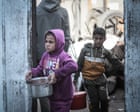
Hundreds of thousands of people are living in damaged concrete shells or makeshift encampments along the coast, particularly in areas like Al-Mawasi. The soil in these coastal strips is largely sand mixed with clay. When heavy Mediterranean storms roll in, runoff from paved urban areas floods low-lying tent camps, mixing rainwater with raw sewage from destroyed sanitation networks.
- Respiratory and Waterborne Disease: Crowded, damp tents accelerate the spread of pneumonia, bronchitis, and influenza. Simultaneously, flooded latrines contaminate shallow groundwater and plastic water bladders, triggering outbreaks of cholera, dysentery, and Hepatitis A.
- Structural Collapse: Standard humanitarian tarpaulins are designed for temporary emergency shade, not sustained gale-force winds. Without reinforced framing, shelters collapse overnight, leaving families exposed to freezing rain.
- Caloric Deficit and Hypothermia: A human body experiencing chronic malnutrition lacks the fat reserves and metabolic energy needed to generate heat. In a damp environment, hypothermia can set in even when air temperatures remain well above freezing.
Hospitals that are only partially operational—running on rationed fuel and lacking basic antibiotics—cannot absorb a seasonal surge in pediatric respiratory infections and trauma injuries from collapsing structures.
The Geopolitical Shift Behind the Joint Statement
Look closely at the four countries that signed this rebuke. None of them are traditional adversaries of Israel.
The United Kingdom, Canada, and Australia share deep historical, intelligence, and diplomatic alignment with Washington and Jerusalem. Italy, under Prime Minister Giorgia Meloni, has positioned itself as one of Israel's staunchest defenders within the European Union. When these specific governments step forward together, it signals that the political cost of unconditional diplomatic cover has become unsustainable.
Several underlying factors explain why these four capitals broke ranks publicly:
- Divergence from Washington: While the United States remains Israel's primary military supplier and diplomatic shield, middle-power allies have less leverage over Israeli decision-making and far greater exposure to domestic political backlash. Issuing joint statements allows them to carve out an independent diplomatic lane without directly confronting the White House.
- Legal Risk Management: Government lawyers in London, Ottawa, and Canberra are acutely aware of ongoing proceedings at the International Court of Justice and the International Criminal Court. Publicly documenting demands for humanitarian access helps shield these governments from accusations that they ignored credible warnings of mass civilian harm.
- Credibility on the Global Stage: Western nations spend enormous diplomatic capital lecturing adversaries on rules-based order and international law in theaters like Ukraine. Failing to hold close allies to similar standards on basic humanitarian access erodes their credibility across the Global South.
Why Diplomatic Statements Rarely Move Trucks
History shows a wide gap between diplomatic rhetoric and logistical reality. Foreign ministries issue strongly worded communiques; border crossings operate on military standard operating procedures.
A joint statement from four foreign ministers does not rewrite COGAT's dual-use list. It does not repair cratered roads between Kerem Shalom and Khan Younis, nor does it provide armored vehicles, fuel, or visas for humanitarian logisticians. Unless diplomatic pressure is tied to concrete leverage—such as conditioning intelligence sharing, pausing specific defense contracts, or imposing targeted sanctions on officials obstructing aid—border bureaucracy tends to revert to its default posture of maximum security restriction.
Aid workers on the ground operate by a simple rule: watch the crossings, not the press conferences. Real change is measured in the number of heavy-duty winter tents cleared without bureaucratic delays, the restoration of commercial trucking routes to stabilize food prices, the issuance of long-term visas for logistics coordinators, and the establishment of predictable deconfliction mechanisms so drivers are not killed while delivering flour and blankets.
Until those operational bottlenecks are dismantled at the inspection gates, statements from Canberra, London, Ottawa, and Rome will remain just words on paper while the rain begins to fall.