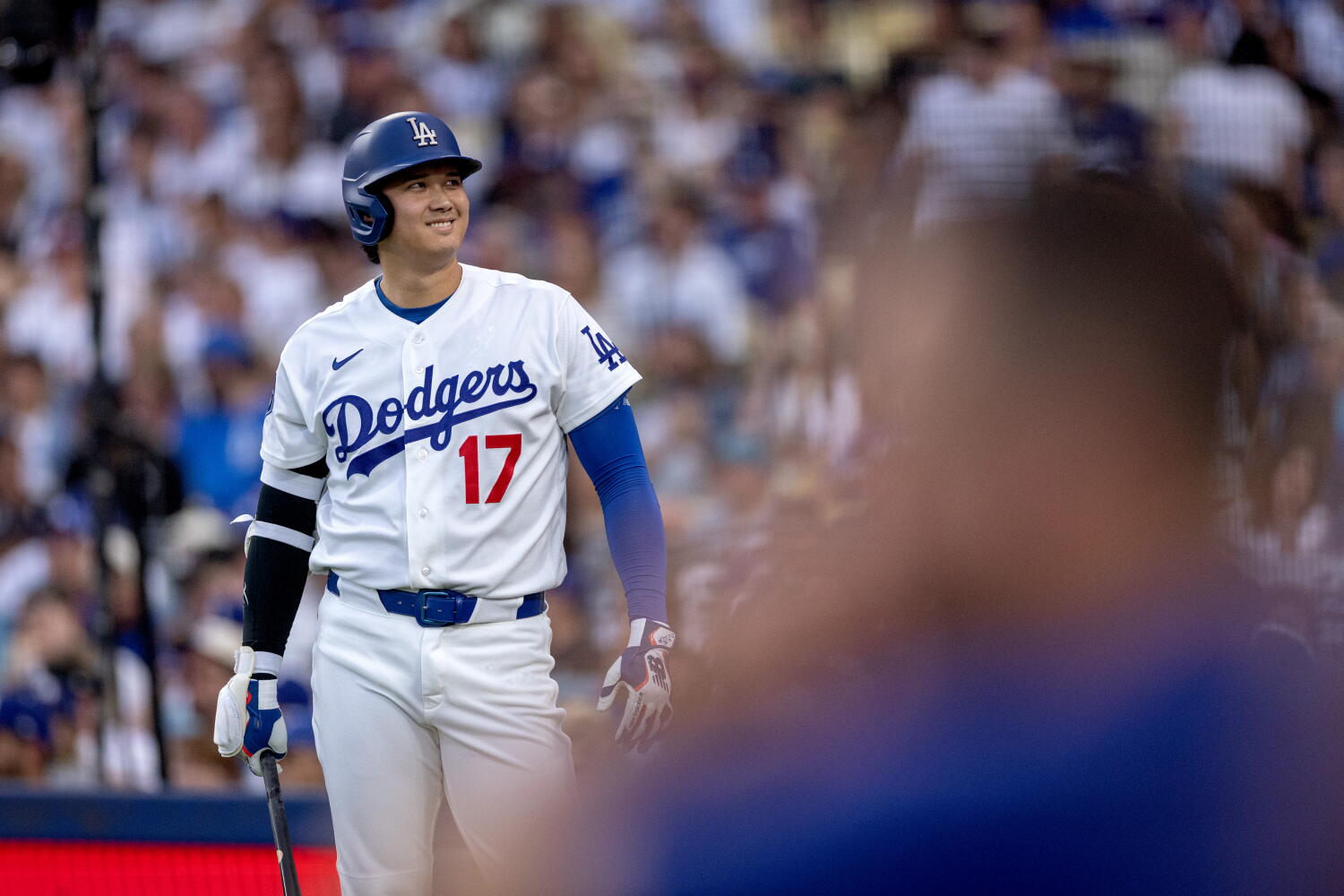
The modern baseball monolith does not merely win games; it absorbs anomalies and converts them into momentum. When Shohei Ohtani returned to the Los Angeles Dodgers lineup following a brief injury scare, the conventional narrative suggested a Hollywood script unfolding in real time. Yet, reducing the Dodgers' fifth consecutive victory to a star-studded cinematic moment misses the mechanical reality of how this roster operates. Behind Ohtani's immediate impact and Teoscar Hernández continuing his relentless offensive tear lies a finely calibrated organizational machine designed to withstand variance.
Baseball is a sport built on failure. Even the greatest hitters in the world fail seven out of ten times, and elite rotations routinely experience turbulence through the dog days of summer. What separates a perennial contender from a transient powerhouse is the construction of an insurance policy that never cashes out. The Dodgers have built a roster where the absence of a superstar creates an immediate vacuum filled not by panic, but by internal depth that rivals major league starting lineups.
The Anatomy of a Five-Game Surge
Winning five straight games in the major leagues requires more than a single hot bat or a clean ninth inning. It demands synchronization across pitching, defensive positioning, and plate discipline. During this recent streak, the Dodgers capitalized on precise situational hitting while opposing pitchers attempted to navigate a gauntlet with zero margin for error.
To understand why this stretch felt different, look at the bottom third of the batting order. While national broadcasts obsess over the top of the lineup, the supporting cast has generated high-leverage at-bats that wear down opposing bullpens. Pitchers cannot pitch around the middle of the order when the bottom is actively drawing walks and extending pitch counts.
+------------------+-------------------+---------------------+
| Lineup Segment   | Recent OBP Trend  | Strategic Impact    |
+------------------+-------------------+---------------------+
| Top (1-3)        | Elite (.380+)     | Forces early exits  |
| Middle (4-6)     | Power-heavy (.500)| Capitalizes on miscues|
| Bottom (7-9)     | High work-rate    | Turns over the order|
+------------------+-------------------+---------------------+
This offensive pressure creates a compounding effect. When a starter throws thirty pitches in the second inning, the opposing manager is forced to look toward a bullpen much earlier than anticipated. By the time the sixth inning arrives, the Dodgers are facing middle-relief arms who are pitching behind in the count.
The Teoscar Hernández Factor
Few acquisitions have paid dividends as consistently as Teoscar Hernández. While marquee signings often dominate the headlines, mid-tier marquee talent provides the stabilizing floor that prevents slumps from turning into losing skids. Hernández has refused to cool off, providing protection in the lineup that alters how managers deploy their pitching staffs.
When opposing pitchers face the choice between pitching to a returning Ohtani or challenging a locked-in Hernández, they are caught in a classic operational bind. Walk one to get to the other, and you invite a multi-run extra-base hit. Attack the strike zone, and you risk a mistake fastball leaving the yard.
This is not luck. It is the result of exhaustive advance scouting and mechanical adjustments that Hernández made during the off-season to shorten his swing path against elite velocity. Hitters at this level do not stay hot by accident; they survive through rigorous adaptation.
Pitching Resilience and the Bullpen Puzzle
The offensive fireworks often overshadow a pitching staff that has absorbed significant structural losses. Injuries to key rotation pieces would derail most franchises. Instead, the Dodgers front office treats rotation depth like a commodity portfolio, constantly cycling through arms while maintaining a baseline of competitive execution.
Relief pitching is notoriously volatile. A dominant setup man in May can become a liability by July. Managing this volatility requires a delicate balance of workload management and tactical deployment. The recent win streak highlighted a bullpen that is beginning to find its rhythm, minimizing free passes and forcing hitters to earn every base.
- Strikeout-to-walk ratios have improved significantly over the last ten games.
- First-pitch strikes are up across the entire relief corps, reducing deep counts.
- Defensive alignment shifts have converted hard-hit ground balls into routine outs.
The Financial and Operational Reality
Critics frequently point to the staggering payroll when analyzing the Dodgers' success, viewing the franchise through a lens of financial brute force. That perspective, while partially accurate, oversimplifies the modern analytical apparatus required to sustain this level of play. Money buys talent, but it does not buy execution. It does not teach a hitter how to lay off a slider in the dirt, nor does it coach a reliever through a bases-loaded jam.
The real competitive advantage lies in the player development pipeline and the rapid integration of minor league talent into major league systems. When a player is called up to fill a temporary vacancy, they do not have to reinvent their approach. They step into a pre-existing structural framework where expectations, preparation routines, and tactical goals are standardized from Single-A to the majors.
Navigating the Long Haul
A five-game win streak in the middle of a grueling season is a blip on the radar of a 162-game marathon. The true test of a championship contender is not how they perform when everyone is healthy and the bats are clicking. It is how they manage the inevitable slumps, the fatigue of late August, and the inevitable pressure of October baseball.
As Ohtani reintegrates fully into the defensive and offensive rhythms of daily play, opposing teams will adjust their defensive schemes. They will pitch him backward, test his surgically repaired elbow with high heat, and challenge the rest of the lineup to beat them. The Dodgers' response to those adjustments will dictate whether this current streak is merely a hot stretch or the early blueprint for another deep postseason run.
The machine keeps turning, fueled by depth, talent, and an institutional refusal to rely on any single individual to carry the weight.