An aggressive government crackdown on exotic pet ownership in the Dominican Republic has triggered an unprecedented animal welfare emergency, overwhelming the nation's only zoo with thousands of confiscated creatures, ranging from bleached flamingos to displaced crocodiles and tigers.
Authorities have shifted from passive enforcement to active interdiction. The numbers tell a stark story. State agents seized 188 animals in 2023, but that metric skyrocketed to dramatic heights as enforcement agencies tightened the loop on illegal trafficking rings and private owners treating protected species as living garden ornaments. The capital’s National Zoological Park, tucked across 309 hectares in Santo Domingo, stands as the lone institutional safety net for these rescued victims. It is buckling under the weight.
The Anatomy of a Confiscation Crisis
When a wildlife seizure occurs, the public imagines a triumphant liberation. They picture a caged creature returning immediately to the wild canopy or wide-open savannah. Reality is far more brutal.
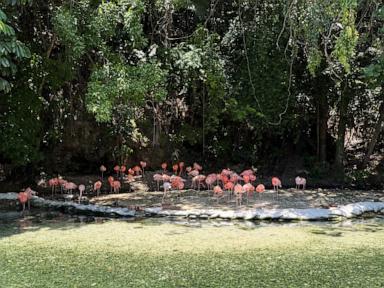
Take the Caribbean flamingo. Protected by local and international statutes, these birds are frequently poached from coastal habitats and sold to private resort hotels or homeowners seeking an exotic aesthetic for their courtyards. To keep them from flying away, captors routinely commit mutilation, amputating the birds' wings. Worse still, ignorant owners feed these migratory animals a steady diet of white bread and table scraps rather than specialized nutrients.
By the time enforcement officers raid these properties, the flamingos are physically degraded. Their vibrant, natural coral plumage fades to a stark, unnatural white due to severe malnutrition and vitamin deficiencies.
Rescuing them is only the opening act. Transforming a broken, domesticated wild animal into a self-sufficient organism requires months of intensive veterinary care, specialized rehabilitation enclosures, and precise dietary tracking. The National Zoological Park now finds itself functioning less like a traditional public attraction and more like an emergency triage ward for broken wildlife.
The Regional Bottleneck and Cross-Border Strains
The crisis does not stop at the Dominican border. Island ecosystems across the Caribbean share an interconnected black market for exotic species, and logistical burdens bleed across territorial lines.
Neighboring jurisdictions, including Puerto Rico, face matching waves of illicit trafficking. Over recent holiday periods, U.S. federal and territorial authorities intercepted nearly a hundred animals in a single weekend, pulling dozens of boa constrictors, pythons, caimans, and exotic birds from smugglers. Under ongoing regional cooperation pacts, the Dominican Republic is preparing to absorb overflow specimens, including caimans seized from drug trafficking operations abroad.
This creates a systemic bottleneck. The National Zoological Park features dedicated spaces, but territorial predators like crocodiles demand strict physical isolation. Keeping apex predators apart requires expanding infrastructure—building more concrete cells, sourcing specialized filtration systems, and hiring additional veterinary staff. Funding has failed to scale at the same velocity as the enforcement actions. Every successful police raid brings the institution closer to full operational capacity.
Shifting Cultural Appetites and Enforcement Realities
For decades, the illicit trade centered around common household favorites like parakeets and small parrots. Today's seizures reveal an alarming diversification of contraband. Tigers, apex reptiles, and heavily trafficked migratory birds flow continuously into domestic black markets, fueled by social media trends and the unyielding human impulse to privatize nature.
The government has deployed public awareness campaigns, erecting billboards along major roadways to warn citizens against buying endemic parrots taken from local nests. Yet, the black market adapts faster than public service announcements can alter cultural habits. When people spot protected species displayed openly along rural highways, they call enforcement hotlines. Those calls trigger raids. Those raids trigger more animals arriving at a zoo that is already operating near its threshold.
Veterinarians at the park report treating animals with compromised immune systems, failing organs, and psychological trauma born of isolation in concrete basements and suburban backyards. The transition from private possession to institutional sanctuary is harrowing for the animals, and financially punishing for the facility tasked with their survival.
Enforcement without an expanded infrastructural blueprint creates a cruel paradox. The harder the state works to save abused wildlife from private hands, the closer its lone sanctuary gets to administrative collapse. The cage doors keep opening to let victims in, but the financial and spatial runway required to keep them safe is rapidly running out.