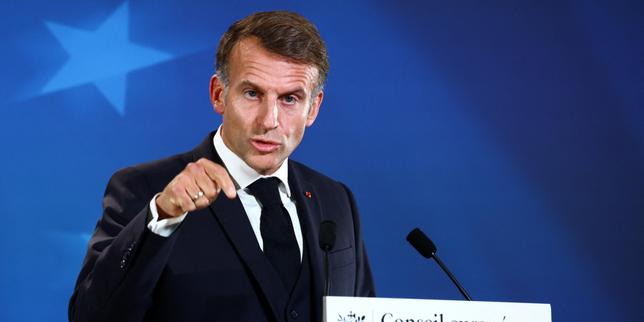
The war in Ukraine has exposed a widening fracture across Europe over how much political, industrial, and military strain allied governments are willing to absorb as the conflict grinds on. French President Emmanuel Macron’s insistence on not abandoning Kyiv and holding the line against ambiguities speaks directly to a central tension in European statecraft. Public rhetoric sounds unified at summits. Behind closed doors, defense ministries, treasury officials, and voters are colliding over production bottlenecks, fiscal limits, and competing definitions of security.
Decades of covering foreign policy and industrial mobilization teach a simple lesson. Speeches do not fire artillery shells. Rhetoric only matters when it aligns with factory output, budget lines, and political durability back home. When leaders warn against ambiguity, they are usually talking about allies just as much as they are talking about Moscow.
Why Rhetorical Resolve Masks Industrial Friction
Statements of unwavering support frequently outpace what European defense industries can actually deliver on short notice. For years after the end of the Cold War, many European capitals treated defense manufacturing as a shrinking commercial niche rather than a core pillar of national survival. When large-scale attrition warfare returned to the continent, the gap between diplomatic promises and physical stockpiles became impossible to ignore.
Scaling up munitions, air defense interceptors, and armored vehicles requires more than political decrees. It demands long-term procurement contracts, predictable raw material supply chains, skilled engineering labor, and factories willing to invest in lines that might not stay profitable if geopolitical conditions shift. A government can announce a bold pledge on Monday and still face eighteen-month lead times on critical components on Tuesday.
That lag creates a chronic credibility problem. Kyiv measures commitment in delivered rounds, spare parts, and air defense coverage, while European capitals often measure commitment in announced packages and multi-year frameworks. Both sides can argue their case in good faith and still feel let down by the pace of execution.
Rhetorical clarity cannot substitute for industrial capacity when modern attrition consumes materiel faster than peacetime supply chains were built to replenish it.
The Politics of Burden Sharing
Even among governments that agree on supporting Ukraine, definitions of fair burden sharing vary sharply. Countries closer to Russia’s border often view the conflict as an immediate existential threat that requires rapid, high-intensity mobilization regardless of domestic fiscal discomfort. More distant capitals frequently weigh those same security risks against domestic energy costs, industrial competitiveness, and strained public budgets.
These differing risk perceptions turn every diplomatic phrase into a negotiation. When Macron calls for holding the line against ambiguities, that phrase can read as a demand for strategic discipline in Paris, a rebuke to hesitant partners elsewhere, or an attempt to keep France positioned at the center of European security debates. Allies read subtext into every word because every word carries domestic political weight.
Public opinion adds another layer of volatility. Voters rarely stay enthusiastic about open-ended commitments when inflation bites, coalition governments feel fragile, or opposition parties campaign on putting domestic welfare first. Leaders who sound resolute abroad often face narrower room for maneuver at home than their podium speeches suggest.
The Strategic Trap of Strategic Ambiguity
For years, foreign policy analysts debated the merits of strategic ambiguity in deterrence. The theory was simple enough on paper. Keep an adversary guessing about exact red lines so they hesitate before escalating.
In prolonged conflicts, ambiguity has a darker twin. It breeds hesitation inside the coalition itself. When allies leave key questions unanswered—such as rules on deep strikes, long-term security guarantees, or what happens if external backing falters—uncertainty weakens deterrence rather than strengthening it.
Moscow watches allied divisions closely. Any sign of wavering, public disagreement, or open-ended delay encourages Russian planners to bet on Western fatigue and political turnover. A coalition that cannot agree on its own bottom line invites pressure at its weakest seams.
Escalation Management Versus Credibility
Every major step in the war in Ukraine has forced allied leaders to balance two competing fears. One fear is triggering a wider, potentially catastrophic confrontation with a nuclear-armed adversary. The other fear is signaling weakness and allowing aggression to set a dangerous precedent across Europe.
Neither fear is imaginary. Dismissing escalation risks as mere bluffing can lead to miscalculation. Treating every escalation warning as an absolute barrier can paralyze policy and hand the initiative to the side willing to absorb higher costs.
Finding the middle ground is messy and rarely satisfies critics on either side. Moves that look cautious to hawks can still look provocative to nervous partners, while restraint that looks prudent in one capital can look like drift in another. That tension sits right at the heart of the debate over holding the line.
Overlooked Pressures Inside European Capitals
Most coverage of the war in Ukraine focuses on frontline movements, summit communiqués, and headline aid figures. Far less attention goes to the quieter bureaucratic and financial constraints shaping decisions behind the scenes. Those constraints often decide what is actually possible long before ministers step in front of cameras.
Consider a hypothetical example of how a defense ministry manages competing pressures during a budget cycle. Suppose officials must choose between funding an immediate shipment of existing equipment from national stocks or signing a multi-year contract to expand domestic production capacity. Sending existing stock helps quickly, yet it can temporarily thin out national readiness if replacement timelines slip. Signing a production contract builds long-term capacity, yet deliveries may arrive too late to shape the current phase of fighting.
Finance ministries watch those trade-offs with a sharp pencil. Defense spending competes directly with healthcare, pensions, infrastructure, debt service, and green transition subsidies. Even when governments raise defense budgets, turning authorized appropriations into actual hardware takes time, procurement reform, and political stamina across multiple electoral cycles.
- Procurement bottlenecks: Complex cross-border rules and fragmented national orders still slow down joint purchasing and standardization.
- Industrial risk aversion: Private manufacturers hesitate to build extra capacity without firm multi-year revenue guarantees backed by binding state commitments.
- Domestic political cycles: Coalition shifts and upcoming elections can alter tone and priorities overnight, complicating long-term planning.
- Energy and economic strain: Industrial competitiveness concerns in major European economies make leaders cautious about policies perceived as raising costs further.
Diplomacy and the Endgame Question
Another uncomfortable question hangs over every pledge to stay the course. What does holding the line actually achieve over the medium and long term, and how does it connect to eventual diplomatic leverage?
Supporters of firm, sustained backing argue that durable negotiations only become possible when Ukraine holds strong defensive positions and Russia sees no viable path to outright victory on the battlefield. From that viewpoint, wavering early only encourages harder demands and a more fragile settlement later.
Critics and skeptics ask harder questions about timelines, costs, and realistic outcomes. They wonder how long high-intensity support can be sustained without straining allied cohesion, what security architecture can realistically emerge afterward, and how Europe will protect itself regardless of how negotiations eventually unfold. Ignoring those questions does not make them go away; it simply leaves allies less prepared when circumstances shift.
What Real Commitment Requires From Here
If European leaders want their warnings against ambiguity to carry real weight, the test is practical rather than rhetorical. Credibility is built through alignment between stated goals, industrial timelines, and fiscal reality.
That starts with honesty about trade-offs. Voters and allies alike recognize when leaders overpromise and underdeliver. Clearer explanations of why certain capabilities take time, what risks exist in different paths, and what long-term security means for Europe are more durable than slogans.
It also requires treating defense readiness as a structural shift rather than a temporary emergency. Factories, stockpiles, logistics networks, and diplomatic strategy all move on different clocks. Aligning those clocks is slow, unglamorous work, and it is the only way holding the line becomes more than a phrase.