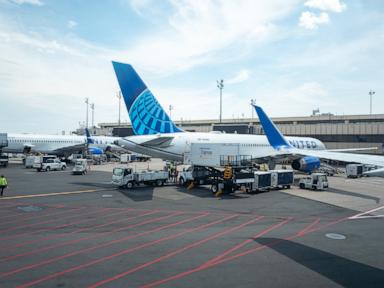
Commercial aviation operates on a terrifyingly thin margin of redundancy. For decades, passengers have boarded widebody aircraft and commuter jets alike, blissfully unaware of the aging, patchwork infrastructure humming beneath their feet. When the Federal Aviation Administration orders a sudden airspace shutdown due to a critical equipment outage, the public treats it as a temporary weather delay or a glitch in the software matrix.
It is neither. It is the predictable consequence of a multi-billion-dollar infrastructure debt coming due all at once. Meanwhile, you can read similar developments here: The Long Shadow Before the Ballot.
Consider the recent Northeast airspace ground stops triggered by sudden system failures. For at least thirty minutes, major travel hubs ground to a dead stop. Millions of dollars in fuel burn, missed connections, and operational chaos rippled across the eastern seaboard. The official statements point toward routine equipment malfunctions or unexpected maintenance cycles.
Veteran industry analysts know the truth. The systems managing the world's most congested corridors rely heavily on legacy software and hardware architectures that belong in a museum rather than an active air traffic control center. To explore the complete picture, check out the recent analysis by BBC News.
The Anatomy Of A Legacy Breakdown
Air traffic management is not a singular monolithic computer. It is a sprawling web of disparate subsystems, ranging from modern digital flight data processors down to vintage radar processing units that rely on decades-old programming languages. When an outage occurs, it rarely means the entire sky goes dark. Instead, a critical communication link drops, a routing database desynchronizes, or a backup power supply fails during a routine transition.
The Federal Aviation Administration faces a structural crisis. Congress allocates funding in unpredictable fiscal cycles, often treating infrastructure modernization as a discretionary line item rather than a matter of national security. When budgets tighten, preventive maintenance and total system overhauls take a back seat to keeping the lights on.
Engineers patch legacy codebases with temporary fixes. They cannibalize obsolete hardware components from retired facilities just to keep primary displays functioning. Eventually, the patches fail. The system encounters an edge case it was never designed to handle, and safety protocols demand the only responsible action left on the table: an immediate ground stop.
The Human Cost Behind The Screens
While passengers curse their delayed flights in terminal concourses, air traffic controllers sit in darkened rooms staring at amber warning lights. These professionals manage staggering volumes of high-altitude traffic with tools that demand intense cognitive load.
When a core system drops offline, controllers must instantly revert to manual coordination procedures designed in the mid-twentieth century. Strips of paper return to flight data racks. Telephone lines hum as regional centers scramble to verbally verify aircraft positions and handoff vectors. The margin for human error shrinks dramatically.
The stress on the workforce is catastrophic. Chronic staffing shortages compound the technical failures. Controllers work mandatory overtime, six days a week, staring at flickering screens that require constant human oversight because the automation cannot be trusted blindly. When equipment fails under these conditions, the system survives purely on the adrenaline and extraordinary competence of the people wearing headsets, not the technology supporting them.
The Multi-Billion Dollar Modernization Trap
Fixing this problem requires more than a temporary congressional funding bill. The Next Generation Air Transportation System initiative aimed to revolutionize the network through satellite-based navigation and digital data communications. Yet, execution has been plagued by bureaucratic delays, cost overruns, and scope creep.
Contractors build proprietary systems that struggle to communicate with legacy hardware owned by regional authorities. Every attempt to upgrade a single node in the network risks destabilizing neighboring nodes. It is the equivalent of open-heart surgery on a patient running a marathon.
Airlines bear the immediate financial burden of these disruptions, yet they have little direct control over federal infrastructure spending. Carriers invest heavily in modern fuel-efficient fleets, advanced flight management computers, and cabin connectivity, only to watch their multi-million-dollar assets sit idle on taxiways because a server rack in an unglamorous suburban facility overheated or lost a core routing table.
The Inevitable Reckoning
Every sudden ground stop serves as a loud warning flare. The question facing regulators is no longer whether another major technical failure will happen, but how catastrophic the timing will be when it does.
Until government leadership treats airspace modernization with the same urgency as highway bridges and electrical grids, the entire system remains one blown circuit away from total paralysis. The next time the departure boards freeze and the announcement echoes through the gate area, remember that the problem is not a simple glitch. It is the sound of an aviation system buckling under the weight of its own neglected history.