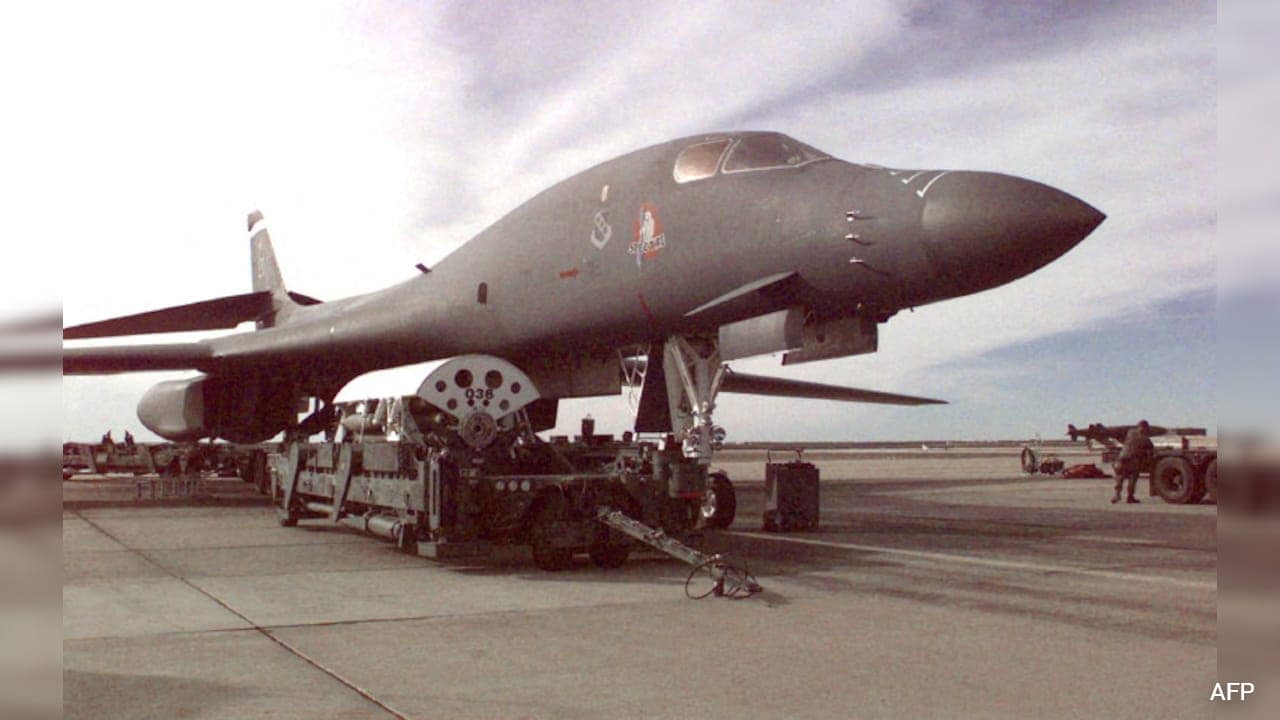
The hasty redeployment of a full squadron of American B-1 Lancer heavy bombers from Royal Air Force Fairford back to continental United States soil was not standard military rotation. It was an emergency evacuation born of sudden terror and profound vulnerability. When Washington pulled its strategic air assets from Gloucestershire, it sent an unmistakable shockwave through transatlantic defense architecture. Behind closed doors, military planners are grappling with an uncomfortable reality. Hostile foreign actors have pierced the outer rings of Western military installations with alarming ease, turning vital forward-operating hubs into perceived liabilities.
Decades of operational doctrine relied on a simple premise. British soil was safe, stable, and deeply fortified against asymmetrical infiltration. RAF Fairford and RAF Mildenhall functioned as reliable launchpads for American power projection across Europe and the Middle East. That illusion shattered following counter-terrorism operations that resulted in multiple arrests near Gloucestershire. Investigators uncovered a suspected foreign intelligence plot targeting the base infrastructure. The discovery of local surveillance, coordinated communications, and suspicious logistics near military perimeters forced an immediate reassessment from the Pentagon.
Strategic planners could not ignore the calculus of risk. A heavy bomber parked on an open tarmac is a multi-million-dollar target sitting in plain sight. Unlike tactical fighters housed in hardened reinforced concrete shelters designed to withstand localized blasts or sabotage, these massive aircraft require expansive support footprints. When intelligence feeds suggested that operatives linked to the Iranian Islamic Revolutionary Guard Corps were mapping vulnerabilities around British installations, the White House opted out of playing defensive chess. The planes took off within hours, leaving Downing Street scrambling to contain the diplomatic fallout.
The immediate public reaction from British officials featured stiff upper lips and absolute assertions that local facilities remain secure. Intelligence ministers insist that domestic counter-terrorism frameworks caught the threat before any catastrophic breach occurred. Yet, military analysts view the situation through a much darker lens. Security failures of this magnitude do not happen in a vacuum. When foreign intelligence networks can establish operational nodes within striking distance of sensitive allied airfields, the baseline assumptions of base defense require an urgent and painful rewrite.
Troop protection protocols across European joint commands are undergoing immediate revision. Base commanders are suddenly tasked with defending against a hybrid threat matrix that combines conventional sabotage, insider reconnaissance, and cyber espionage. Perimeter fences equipped with basic motion sensors are no longer enough when adversaries employ local proxies and encrypted coordination channels. The reliance on civilian contractors, local supply chains, and open-access perimeter roads near historic bases like Fairford creates a porous security environment that is extraordinarily difficult to seal completely.
The financial and operational costs of this withdrawal ripple far beyond a single runway in Gloucestershire. Operating heavy bombers directly from the United States mainland for global deterrence missions dramatically increases fuel overhead, maintenance wear on aging airframes, and crew fatigue. Intercontinental sorties require extensive mid-air refuelling bridges, turning routine training exercises into complex logistical marathons. Washington loses vital response time when aircraft must cross an ocean rather than staging out of the European theater.
Relations between Washington and London are also feeling the strain of the sudden move. American leadership made little effort to mask its frustration over how close the security breaches came to critical assets. Public comments from senior US officials underscored a growing impatience with European counter-intelligence gaps. On the other side of the Atlantic, defense officials in London worry that the episode damages the credibility of British security services on the international stage.
This incident exposes a fundamental vulnerability in modern alliance structures. Adversaries no longer need to match superpower military might dollar for dollar to neutralize strategic advantage. By exploiting the open societies, civilian proximity, and bureaucratic friction of Western democracies, hostile states can force an evacuation of key strategic assets simply through the credible threat of disruption. The B-1 bombers are parked safely in American hangars today, but the strategic vacuum they left behind in Britain remains wide open.