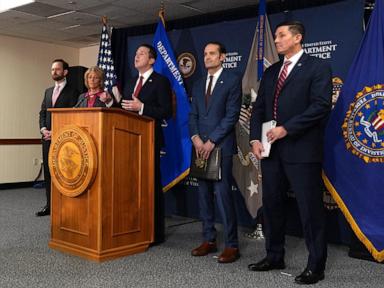
Federal investigators are intensifying crackdowns on organized ghost student fraud, a rapidly expanding financial crime in which criminal syndicates use stolen identities and generative AI to enroll fake applicants in online community college courses, collect federal Pell Grants and student loans, and vanish before attendance rosters are finalized. By exploiting automated admissions pipelines and remote learning loopholes, fraud rings siphon tens of millions of dollars from the Department of Education while leaving real identity theft victims saddled with fraudulent debt and wrecked academic transcripts.
The mechanics are brutally simple. A thief buys a batch of personally identifiable information (PII)—names, birthdates, and Social Security numbers—off an encrypted dark web marketplace. Instead of opening a credit card that triggers instant bank alerts, the criminal submits an application to an open-access community college offering asynchronous online classes. Within days, the fake applicant is accepted, fills out the Free Application for Federal Student Aid (FAFSA), and registers for the minimum number of credits required to trigger maximum financial aid disbursement. If you liked this post, you might want to read: this related article.
They never watch a single lecture. They never submit a genuine assignment. They just wait for the refund check to clear.
How Automated Admissions Built an Open Door
To understand why ghost student fraud exploded over the last several years, you have to look at how community colleges operate. By design, public two-year institutions maintain open-enrollment policies. Their mission is accessibility, removing financial and bureaucratic barriers so working adults, first-generation learners, and low-income residents can enter higher education without friction. For another look on this event, refer to the recent update from NPR.
For decades, that model worked because enrollment required physical presence. Someone had to walk onto a campus, show a photo ID at the registrar's window, and sit in a lecture hall.
Then came the rapid shift toward asynchronous online education and automated onboarding. To compete for declining student populations and streamline administrative overhead, colleges digitized every step of the intake funnel. Applications are processed by software in minutes. Financial aid verification relies on automated database cross-checks rather than human interviews. In many districts, a student can apply, register, and qualify for federal disbursements without ever speaking to a counselor or turning on a webcam.
Criminals recognized the vulnerability immediately. Unlike commercial banks, which spend billions on real-time behavioral biometrics, device fingerprinting, and multi-factor authentication, public community colleges operate on razor-thin IT budgets. Security teams at regional college districts often consist of a handful of generalists tasked with maintaining campus Wi-Fi, classroom projectors, and student portals all at once.
When organized fraud rings pointed automated bots at those portals, the defenses collapsed.
The Anatomy of a Ghost Student Ring
Consider a hypothetical scenario illustrating how a modern fraud ring operates at scale. A syndicate based overseas acquires a dataset of 5,000 compromised identities from a healthcare data breach. Using automated scripts, the ring filters for individuals aged 18 to 35 who have no prior federal student loan history—a prime demographic for maximum Pell Grant eligibility.
Next, the operators deploy residential proxy networks to mask their foreign IP addresses, making every application appear as though it originates from a neighborhood two miles away from the targeted college. They generate synthetic email addresses and VoIP phone numbers for each identity.
Once admitted, the bots enroll in low-barrier introductory courses—subjects like Intro to Sociology, Basic Art Appreciation, or Digital Literacy—specifically chosen because they lack proctored exams or mandatory live video sessions.
To survive the critical census date—the deadline after which colleges report enrollment numbers to the Department of Education and release excess aid money to students—the ring must simulate academic engagement. Historically, fraudsters logged in once, posted a generic "I agree with your point" in a discussion forum, and logged out. Today, they connect large language models directly to the learning management system. The AI reads the syllabus, generates passable weekly discussion posts, and submits plausible short essays.
To an overworked adjunct professor teaching five online sections across three different colleges, the ghost student looks like an average, quiet learner.
When the financial aid office disburses the Title IV funds, tuition is deducted first, and the remaining balance—often several thousand dollars per semester—is wired directly to a prepaid debit card or fintech bank account controlled by the syndicate. Two weeks later, the ghost student stops logging in, fails every class, and disappears. The syndicate moves on to the next academic term with a fresh batch of stolen identities.
The Collateral Damage Nobody Tracks
In headline coverage, ghost student fraud is usually framed as a taxpayer loss—millions of federal dollars disappearing into thin air. That framing misses the human wreckage left behind on campuses and in households across the country.
First, there are the real students locked out of classes. Community colleges operate with strict caps on course sections due to faculty contracts and budget limits. When twenty bots claim seats in an introductory biology or English composition course, twenty legitimate local students get pushed onto a waitlist. Those real students lose momentum, delay their degree timelines, or drop out entirely because they cannot build a workable class schedule around their jobs and childcare.
Second, instructors bear an invisible administrative burden. Faculty members have increasingly been drafted into acting as frontline fraud investigators. Instead of focusing on pedagogy, professors spend hours scrutinizing IP login logs, analyzing writing samples for AI artifacts, and manually dropping non-participating students before census deadlines. If an instructor drops a legitimate student by mistake, they face formal grievances and administrative pushback. If they leave a bot on the roster, they facilitate federal wire fraud.
Third, the identity theft victims face a bureaucratic nightmare. Most victims have no idea they have been enrolled in college until months or years later. They discover the crime when they apply for a mortgage and find defaulted federal student loans on their credit report, when the IRS garnishes their tax refund, or when they legitimately decide to go back to school and learn they have exhausted their lifetime Pell Grant eligibility or failed out of an institution they never visited.
Clearing a fraudulent academic record is far harder than disputing a bogus credit card charge. Victims must file police reports, submit identity theft affidavits to the Department of Education, petition individual college registrars to expunge failing transcripts, and fight loan servicers to discharge debt—a process that routinely drags on for over a year.
Why Federal Oversight Struggled to Keep Pace
The Department of Education's Office of Inspector General (OIG) has sounded the alarm on distance education fraud rings for years, yet systemic enforcement lagged behind the scale of the abuse. Understanding why requires looking at the structural tension inside federal student aid policy.
For the past decade, regulatory reforms focused heavily on reducing verification friction for low-income applicants. Policy advocates rightly pointed out that excessive paperwork requirements—demanding tax transcripts, notarized identity statements, and physical documentation—disproportionately caused eligible, low-income students to abandon their FAFSA applications before ever stepping foot on campus.
To boost college access, federal regulators simplified the FAFSA, automated data retrieval from the IRS, and relaxed certain institutional verification mandates, particularly during and immediately after the pandemic emergency period.
Those policy choices achieved their intended goal of making aid easier to access for legitimate applicants. At the same time, they inadvertently removed the very friction points that slowed down criminal syndicates. When identity verification relies primarily on matching static data points—a name, a Social Security number, and a date of birth—anyone holding a stolen database holds the keys to the vault.
Furthermore, the institutional incentive structure creates subtle blind spots. Community colleges rely on enrollment metrics for state funding allocations and tuition revenue. Even when an institution detects a ghost student after the census date and is forced to return unearned Title IV funds to the federal government, the administrative cost of investigating, auditing, and absorbing bad debt falls squarely on the college's operating budget.
The Counter-Argument Against Heavy-Handed Crackdowns
As federal prosecutors ramp up indictments and the Department of Education tightens identity verification rules—including requirements for live video identity checks or in-person document presentation for flagged applicants—higher education leaders warn of an unintended consequence.
Every security wall built to block a bot also creates a barrier for a vulnerable human.
Consider a rural single parent working two shifts who relies on an asynchronous online program because they lack transportation to campus. Or a formerly incarcerated individual rebuilding their life without an active driver's license or passport. Or an unhoused young adult applying for financial aid from a public library computer using a borrowed phone number.
To an automated fraud-detection algorithm, those legitimate students exhibit the exact same risk signals as a criminal syndicate: inconsistent IP addresses, mismatched billing histories, prepaid phone numbers, and lack of traditional credit footprints.
When colleges deploy aggressive automated fraud filters without nuanced human review, false positives spike. Legitimate students get locked out of their accounts days before tuition is due, have their financial aid frozen indefinitely, and receive cryptic compliance notices demanding documentation they cannot easily produce. Many never appeal; they simply assume college is not for them and walk away.
Critics of rigid federal mandates argue that shifting the entire fraud-prevention burden onto underfunded community colleges risks recreating the exact socio-economic gatekeeping that public two-year colleges were founded to dismantle.
Where Institutional Defenses Fall Short—And What Actually Works
Throwing generic cybersecurity software at admissions portals will not solve ghost student fraud. Syndicates adapt to static rules within weeks. When colleges blocked foreign IP addresses, rings switched to compromised residential proxies inside the United States. When schools required written essays for admission, rings deployed generative AI.
Effective mitigation requires layered behavioral and institutional controls that target the economic model of the fraud rings rather than relying solely on upfront document checks.
- Staggered Disbursement Schedules: Fraud rings operate on rapid cash conversion. When colleges disburse lump-sum aid refunds two weeks into a sixteen-week semester, criminals extract maximum profit with minimal effort. Splitting financial aid disbursements into multiple smaller tranches tied to verified mid-term academic milestones dramatically lowers the return on investment for fraud syndicates without denying funds to legitimate learners.
- Proctored Identity Checkpoints Inside Coursework: Rather than gating the initial application—which deters legitimate prospective students—institutions can embed brief, low-friction live video check-ins or synchronous orientation sessions during the first week of class. A human instructor can verify a student's presence in sixty seconds, something an automated bot network running thousands of parallel accounts cannot scale profitably.
- Cross-Institutional Threat Intelligence: Fraud rings rarely attack a single college in isolation; they hit dozens of districts simultaneously using shared infrastructure, bank routing numbers, and device signatures. State community college systems that pool real-time telemetry across campuses can detect anomalous spikes in application velocity and shut down coordinated attacks before funds are wired out.
- Device and Behavioral Telemetry Over Static PII: Verifying who someone is matters less than verifying how they interact. Keystroke dynamics, browser environment consistency, and session behavior distinguish an automated script or copy-paste AI workflow from a human student typing on a laptop or smartphone.
The Uncomfortable Reality Facing Higher Education
Federal law enforcement can prosecute individual syndicate leaders, seize bank accounts, and dismantle specific bot networks, and those prosecutions send a necessary warning shot. Yet enforcement actions always arrive months or years after the money has already left the Treasury.
As long as open-access online enrollment remains paired with automated, lump-sum cash disbursements, ghost student fraud will remain one of the highest-margin, lowest-risk cybercrimes in North America. Colleges cannot secure their portals by pretending it is still 1995, nor can they abandon their open-door mandate by treating every applicant like a criminal suspect. Until federal aid rules align disbursement timing with genuine human verification, taxpayers, faculty, and unwitting identity theft victims will continue paying the price for a system built on trust in an era of automated deception.