Trade routes rarely shift by accident. When billions of dollars in industrial manufacturing suddenly detour through small island nations and remote border towns, you are not watching free market supply chain optimization. You are watching an engineered evasion. United States trade authorities have officially pinned a target on what they call the Great Transshipment Scam, a massive, coordinated effort by Chinese exporters to route billions of dollars in goods through third countries. The goal is simple. Strip off the origin labels, bypass punitive tariffs, and dump cheap inventory onto American shores under a false flag.
For two decades, covering trade enforcement means watching the same game play out with different props. Washington levies a tariff. Beijing finds a back door. But the current transshipment apparatus has evolved from a few rogue container ships dropping anchor in midnight ports into an industrialized logistics machine. This is not about smugglers hiding electronics in hollowed-out truck beds. This is corporate engineering designed to exploit the blind spots of modern customs enforcement.
The Anatomy of the Route
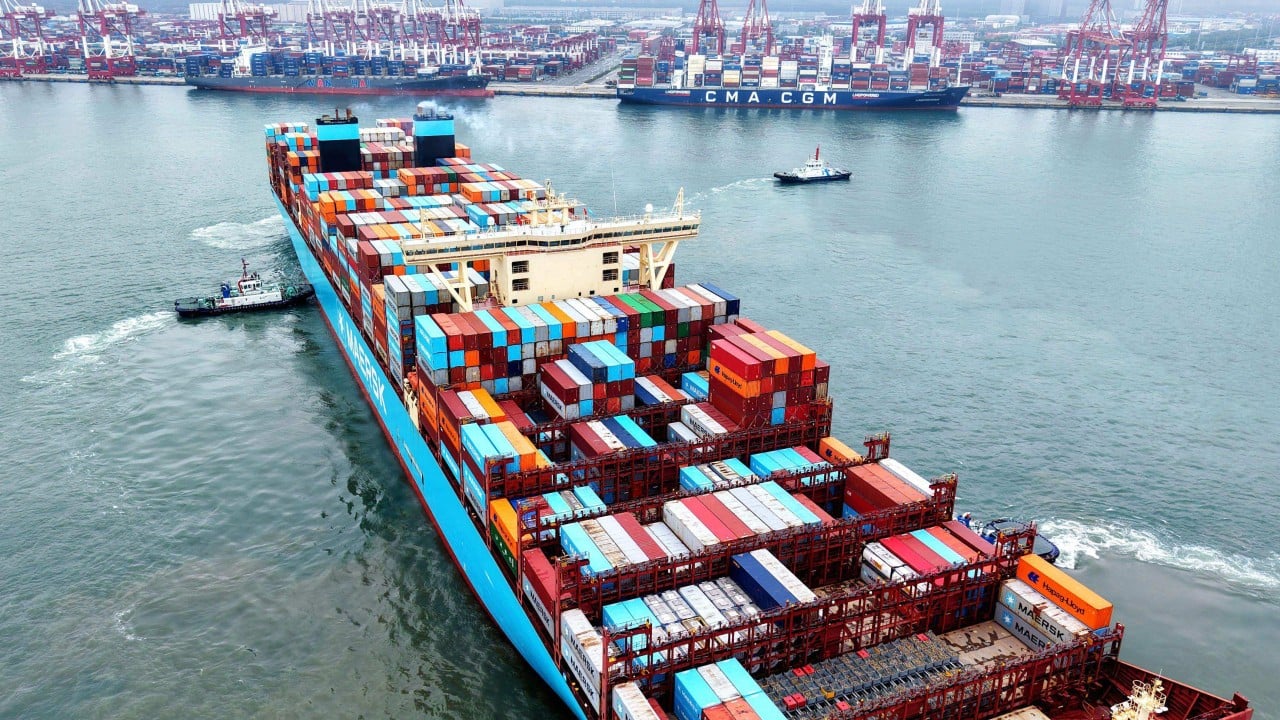
To understand how a factory in Zhejiang manages to look like a manufacturing plant in Vietnam or Mexico, you have to follow the paperwork. Raw materials start in China. Steel, aluminum, solar panels, and precision electronics flow out of industrial hubs toward intermediate nations with preferential trade agreements or lighter tariff burdens with the United States.
Once the cargo lands in the intermediary country, the transformation begins. Sometimes, physical value is added. A battery pack might get a new plastic housing bolted on by workers earning a fraction of mainland wages. Other times, the transformation is purely bureaucratic. Shipping containers are unloaded in a bonded warehouse, stripped of their original documentation, and assigned new certificates of origin.
By the time the cargo clears customs in Los Angeles or Houston, its birth certificate has been completely rewritten.
Customs brokers call this country of origin laundering. It relies entirely on the fact that global supply chains are too vast, too fragmented, and too fast-moving for border agents to physically inspect every pallet. When a shipping manifest declares that aluminum extrusions originated in Southeast Asia rather than East Asia, federal inspectors have to trust the paperwork unless they have specific intelligence pointing otherwise.
Exporters have weaponized that trust.
The Tariff Wall and the Tunnel Builders
The roots of this crisis stretch back to the trade conflicts of the late 2010s. When successive American administrations slapped sweeping tariffs on Chinese imports, economic theorists assumed the math would work as advertised. Higher taxes on foreign goods would make domestic manufacturing competitive again, or at least force companies to source from allied nations.
The theorists forgot about human ingenuity when backed by billions of dollars in profit margins.
Instead of moving factories out of China entirely—an expensive, multi-year nightmare involving massive capital expenditure—many operators chose a cheaper path. They built logistical tunnels underneath the tariff wall. Vietnam saw industrial land values skyrocket not because its domestic tech sector suddenly exploded, but because warehouses were needed to stage goods coming in from across the northern border.
Mexico became another favored staging ground. Under regional trade frameworks, goods manufactured or substantially transformed south of the border enjoy favorable entry terms. Chinese capital flooded Mexican industrial parks, setting up assembly operations that function essentially as transshipment turnstiles. Raw or semi-finished components arrive from Shanghai, get a final screw turned by local labor, and roll across the border onto American highways.
Washington is reacting, but enforcement is structurally reactive. The United States Customs and Border Protection agency operates like a police force trying to catch speeders with a stopwatch from the 1970s while the traffic has upgraded to supersonic jets.
The Cost of the Paper Trail
Tracing a supply chain across three international borders requires forensic accounting on a massive scale. Federal investigators have to track electricity bills at foreign factories, audit shipping line logs, and compare raw material consumption rates against finished export volumes. If a factory in a small nation exports five times more steel than its local grid uses in power, you have found a transshipment hub.
Yet, catching them takes time. Months of investigation. Subpoenas. International cooperation that often runs aground in jurisdictions where local officials benefit from the economic activity generated by the transit trade.
Meanwhile, domestic American producers who actually play by the rules bleed market price points. A domestic manufacturer of solar panels or steel tubing cannot compete against an import that has successfully shed a twenty-five percent tariff through a fraudulent paperwork shuffle. The scam does not just cheat the federal treasury out of billions in uncollected duties. It actively penalizes industrial compliance.
The system punishes honesty. If you pay the tariff, your margins collapse. If you route through a transshipper, you take a calculated risk with compliance officers while your competitors do the same thing down the block.
The Enforcement Paradox
Can the United States seal these leaks? Not completely.
Modern trade relies on speed. Supply chains are engineered for JIT—just-in-time delivery. If customs authorities stopped every container that looked suspicious to conduct deep forensic audits of every supply chain tier, international commerce would grind to a dead halt within forty-eight hours. Ports would choke. Store shelves would empty. Inflation would spike.
Enforcement agencies walk a permanent tightrope between security and economic suffocation.
Exporters know this. They build redundancy into their evasion networks. If a specific transshipment hub in one country gets burned by an alert customs investigator, the operation shifts overnight to a port two countries over. The corporate entities behind the shell companies dissolve and reappear under new names, registered in tax havens that share zero data with Western regulators.
Technology offers some countermeasures. Big data analytics can spot anomalies in trade flows before human inspectors notice patterns. Machine learning algorithms flag sudden spikes in exports from nations with little historical production capacity for those specific goods. But algorithms can only point toward a problem; they cannot seize a container or hold a corporate officer accountable in a foreign court.
The Great Transshipment Scam is not a temporary glitch in global trade. It is a permanent feature of a fractured economic world where national borders try to contain a manufacturing ecosystem that has spent decades globalizing. Until the enforcement mechanisms evolve past paper manifests and catch up to the speed of modern logistics, the border will remain porous to anyone willing to pay the price of a fake origin story.
The loopholes remain open because the profits are too high to ignore. When the penalty for getting caught is merely a cost of doing business, the paperwork will always keep moving.