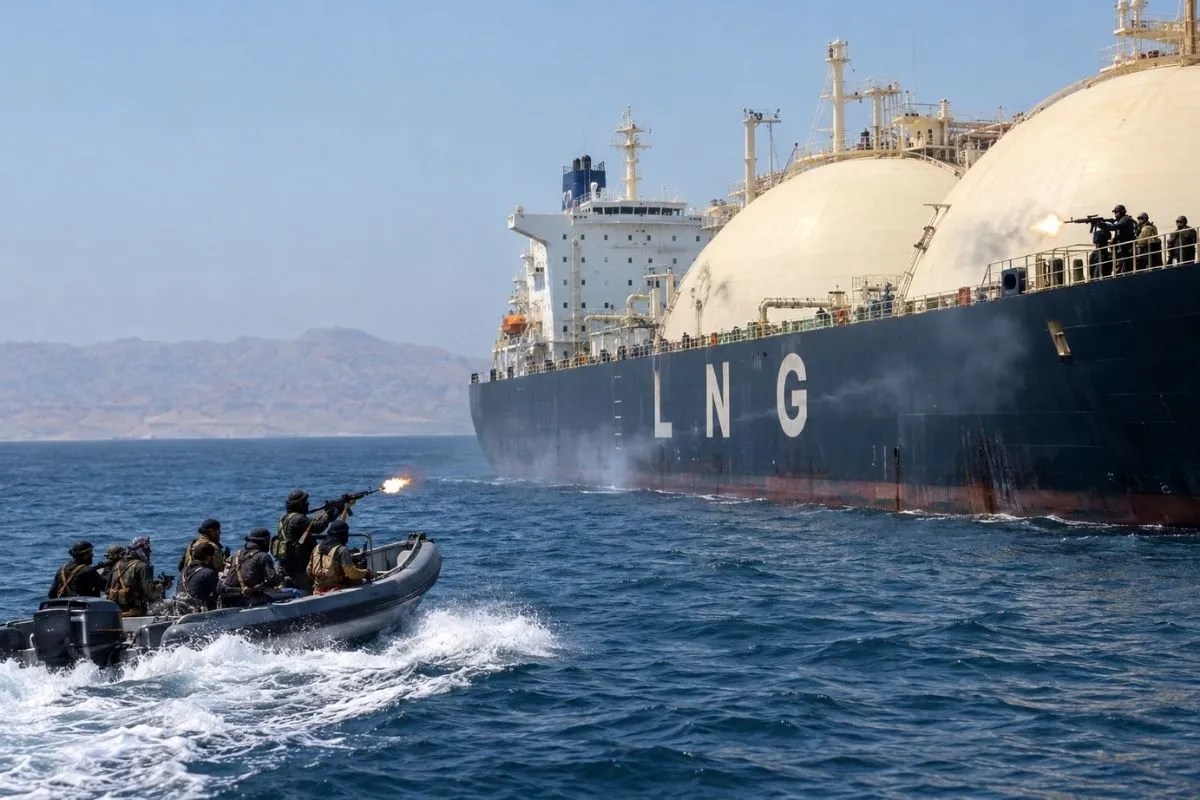
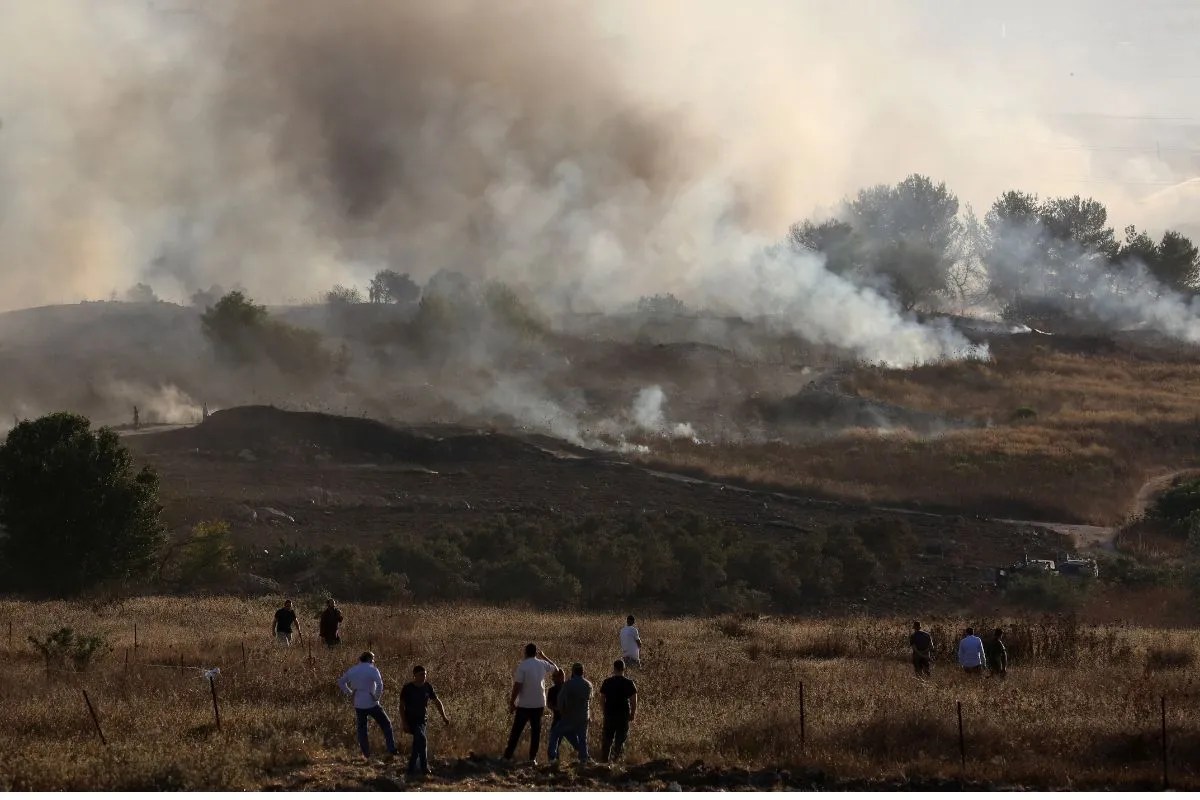
When United Kingdom Maritime Trade Operations issues a warning that a commercial tanker has been struck by an unknown projectile in the Persian Gulf or near the Strait of Hormuz, markets usually brace for an immediate spike in crude. Yet across the November 2026 escalation of the Iran-US war, the deeper story is not a single projectile strike off Saudi Arabia or a lone engine-room fire near Oman. It is a prolonged war of attrition over maritime chokepoints, conflicting intelligence claims, and shipping logistics where barrels still move, even as war-risk premiums and crew danger climb.
A headline reporting a tanker struck by an unknown projectile captures a single flashpoint. It rarely captures the fog of war behind it.
In the broader 2026 conflict that erupted after US-Israeli strikes on Iran in late February, commercial shipping in the Persian Gulf and the Strait of Hormuz has faced recurring waves of projectiles, mines, naval blockades, and contested accounts. Earlier in the month, advisories and maritime reports flagged projectile strikes off Saudi Arabia's eastern coast alongside a string of incidents in and around the Strait of Hormuz—including outbound transits hit by unidentified projectiles, engine-room fires, and vessels disabled near Oman's Musandam Peninsula and Khasab.
Why Projectile Alerts Rarely Tell the Whole Story
Maritime advisories are deliberately cautious. UKMTO's mandate is to alert mariners rapidly with verified operational details, not to assign blame in real time. When a crew reports an impact or fire, the initial public notice often labels the weapon an "unknown projectile" because verification at sea takes hours or days, and debris or radar tracks may remain disputed.
That ambiguity creates an information vacuum that combatants quickly exploit. During November's flare-ups in the Strait of Hormuz, Iranian forces claimed tankers were struck by mines during what Tehran called unauthorized transits along southern shipping lanes, even releasing footage that independent observers noted lacked clear vessel verification. Meanwhile, maritime reporting pointed to projectile hits and engine-room fires on vessels such as the LPG carrier Tara Gas and the tanker On Phoenix.
A single vague projectile alert can move freight rates before anyone knows whether a ship hit a moored mine, took a drone strike, or suffered secondary blast damage.
For shipowners, charterers, and marine insurers, that distinction matters enormously. A minefield implies area denial and slow sweeping operations. A shore- or drone-launched projectile points to targeted harassment along specific transit corridors, naval escort routes, or approaches to Gulf terminals.
The Hidden Mechanics of Gulf Chokepoint Risk
Before the 2026 war began, roughly a fifth to a quarter of the world's seaborne oil and around a fifth of global liquefied natural gas moved through the Strait of Hormuz, alongside a major share of seaborne fertilizers like urea and ammonia. When conflict shut traffic down near zero early in the crisis, the shock looked total. Months later, the reality is more complex—and in some ways trickier for traders to price.
Preliminary flow estimates during the autumn have shown crude and product movements recovering to a substantial share of pre-war volumes—around 80 percent or more when factoring in offshore transfers and rerouted logistics. That recovery is why flat crude prices have sometimes pulled back or stayed tethered to broader supply balances, even when fresh tanker strikes hit the wires.
Do not mistake partial flow recovery for safety. It means the market has adapted to friction rather than eliminated danger.
Three structural pressures keep the maritime threat alive even when barrels reach export markets:
- Narrow maneuvering room: The navigable shipping channels around the Strait of Hormuz compress commercial vessels into predictable lanes, making them vulnerable to mines, fast boats, drones, and missiles.
- Escort and corridor friction: When naval escorts or designated transit routes are used, contested corridors can become focal points of confrontation rather than guaranteed safe passage.
- Shadow and ship-to-ship transfers: Ongoing tanker activity, coastal movements, and ship-to-ship transfers in regional waters complicate visibility for insurers, sanctions monitors, and naval commanders alike.
| Risk Dimension | What Headlines Emphasize | What Actually Drives Cost & Danger |
|---|---|---|
| Incident Type | Single projectile strike or fire | Cumulative frequency of attacks, mines, and escorts |
| Oil Supply | Fears of an overnight Hormuz closure | Net barrels reaching buyers vs. slower, costlier transit |
| Shipping Economics | Spot crude price swings | War-risk insurance, charter rates, and crew safety |
| Information | Official warnings and military claims | Independent AIS tracking, casualty reports, and salvage data |
A Hypothetical Example of How Risk Prices In
Suppose an independent operator runs a hypothetical product tanker—call it the MV Al-Mirqab—loading cargo at a Persian Gulf terminal for delivery to South Asia. Even if no missile hits the hull, the economics change the moment a neighboring vessel reports a strike in the region.
War-risk underwriters reassess exposure across the hull and cargo policy. Charterers demand tighter scheduling or higher demurrage protection. The master and crew face heightened vigilance in confined waters where an engine-room hit or fire can disable propulsion and force an abandonment near a warzone.
Multiply that calculation across dozens of voyages a week. You get a market where oil still clears, refineries still run, and yet every barrel carries an invisible tax of time, insurance, and risk.
What Overlooked Factors Shape the Next Phase
Coverage of Middle East maritime conflict often zooms in on Washington, Tehran, and Riyadh—and for good reason, given retaliatory strikes, regional air and missile exchanges, and diplomatic pressure. Yet two quieter factors deserve just as much scrutiny.
First is the human toll on civilian seafarers. Merchant mariners—including large numbers of South Asian and international crew members serving on regional and flag-of-convenience tankers—operate without warship armor. When a ship takes a hit and catches fire, crews face smoke, disabled steering, search-and-rescue delays, and hospital transfers in nearby ports like Khasab.
Second is the divergence between physical supply and logistics strain. Analysts watching energy markets have noted that when global supply fundamentals appear relatively well-supplied or demand signals soften, traders can discount geopolitical headlines faster than expected. That creates a dangerous blind spot: a market can look calm on crude charts right up until a cluster of strikes, a major spill, or a prolonged delay hits refined products, LPG, or agricultural inputs like fertilizer.
No single maritime alert settles how this conflict will end. Watch the insurance quotes, the crew evacuation reports, and the daily flow numbers rather than the loudest claim of the hour—that is where the real pressure shows up first.