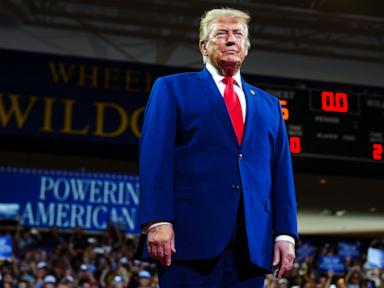
Donald Trump has made the position explicit. A U.S.-Saudi civilian nuclear agreement will not move forward without Crown Prince Mohammed bin Salman committing to full diplomatic normalization with Israel through the Abraham Accords. This conditional stance ties Washington’s nonproliferation standards directly to Middle Eastern geopolitical alignment. It transforms a technical energy discussion into a massive transaction involving military guarantees, uranium enrichment rights, and regional security balances.
Washington's foreign policy establishment has wrestled with Riyadh’s nuclear ambitions for over a decade. The Saudis want energy diversification to prepare for a post-oil economy. They also want nuclear parity with Iran. However, the U.S. Congress and national security officials have historically resisted granting civilian nuclear technology without strict safeguards. The central sticking point remains the Gold Standard of nonproliferation agreements, known as Section 123 under the U.S. Atomic Energy Act. Under this rule, standard practice requires a partner state to renounce domestic uranium enrichment and spent-fuel reprocessing. Riyadh has consistently refused to sign away those sovereign rights.
By tying nuclear technology transfer directly to the Abraham Accords, Washington alters the bargaining table entirely.
The Price of Atomic Ambition in Riyadh
Riyadh does not merely seek nuclear reactors to generate electricity. The kingdom holds significant domestic uranium deposits in its vast desert interior. Crown Prince Mohammed bin Salman views the extraction and refining of domestic uranium as an essential exercise in sovereign economic strategy. Giving up domestic enrichment means relying entirely on foreign suppliers for reactor fuel. In the Saudi view, that setup leaves their domestic energy security at the mercy of foreign political shifts.
Then there is the persistent presence of Tehran.
Iran currently enriches uranium up to sixty percent purity, a short technical step from weapons-grade threshold. Saudi Arabia’s security apparatus views any deal that deprives them of an enrichment capability as a permanent strategic disadvantage. If Tehran reaches nuclear capability, Riyadh wants the legal and industrial infrastructure ready to respond.
To secure American technology without giving up domestic enrichment, the kingdom has dangled the ultimate diplomatic prize: formal recognition of Israel. For Washington, an official normalization between Saudi Arabia and Israel would re-order Middle Eastern regional politics. It would consolidate an explicit anti-Iran bloc stretching from the Persian Gulf to the Mediterranean.
Yet the domestic political calculus inside Saudi Arabia remains deeply complicated.
Public opposition across the Arab world toward normalization has escalated following extensive military conflict in Gaza. Crown Prince Mohammed bin Salman has repeatedly stated that any normalization agreement must include a credible, irreversible pathway toward an independent Palestinian state. Israel’s current political leadership firmly rejects that condition.
This leaves the nuclear agreement trapped between two immovable demands. Washington demands Israel normalization as the price for a deal. Riyadh demands Palestinian statehood steps as the price for normalization.
Why Enrichment Remains the Ultimate Dealbreaker
The technical debate over Saudi Arabia's nuclear program centers on domestic fuel cycle control.
To run light-water nuclear reactors, uranium ore must be mined, converted into gas, and enriched to roughly three to five percent purity. If that same enrichment equipment runs longer or through reconfigured centrifuge cascades, it can produce ninety percent weapons-grade uranium.
+-----------------------------------------------------------------------+
|                    THE NUCLEAR ENRICHMENT THRESHOLD                    |
+-----------------------------------------------------------------------+
|  Natural Uranium   -->   Low-Enriched (3-5%)   -->   High-Enriched (90%) |
|  (Raw Material)          (Commercial Power)          (Weapons Grade)   |
+-----------------------------------------------------------------------+
Under a standard U.S. 123 Agreement without special waivers, Washington requires recipient countries to forfeit domestic enrichment. The United Arab Emirates accepted these terms in 2009 when signing its own civilian nuclear agreement with the United States. Abu Dhabi agreed to import pre-fabricated fuel assemblies and ship spent nuclear fuel abroad for disposal.
Saudi negotiators reject the Emirati template outright.
They argue that their natural resources grant them the right to develop a complete domestic nuclear fuel cycle. They have threatened to buy reactors from Beijing or Moscow if Washington refuses to meet their terms.
+-----------------------------------------------------------------------+
|                      COMPARING PROPOSED PATHWAYS                       |
+-----------------------------------------------------------------------+
| PARAMETER             | U.S. "GOLD STANDARD"   | SAUDI REQUESTED DEAL |
+-----------------------+------------------------+----------------------+
| Domestic Enrichment   | Strictly Forbidden     | Allowed Under Guards |
| Reprocessing Rights   | Prohibited             | Subject to Review    |
| Fuel Supply           | External Vendors Only  | Domestic Mining/Ref. |
| Diplomatic Link       | Standard Safeguards    | Abraham Accords Link |
+-----------------------+------------------------+----------------------+
China has made explicit offers to build nuclear reactors in the kingdom’s Eastern Province without demanding nonproliferation restrictions or diplomatic concessions regarding Israel. However, Chinese reactor tech comes with distinct drawbacks. Beijing cannot provide the binding defense guarantees that Riyadh wants from the United States. China also lacks the specialized integration systems that match Saudi Arabia’s existing military hardware.
Saudi Arabia wants American defense technology, American security commitments, and American nuclear hardware. Washington holds significant cards, but the clock is ticking as alternative suppliers build relationships across the Gulf.
Washington's Balance Between Security Guarantees and Proliferation Risks
If Washington grants Saudi Arabia domestic enrichment rights under a customized bilateral package, it creates a serious dilemma for nonproliferation protocols across the globe.
- Regional Domino Effects: Other Middle Eastern states, such as Turkey or Egypt, could demand equal domestic fuel cycle rights if Riyadh gets a waiver.
- Congressional Opposition: A U.S.-Saudi agreement requires congressional review. Lawmakers from both major political parties have expressed skepticism about permitting domestic enrichment in a volatile region.
- Israel's Qualitative Military Edge: Israel operates as an unacknowledged nuclear power and maintains strict defense doctrine against any neighboring state acquiring enrichment capabilities.
Israel’s security leadership remains divided on the matter.
Some military officials view a formal treaty with Saudi Arabia as a vital counterweight to Iran. They believe American operational oversight over a Saudi nuclear facility could mitigate nonproliferation risks.
Other security officials argue that once centrifuges spin on Saudi soil, political changes in the future could instantly convert a civilian facility into a military breakout option. No monitoring regime can guarantee permanent safety if national leadership changes or regional alliances shift overnight.
How Regional Realities Disrupt Washington's Calculations
Linking a nuclear deal to the Abraham Accords assumes that regional leaders can isolate diplomatic agreements from broader public sentiment.
That assumption has broken down.
The humanitarian crisis and ongoing combat operations in Gaza have raised the political risk for Arab leaders contemplating open ties with Israel. Crown Prince Mohammed bin Salman cannot simply sign an accord without clear, binding concessions on Palestinian sovereignty without risking internal discontent and regional credibility.
Simultaneously, Israeli political leaders face domestic pressure against granting major territorial or political concessions toward a Palestinian state.
This creates a fundamental structural stalemate:
- Washington demands Israel normalization to approve the nuclear pact.
- Riyadh demands a clear path to Palestinian statehood to grant Israel normalization.
- Jerusalem refuses concessions on Palestinian statehood.
- Riyadh refuses to waive domestic uranium enrichment rights without massive security pay-offs.
Every attempt to bypass these structural realities runs into hard geopolitical limits.
Washington policy circles have discussed potential compromises. One proposal involves constructing an American-owned, American-operated enrichment facility on Saudi soil. Under this model, the facility sits within the kingdom, but U.S. technicians hold exclusive operational control, keys, and software access.
The concept sounds neat on paper. In practice, it presents immense legal and logistical hurdles.
An American-run enrichment plant on foreign soil remains legally questionable under U.S. national security statutes. It would also fail to satisfy Saudi Arabia's desire for sovereign industrial control over its energy reserves. If a crisis occurs, host country forces could seize control of the physical infrastructure regardless of who holds the operational contracts.
The Hidden Consequences of Delay
Delay does not freeze the status quo. It actively changes it.
As negotiations stall, Saudi Arabia continues expanding its research infrastructure. The kingdom has constructed a low-power research reactor in Riyadh with assistance from Argentine contractors. It has developed uranium exploration processing infrastructure with Chinese geological teams.
The longer Washington takes to finalize a firm framework, the more time Riyadh has to build alternative supply chains that bypass American oversight entirely.
The strategy of conditioning nuclear technology access on the Abraham Accords is a high-stakes gamble. It treats nuclear energy access as a transactional bonus for broader strategic alignments.
If the gamble works, it cements an historic diplomatic network across the Middle East backed by U.S. military power.
If the gamble fails, it leaves Washington with neither Israeli normalization nor oversight of Saudi Arabia's atomic ambition. Riyadh will move forward with its nuclear program regardless, using alternative international suppliers who do not require nonproliferation standards, strategic ties, or diplomatic handshakes in Washington.