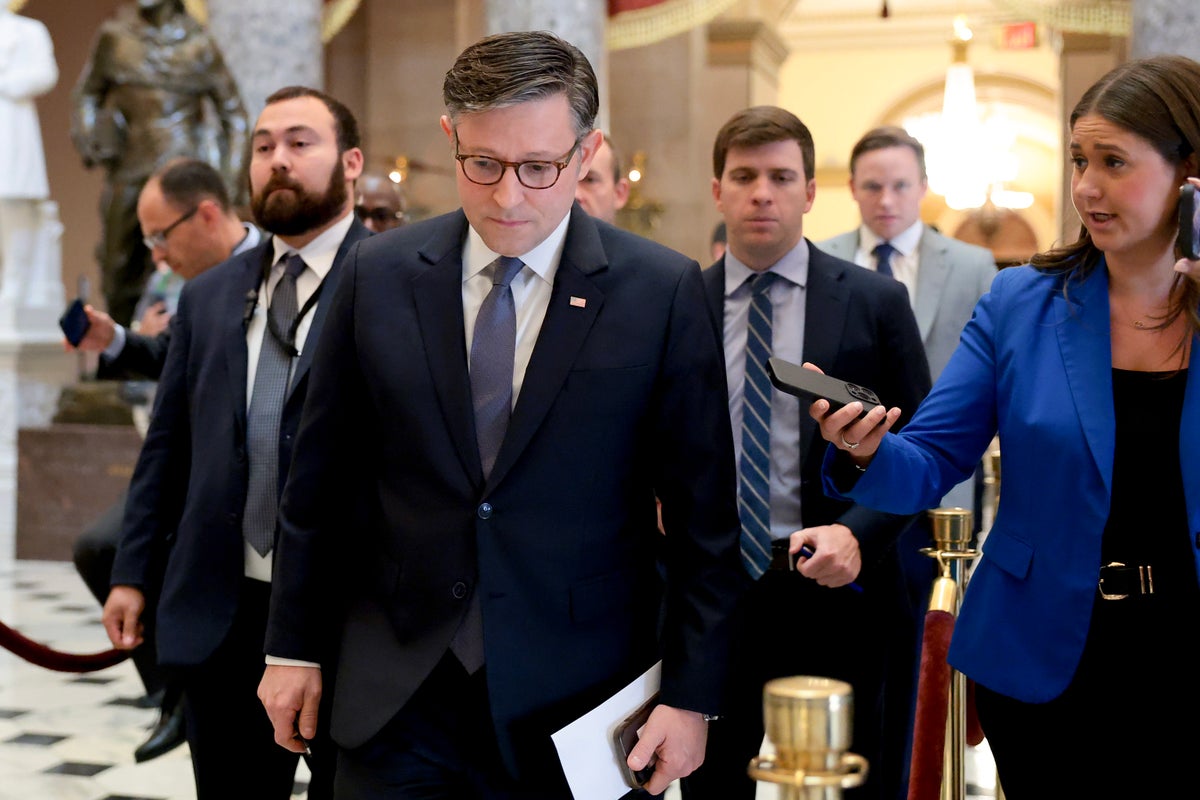
When Speaker Mike Johnson dropped his mild-mannered demeanor during a tense closed-door Capitol confrontation and blurted out that he was fed up with the internal sabotage, he exposed a structural breakdown in Congressional governance. The outburst was not merely a moment of personal irritation from a notoriously devout politician. It was the visible cracking of a legislative machine trapped between a tiny, razor-thin majority and a faction of lawmakers who have realized that hostage-taking pays continuous dividends.
The immediate catalyst was a fight involving Representative Anna Paulina Luna over veterans legislation, but the underlying disease has been festering for months. Hardline conservatives have repeatedly weaponized parliamentary procedure to halt the House floor. By defecting on routine rule votes, a handful of members can paralyze the entire chamber, effectively stripping the Speaker of his ability to set the legislative agenda.
The Math that Killed Majority Rule
House speakership rests on a basic mathematical reality. When your majority is down to three votes, the party leadership no longer controls the floor. A pocket of three or four determined objectors becomes a shadow veto council.
Historically, party leaders kept dissenters in line using committee assignments, campaign funds, and district earmarks. Those traditional levers of discipline no longer function. Modern political incentives reward chaos. For a headline-seeking lawmaker, shutting down the House floor yields national television appearances, millions in small-dollar fundraising, and social media dominance. Voting with leadership on a standard rule vote provides none of that.
This shift has created a perpetual motion machine of dysfunction. When leadership attempts to move standard, bipartisan bills, hardliners threaten to block the rule. When leadership caters to the hardliners to keep the floor moving, moderate members threaten their own rebellions or sign discharge petitions to force votes around the Speaker's back. Johnson is left managing two distinct parties under a single Republican label, neither of which is willing to yield to the other.
Tactical Hostage Taking as the New Normal
The procedural weapon of choice used to be the motion to vacate, which ousted Kevin McCarthy. Today, rebels have discovered a far more efficient tool: the rule vote.
Under House rules, before a major bill can be debated or voted on, the House must pass a "rule" establishing the parameters of debate. For decades, rule votes were strict party-line affairs where even disgruntled members voted with their party to allow debate to move forward. That unwritten norm is completely dead.
By repeatedly voting against rules on key legislation—ranging from defense authorization to routine government funding—a small faction can force leadership to cancel votes and send lawmakers home early. It costs the rebels nothing, yet it completely halts the legislative agenda.
The Broken Promise Trap
Johnson’s primary survival mechanism has been appeasement through future promises. To pass a critical funding measure today, leadership offers a commitment to vote on a hardline priority tomorrow.
The strategy carries a rapid expiration date. When those future promises inevitably hit the wall of Senate reality or fiscal constraints, lawmakers accuse leadership of double-crossing them. Members like Representative Eric Burlison have explicitly cited broken assurances as their rationale for taking down floor votes.
This creates a trust deficit that makes future negotiations almost impossible. Once lawmakers believe that leadership's commitments will be discarded when convenient, they demand their pound of flesh upfront. They demand that controversial policy riders be written directly into must-pass base text rather than handled through separate parliamentary maneuvers.
+-----------------------------------------------------------------------+
|                       THE CAPITOL GRIDLOCK CYCLE                      |
+-----------------------------------------------------------------------+
|                                                                       |
|  1. Narrow Majority      --->  Leadership holds a 2-3 vote cushion.   |
|                                                                       |
|  2. Rule Vote Blockade   --->  3+ rebels vote against debate rules.   |
|                                                                       |
|  3. Appeasement Deals    --->  Speaker promises future votes/riders.  |
|                                                                       |
|  4. Collateral Damage    --->  Bills stall; moderates rebel or walk.   |
|                                                                       |
|  5. Breakdown & Recess   --->  Floor collapses; members sent home.    |
|                                                                       |
+-----------------------------------------------------------------------+
Why Sanctions and Penalties Fail
Frustrated mainstream Republicans often demand that leadership punish the rebels by stripping them of preferred committee seats or cutting off campaign assistance. Retiring members like Don Bacon have voiced intense anger at the lack of consequences for those who routinely wreck party objectives.
Yet applying actual discipline carries catastrophic risks for a Speaker operating on a thin margin. Strip a rebel of their committee assignment, and that member may decide to withhold their vote on every single procedural motion for the remainder of the Congress, or join Democrats to pass discharge petitions.
"The vast majority of members are team players who do not appreciate the minority that does that," noted Representative Carlos Gimenez. Yet in a House governed by brutal mathematics, the minority holds all the leverage.
Johnson is essentially trapped in a room where the dissidents hold the trigger and know the leadership cannot afford to detonate the room.
The Downstream Impact on Governance
This structural paralysis extends far beyond internal party drama. It degrades the fundamental capacity of the federal government to perform basic functions.
When defense authorization bills, farm bills, and annual appropriations measures are perpetually delayed or held hostage for unachievable legislative demands, standard operations grind to a halt. Federal agencies are forced to operate under short-term funding patches that prevent long-term planning and waste billions in administrative inefficiencies.
The political pressure valve is rapidly burning out. As rank-and-file members grow tired of wasting weeks on cancelled votes and fruitless negotiating sessions, the willingness to compromise collapses entirely.
The outburst from the Speaker was not an isolated slip of the tongue; it was the honest reaction of an institution running on empty. So long as a handful of individual members can leverage procedural rules to shut down the chamber without facing electoral or institutional consequences, no House Speaker will be able to govern.
Speaker Johnson forced to send Congress home amid Republican revolt
This report breaks down the exact procedural votes and factional standoffs that forced leadership to cancel House business and send lawmakers home early.