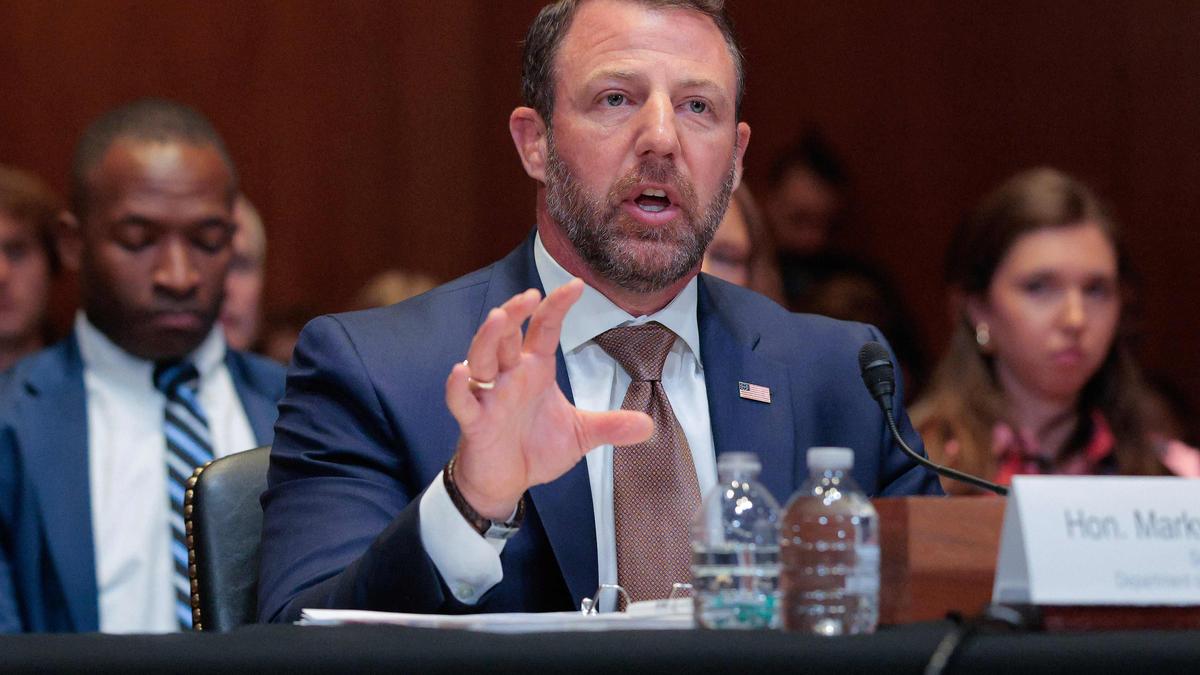
Corporate boardrooms and remote rural hospitals across America are quietly absorbing a staggering economic shockwaves. Homeland Security Secretary Markwayne Mullin revealed to a Senate subcommittee that out of roughly 286,000 H-1B visa applications filed so far in fiscal year 2026, more than 200,000 applicants—nearly 70 percent—have paid a massive, newly mandated $100,000 fee to secure expedited 15-day processing. The development exposes a deep revenue machine and a devastating bottleneck that is pricing public schools, regional healthcare systems, and tech startups entirely out of the global talent market.
What was introduced via presidential proclamation in September 2025 as an aggressive measure to deter foreign labor has instead turned into a brutal pay-to-play system. Corporations with massive cash reserves are treating the $100,000 surcharge as a standard cost of doing business. Meanwhile, vital public services face a seven-and-a-half-month backlog if they cannot produce the cash upfront.
The Economics of a Luxury Border
The numbers presented by DHS demolish the original policy premise that a six-figure fee would halt the reliance on foreign professionals. Instead, it has established a dual-track immigration mechanism.
H-1B Processing Tracks (FY 2026)
┌───────────────────────────────┬───────────────────┬────────────────────┐
│ Track                         │ Processing Time   │ Cost Per Applicant │
├───────────────────────────────┼───────────────────┼────────────────────┤
│ Fast-Track (70% of filings)   │ ~15 Days          │ $100,000           │
│ Standard (Exemption seekers)  │ ~7.5 Months       │ Statutory fees only│
└───────────────────────────────┴───────────────────┴────────────────────┘
The data shows that cash-flush entities are moving faster than ever, bypassing standard delays by cutting a check. The Department of Homeland Security has essentially monetized its own inefficiency. By throwing administrative resources at the high-fee applications, the agency processes those files in two weeks.
The remaining 80,000 applicants who sought a different path forward or applied for a rare "national interest" exemption are left lingering in a grinding bureaucratic purgatory. They must wait up to 225 days for an adjudication. For a business trying to scale or a research lab working on time-sensitive developments, a delay that long is effectively a denial.
The Hidden Casualties in Rural America
While the policy was publicly messaged as a strike against Silicon Valley tech giants, the collateral damage is concentrated heavily in communities that can least afford it. During the Senate Appropriations Subcommittee hearing, Senator Susan Collins pointed to a critical care crisis unfolding in northern Maine. A small, remote hospital in Presque Isle was forced to pay the full $100,000 non-refundable fee simply to bring in an overseas surgeon.
Medical infrastructure cannot absorb these numbers. A massive tech company can distribute a $100,000 charge across a multi-million dollar product line. A rural, non-profit medical clinic operating on razor-thin margins must strip that money directly from patient care or equipment upgrades.
The same crisis is hitting public education. Senator Lisa Murkowski raised concerns during the same hearing regarding severe teacher shortages in rural Alaska. School districts that traditionally utilized H-1B visas to recruit specialized science and math educators are watching positions go unfilled because their annual budgets cannot support a six-figure immigration penalty per classroom.
The Corporate Workaround and Legal Backlash
For enterprise software firms and defense contractors, the math remains simple. If a senior database architect generates half a million dollars in quarterly productivity, writing a $100,000 check to pay.gov to get them on the ground in 15 days is an easy choice. This dynamic has created a deep market distortion where the wealthiest corporations monopolize the annual visa allocation purely by outbidding public sector and mid-market competitors.
This economic divide has triggered a massive legal pushback. A coalition of state attorneys general filed a sweeping lawsuit alleging the administration bypassed the mandatory notice-and-comment framework required by the Administrative Procedure Act (APA). Historically, immigration fees are meticulously calculated to cover the exact operational cost of application processing. A $100,000 price tag dramatically exceeds the actual labor cost of reviewing a visa file, turning the fee into an unauthorized regulatory tax.
Litigants also argue that the executive branch has overstepped its statutory boundaries. Congress explicitly constructed the H-1B framework with specific caps, prevailing wage requirements, and fee structures. By overlaying a massive, unilateral financial barrier, the administration has fundamentally rewritten the Immigration and Nationality Act without legislative assent.
A Fractured System
The DHS Secretary indicated a vague willingness to evaluate case-by-case exemptions for rural healthcare institutions. History suggests that case-by-case government carveouts rarely work at scale. They add more layers of administrative review to an agency that is already drowning under its own caseload.
The hard truth of the current data is that the $100,000 fee did not protect American workers or reduce high-skilled immigration. It simply shifted the roster of who gets to hire them. The United States has established an immigration system where access to global talent is determined entirely by the size of an employer's bank account, leaving public health, education, and domestic innovation to bear the ultimate cost.