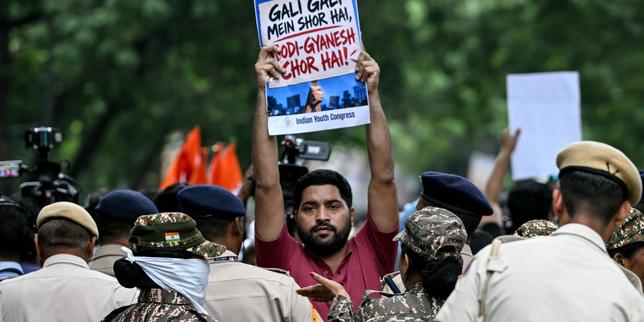
Democracy relies entirely on an invisible agreement between the citizen and the state: the sacred guarantee that a registered vote will exist when election day arrives. When that foundation fractures, the consequences reach far beyond standard political friction. The massive structural controversy surrounding India's electoral administration has exposed deep administrative vulnerabilities within the Election Commission of India (ECI), centering on a sweeping Special Intensive Revision (SIR) exercise that triggered the removal of roughly 130 million names from national voter rolls.
Understanding the current institutional turmoil requires looking past surface-level talking points and examining the mechanics of massive administrative purges. Out of the millions of deletions recorded during this period, statistical breakdowns indicate that roughly seventy-one percent fell under the category of absent, shifted, or unverified individuals, while millions more were classified under deceased or duplicate entries. On paper, routine database maintenance is a standard administrative necessity for any functioning republic to prevent ghost voting. In practice, scale transforms methodology. When administrative cleanup operates on a continental scale without foolproof localized fail-safes, the margin for error scales proportionally, shutting legitimate voters out of the system.
Public outcry intensified as opposition figures, civil society organizations, and affected citizens mobilized against what they characterized as targeted mass disenfranchisement. Major street demonstrations in New Delhi and active legal interventions by the Supreme Court highlighted a profound breakdown in communication between independent oversight bodies and the electorate. Internal friction within the commission itself leaked into the public sphere, as reports surfaced regarding procedural disputes among election commissioners over how these massive data revisions were being forced through without absolute consensus. Critics pointed to procedural hurdles, such as altered online application forms demanding retroactive generational proof, which placed an unreasonable administrative burden on marginalized communities with limited access to legacy documentation.
Defenders of the exercise maintain that rigorous list cleanups are essential to preserve electoral integrity and weed out duplicate or fraudulent entries that could compromise an election's outcome. Government and commission representatives argue that procedural adjustments and later allowances—such as permitting affected individuals to reapply or correct data anomalies through standardized forms—demonstrate institutional responsiveness. Yet, skeptics emphasize a fundamental timeline problem inherent in bureaucratic corrections: for any eligible citizen improperly stripped of their voting rights ahead of a major poll, administrative remedies arriving after the ballots are cast offer no real justice.
The systemic fallout of these controversies forces a harsh evaluation of how modern states manage digital identity and electoral databases. Transparency cannot remain an afterthought treated with administrative secrecy; it must be built directly into the algorithms and verification channels governing citizen registries. As ongoing legal battles continue to test the boundaries of administrative power and judicial oversight, the core question remains whether technological modernization will protect democratic participation or inadvertently introduce new mechanisms for bureaucratic exclusion.
Controverse électorale en Inde : le chef des "cafards" à nouveau arrêté
This video provides on-the-ground context regarding the protests and civil unrest surrounding the electoral roll controversies in New Delhi.